
The first time the traffic doesn't stop for you in Hanoi, something rewires in your chest. The scooters don't slow; they simply bend around the space you're about to occupy, a few thousand of them a minute, and the one thing nobody tells you in advance is that you are not meant to wait for a gap. You are meant to become part of the current, walking at an even pace while the city flows around you like water around a wading heron. This guide teaches that skill in stages: watch it first from above, understand why it works, attempt it at the hardest intersections in the city, then sit down afterwards with a drink you've earned.
Watch it from above before you join it
No crossing lesson should start at street level. Spend the first hour of the trip somewhere above the traffic, and Cafe Pho Co, tucked on Hang Dau at the edge of the Old Quarter, is the best paid vantage point in the city for it. Seating is small tables only (there's no formal group booking system), and a party of 3-4 can usually squeeze onto the rooftop terrace overlooking the Hoan Kiem roundabout below, though anything larger will need to split across floors. Drinks run 60,000-90,000 VND. Go up for the view first: the roundabout has no working light cycle that anyone seems to follow, and yet nothing collides, because every rider is reading everyone else's speed and adjusting by degrees. The egg coffee, thick and sweet, is a bonus for making the trip worthwhile rather than the reason to climb the stairs. For a full run of what else the Old Quarter has to offer once the traffic lesson is done, the Hanoi guide covers the rest of the city.
A second, quieter vantage point trades the lake roundabout for a cathedral square. Cong Caphe, the branch on Nha Tho street facing St. Joseph's Cathedral, keeps things informal (groups of 4-6 fit upstairs without trouble, larger parties should call ahead), and a coconut coffee (45,000-65,000 VND, the signature order) buys an hour of watching scooters negotiate the square with no stoplight in sight. It's a useful contrast to Cafe Pho Co: same principle, different geometry, worth doing both before setting foot off a curb.

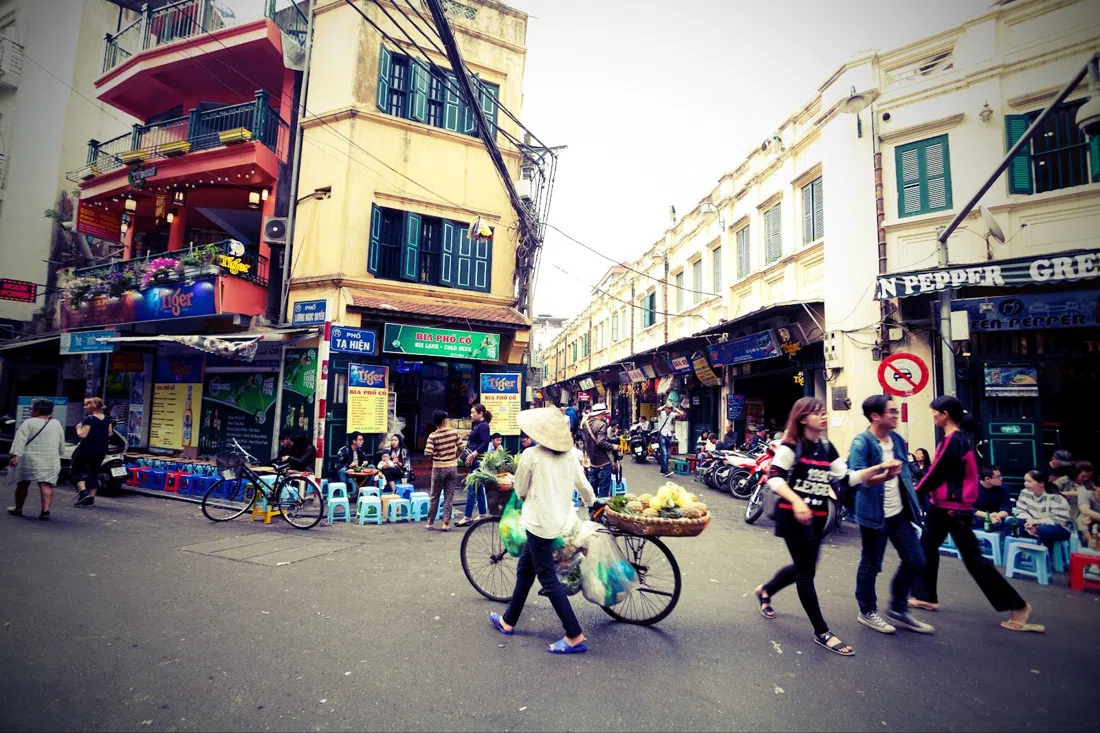
For the evening version of the same spectator sport, head to the Ta Hien Beer Street corner in the Old Quarter, where communal plastic-stool seating absorbs groups of any size; arrive before 7pm if you want a table as the street fills in. A glass of bia hoi costs 11,000-22,000 VND, and there's no better seat in the city to watch the nightly crossing chaos unfold with a cold beer in hand while you stay firmly a spectator.
The technique, once you've watched enough
Once the pattern is legible from above, the actual method is almost disappointingly simple, and it works the same at every intersection in this guide. Step off the curb at a steady, predictable pace (never a run, never a stop-start shuffle) and hold that pace all the way across. Don't make eye contact hoping for a wave-through; there isn't one. Riders are constantly recalculating your position based on your current speed, and the moment you break stride to dodge, you become unpredictable, which is the only genuinely dangerous thing you can do. Groups should cross in a tight cluster rather than strung out, since a compact block is one object for oncoming traffic to route around instead of six unpredictable ones. None of this makes the first crossing feel any less like faith. It just makes it survivable.
The two crossings that actually test you
Two spots in the city separate people who've watched the traffic from people who've walked through it.
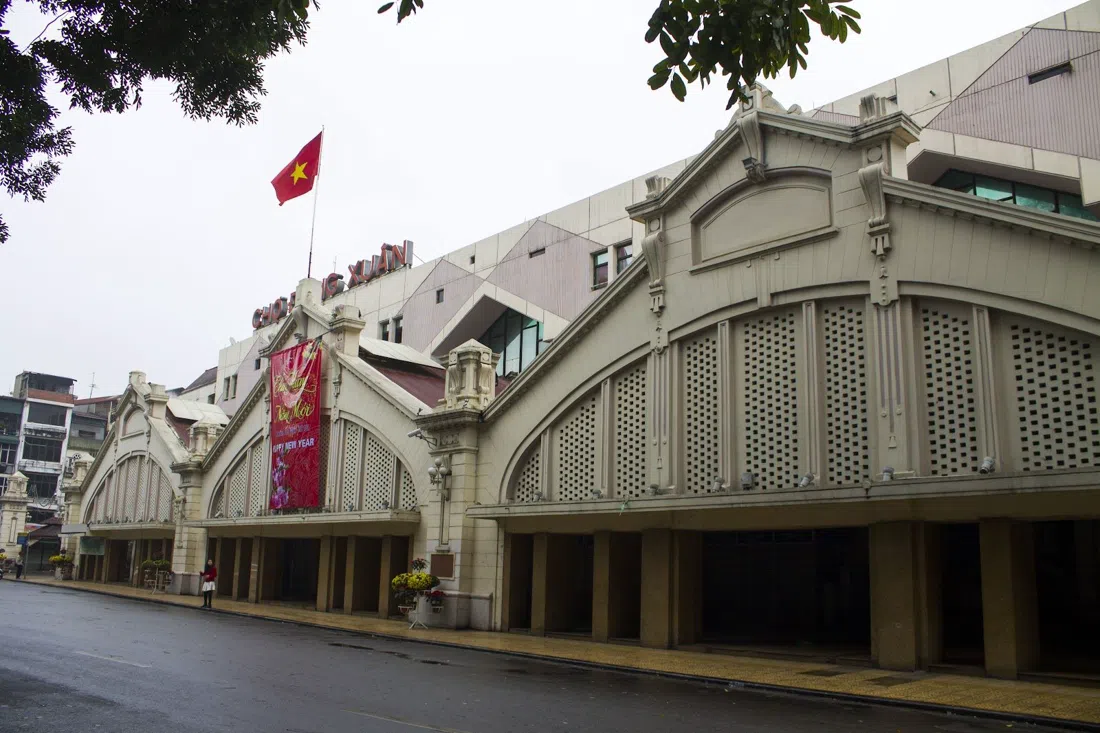
Dong Xuan Market, at the northern edge of the Old Quarter, is the boss level of this guide. It's an open public market (any size group can wander in freely, no booking needed, free to enter), but the forecourt in front of it has no real lanes, just negotiated chaos between delivery bikes, hand carts, and shoppers moving in every direction at once. There's no light, no crosswalk paint, nothing organizing it beyond mutual awareness. Go on a weekday morning rather than a weekend for a calmer rehearsal; the market is still working but the crowd is thinner, which makes it a fairer first attempt at the hardest crossing in the city.
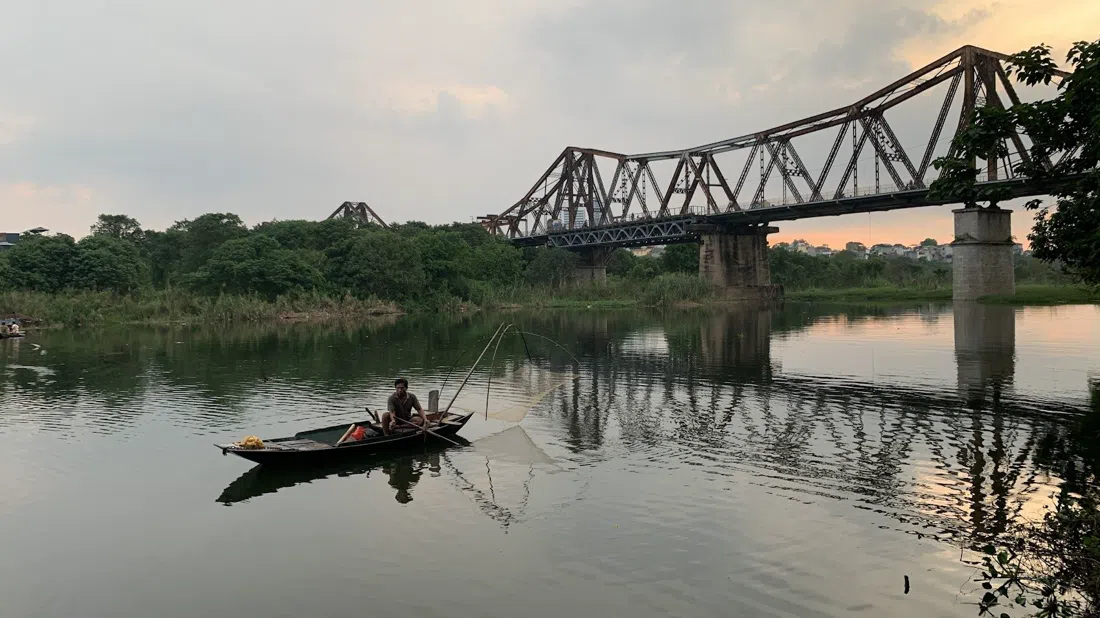
Long Bien Bridge, spanning the Red River just past the market, reopened in late May 2026 after a two-month repair closure and has become the centrepiece of this whole exercise. It's free, open to unlimited group sizes, and works particularly well as a guided walking-group activity at sunset, when the light turns the girders orange and the traffic thins just enough to feel like a fair fight. There's no crosswalk and no traffic light on the bridge itself: just a shared lane between pedestrians, cyclists, and scooters, and the nerve to hold your line. It's the purest version of the skill this whole guide is trying to teach, and it's worth timing your visit for golden hour rather than midday glare.
The counterpoint, standing still while chaos moves
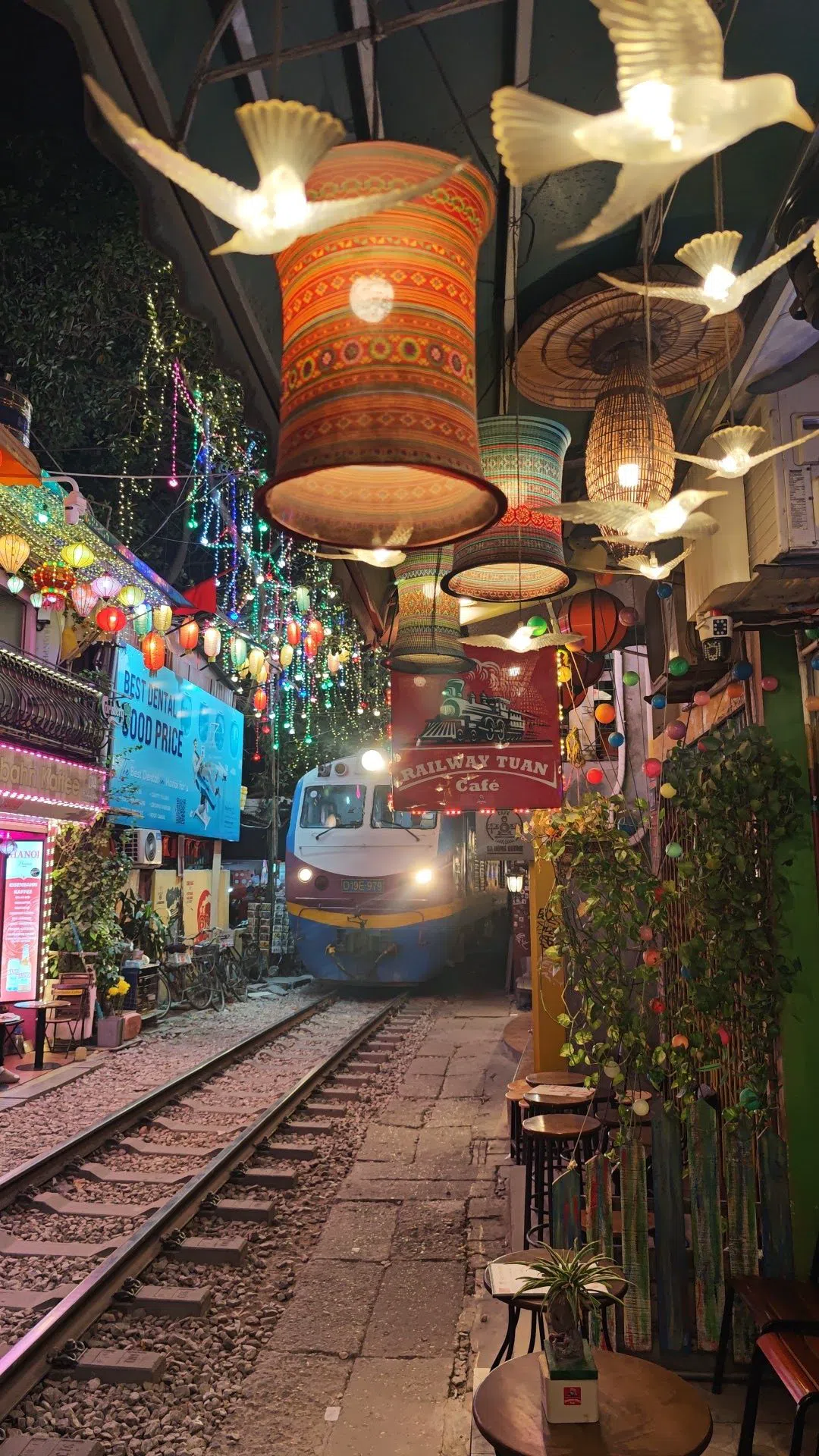
Not every stop in this guide asks you to move. The Railway Cafe on Train Street flips the whole exercise: instead of walking through moving traffic, you sit at a small table right beside the tracks and let a train pass a few feet away while you stay put. Seating is small-group friendly but strictly first-come, and it tightens right before each scheduled passing, so check that day's train times before heading over; access is occasionally restricted by a checkpoint depending on crowd control that week. A drink purchase is required to sit, around 50,000 VND. It's the mirror image of everything else in this guide: here, you're the fixed point, and the show is engineered to move around you instead.
The reward stop
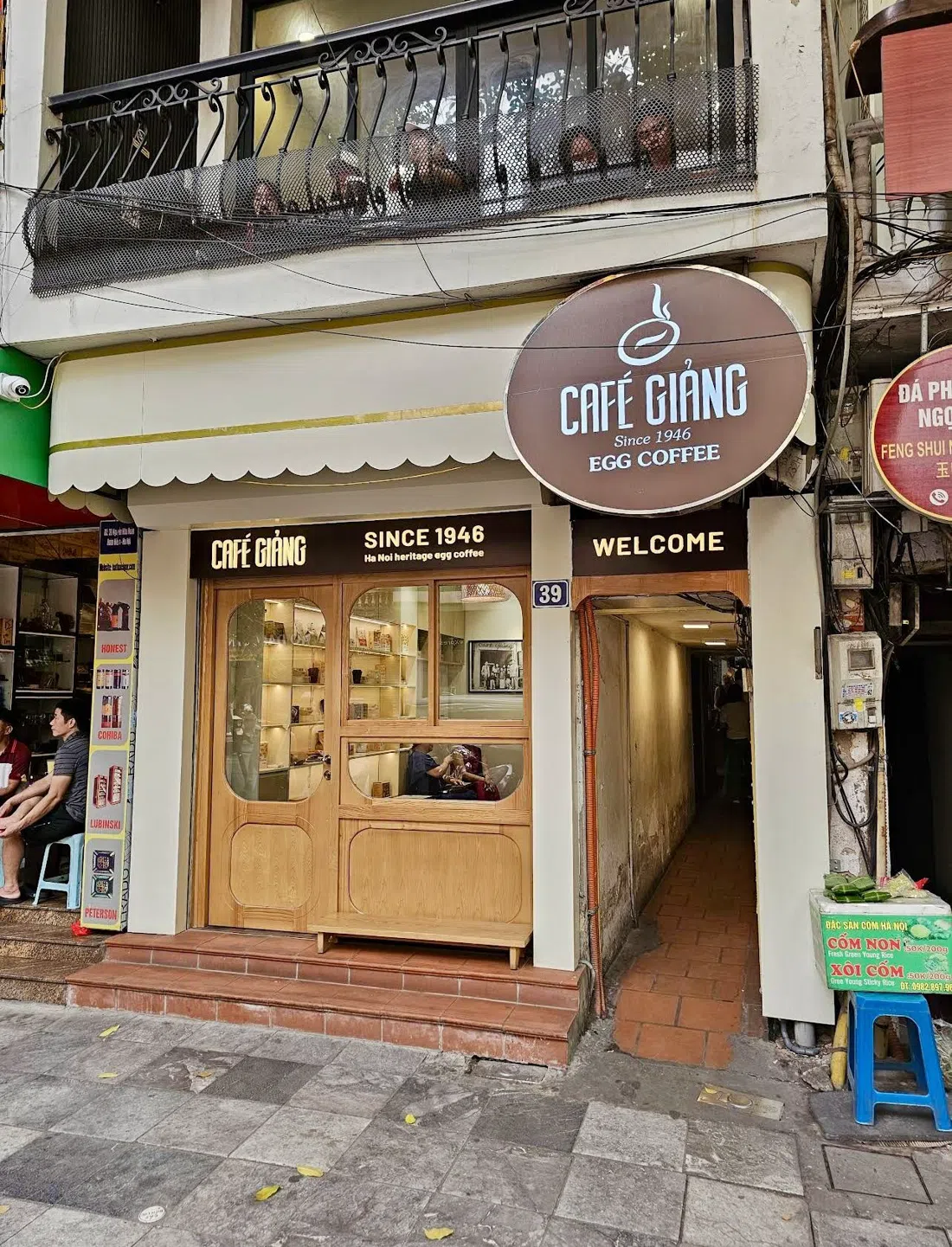
After a successful crossing (market, bridge, or otherwise), the correct move is Cafe Giang, the city's egg coffee institution, three generations deep with a recipe unchanged since 1946. It's a casual walk-in with cramped seating, so groups over six will end up spread across two tables, but that's part of the charm rather than a flaw. A cup runs 40,000-60,000 VND. This isn't the best vantage point in the guide (that's Cafe Pho Co); it's the place you sit down afterwards, adrenaline still running, and let the sweetness of the drink do what a normal coffee never could.
The weekend cheat code
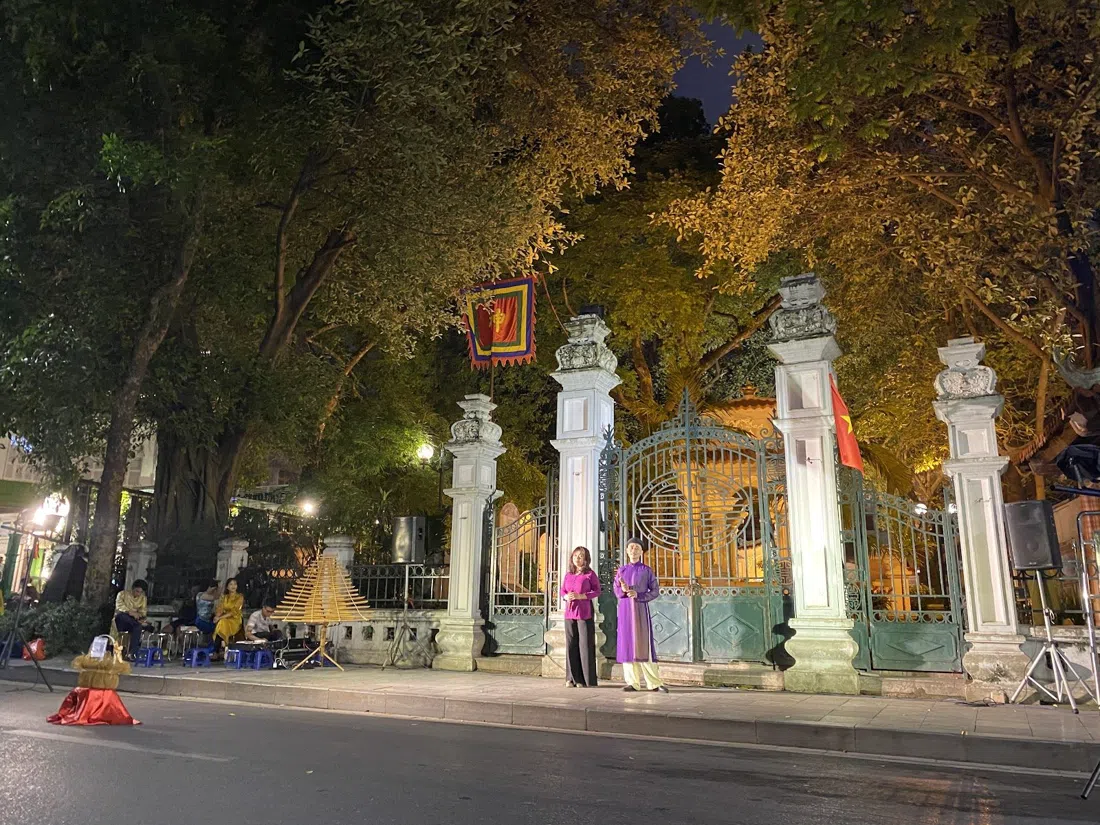
If the whole exercise sounds like more nerve than you brought on this trip, time your visit for a weekend. Hoan Kiem Lake Walking Street turns the same roads that feel like a live video game on weekdays into a fully car-free pedestrian zone, free to enter and open to any group size, with the traffic simply gone. It's worth knowing this in advance if you're building a first-timer's itinerary: cross successfully on a Thursday, then reward yourself with a car-free Saturday stroll around the lake, and the contrast between the two versions of the same street says more about Hanoi's traffic than any explanation could.
If you'd rather not walk into it at all
Some readers will do the survival exercise once, for the story, and then hire someone else to handle it for the rest of the trip. All the sensible options group around the Old Quarter.
Hanoi Street Food Tour has been running since 2013 with over 10,000 TripAdvisor reviews and departs daily at 11am, 5pm, and 6:30pm with hotel pickup included, for roughly $20 per person. It's built for small groups and functions as the guided graduate version of the exact skill this article teaches: you'll cross the same intersections, just with someone experienced doing the timing for you.
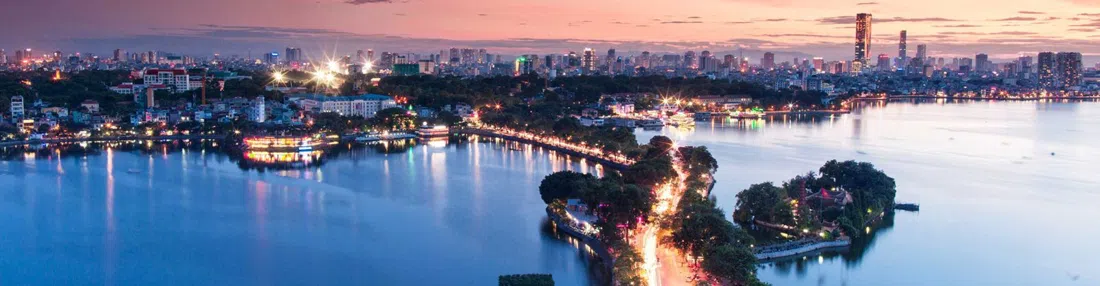
Hanoi Free Walking Tours is the budget version of the same idea: tip-only, with groups forming daily at 9am and 2pm around the lake, no advance sign-up needed. Expect to tip 100,000-200,000 VND. The guides are university students practising English, so the crossing coaching comes with genuine conversation rather than a script.
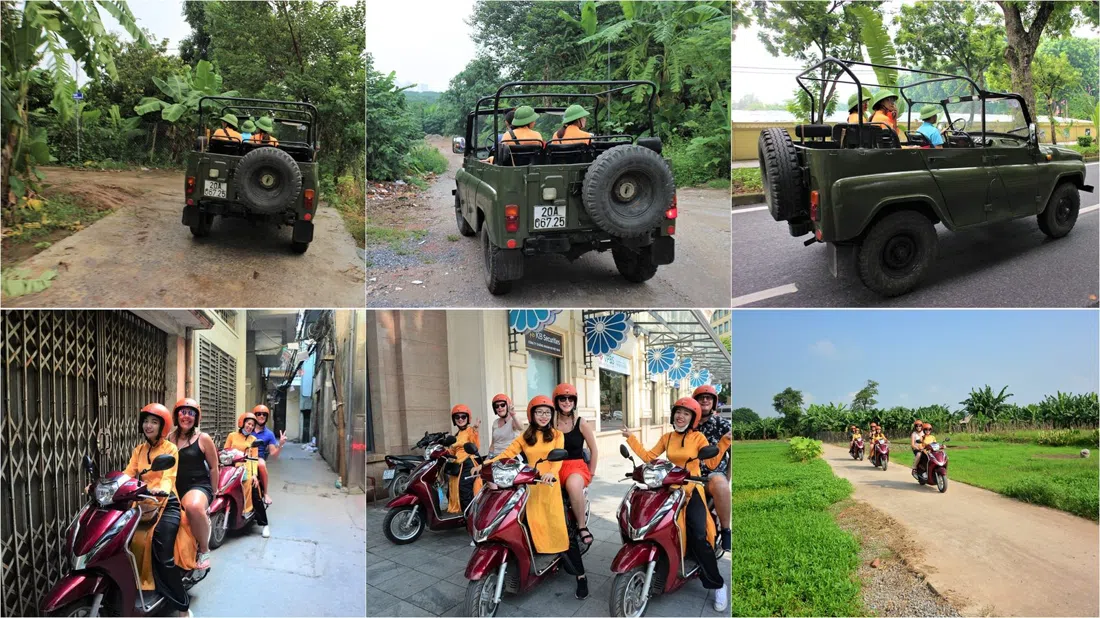
For readers who'd rather ride the chaos than cross it on foot, Vietnam Backstreet Tours, founded by three Hanoi-born locals, runs small motorbike and vintage-jeep groups with one local driver per guest, from around $35 per person. Motorbike City Tours, a women-led operator and TripAdvisor's top-ranked motorbike operator in the city, offers the same one-driver-per-guest structure with hotel pickup and drop-off included, from around $30 per person; the operator itself warns about copycat listings using similar names, so double-check you're booking the right one.

For something slower, Hanoi Cyclo Tours puts one passenger per pedicab and lines up easily into a convoy of 6-10 for group bookings, from $10-15 per person for an hour. It's the slow-motion version of everything else in this guide: you still move through the same traffic, but someone else does the negotiating while you watch from a foot off the ground.
Getting there, cash, and timing
Transport: most of this guide sits within walking distance inside the Old Quarter and around Hoan Kiem Lake, so a few days of a trip can run entirely on foot once the crossing technique clicks. A regional ride-hailing app covers everything further out, including the ride to Long Bien Bridge if you'd rather not walk the whole distance. For where to base yourself, the Hanoi hotel search covers the Old Quarter options within reach of every stop in this guide.
Cash: Vietnam still runs largely on cash for street-level stops (coffee, beer, cyclo fares), so carry small denominations (10,000-50,000 VND notes) for exactly this kind of day. ATMs are common throughout the Old Quarter.
Timing: mornings are calmer for the harder crossings (Dong Xuan Market especially), evenings are better for the spectator stops (Ta Hien, Long Bien Bridge at sunset), and weekends flip the whole equation around the lake once the walking street closes to cars.
Budget: a full day following this guide (two coffee stops, a beer, the reward egg coffee, no tour booked) comes in comfortably under $15. Add a guided walk or motorbike tour and the day moves into the $20-35 range per person, still modest against what the story is worth telling afterward.