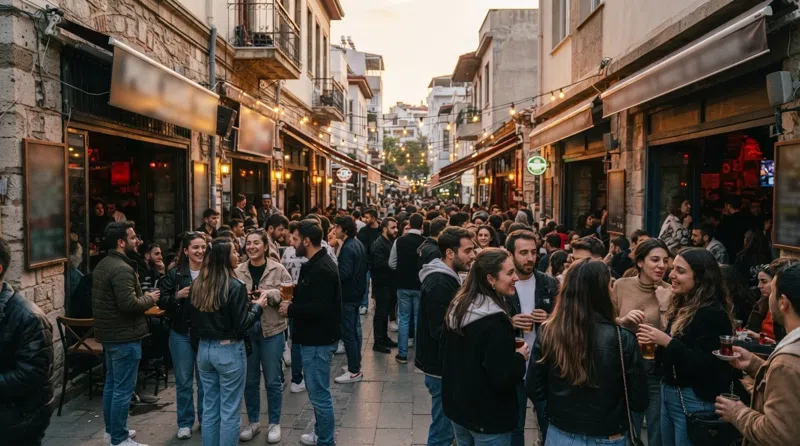

Every evening around six, plastic stools appear on Hanoi's Old Quarter corners as if summoned, and by seven the city's most enduring drinking ritual is running at full tilt: kegs tapped that morning, glasses passed hand to hand, strangers folded into someone else's circle without a word exchanged. It is called bia hoi — literally "fresh beer" — and it owes nothing to craft culture's careful pours or brewery tours. It is Hanoi's cheapest, oldest, most democratic answer to a hot evening and a short walk, and in 2026 it still costs less than a bottle of water in most other capitals.
The history matters because it explains the stools. Bia hoi arrived with Soviet and Czechoslovak brewing assistance in the 1960s and 70s, at a time when refrigeration and bottling were scarce and beer was rationed like everything else. It was brewed unpasteurised, without preservatives, and distributed daily to designated corners because it simply didn't keep — you drank it the day it was made, or you didn't drink it at all. That constraint, born of shortage rather than style, is what built the ritual: sit where the keg is, drink while it lasts, make room for whoever else turns up. Nearly fifty years later, the beer is better filtered and the kegs no longer run dry by early evening, but the sitting-wherever-there's-a-stool instinct never left.
Where It Started, and Still Works Best
Bia Hoi Junction (the corner of Ta Hien and Luong Ngoc Quyen, Old Quarter) is the reason every guidebook photo of Hanoi drinking looks the same: low stools spilling across two intersecting streets, a dozen stalls pouring from the same handful of kegs, and a crowd that thickens from six until well past nine. This is the corner where the old ration-route distribution turned into a standing nightly public ritual, and it remains the single densest cluster of stalls in the city. There's no booking system and no door — if your group is six or sixteen, you simply pull extra stools together, which makes it the most group-native spot in Hanoi. A 500ml glass runs 5,000–15,000 VND (roughly $0.20–0.60), poured by staff who refill without being asked. Go between 7 and 9pm for the room at its fullest; earlier and the kegs are still cold, later and the best corners have filled.
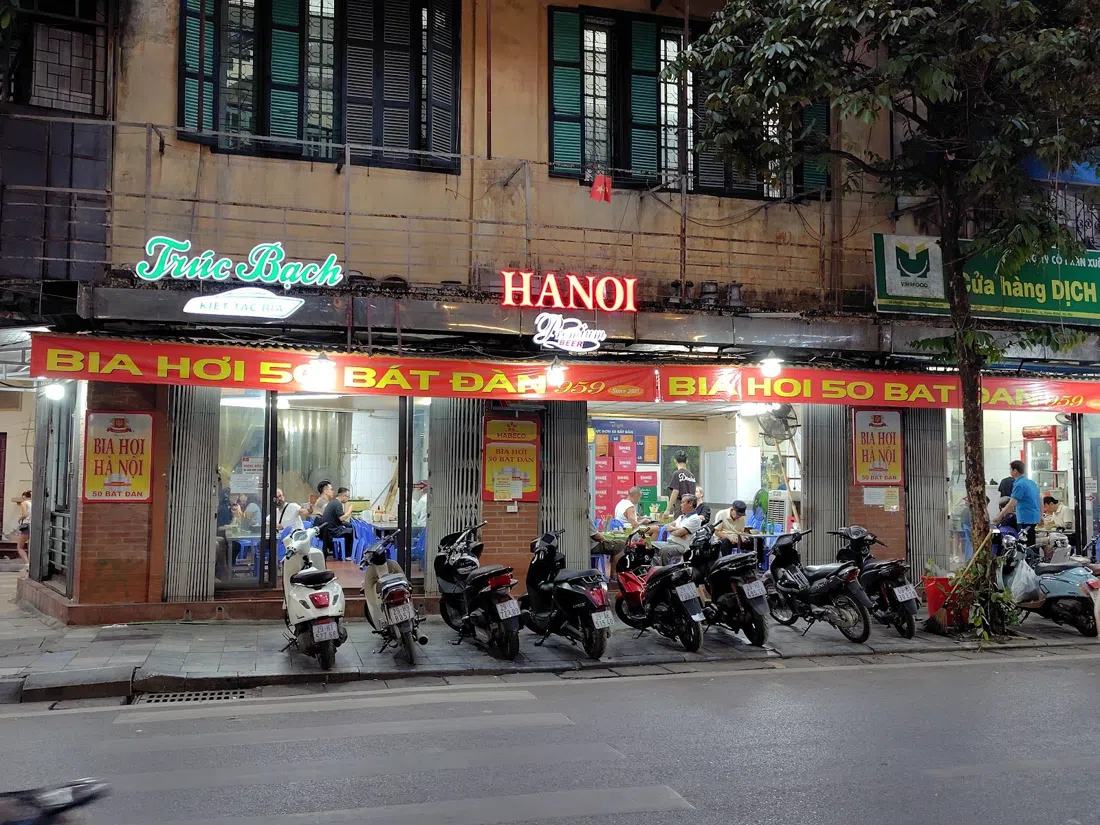
The trade-off at Ta Hien is exactly what you'd expect from its fame: tourists, touts working the edges, and occasional markup for anyone who doesn't ask the price first. Quan Bia Hoi Bat Dan, a few streets over in the Old Quarter, is the answer for readers who want the same ritual without the crush. It takes groups just as easily, at the same 5,000–15,000 VND per glass, but it's the corner that Hanoi residents and long-time guides consistently point to as where locals actually drink. It's harder to find — no illuminated signage, no crowd spilling into the road to mark it from a distance — and that's rather the point. If Ta Hien is the introduction to bia hoi, Bat Dan is the version worth the extra ten minutes of walking for the contrast alone.
Bia Hoi With an Actual Kitchen Behind It
Not every bia hoi stop is a stool-and-glass street corner. A handful of operators have built proper restaurants around the same daily-keg principle, and they solve a real problem: street corners have no toilets, no shelter if it rains, and nowhere to seat a party of ten without scattered stools.
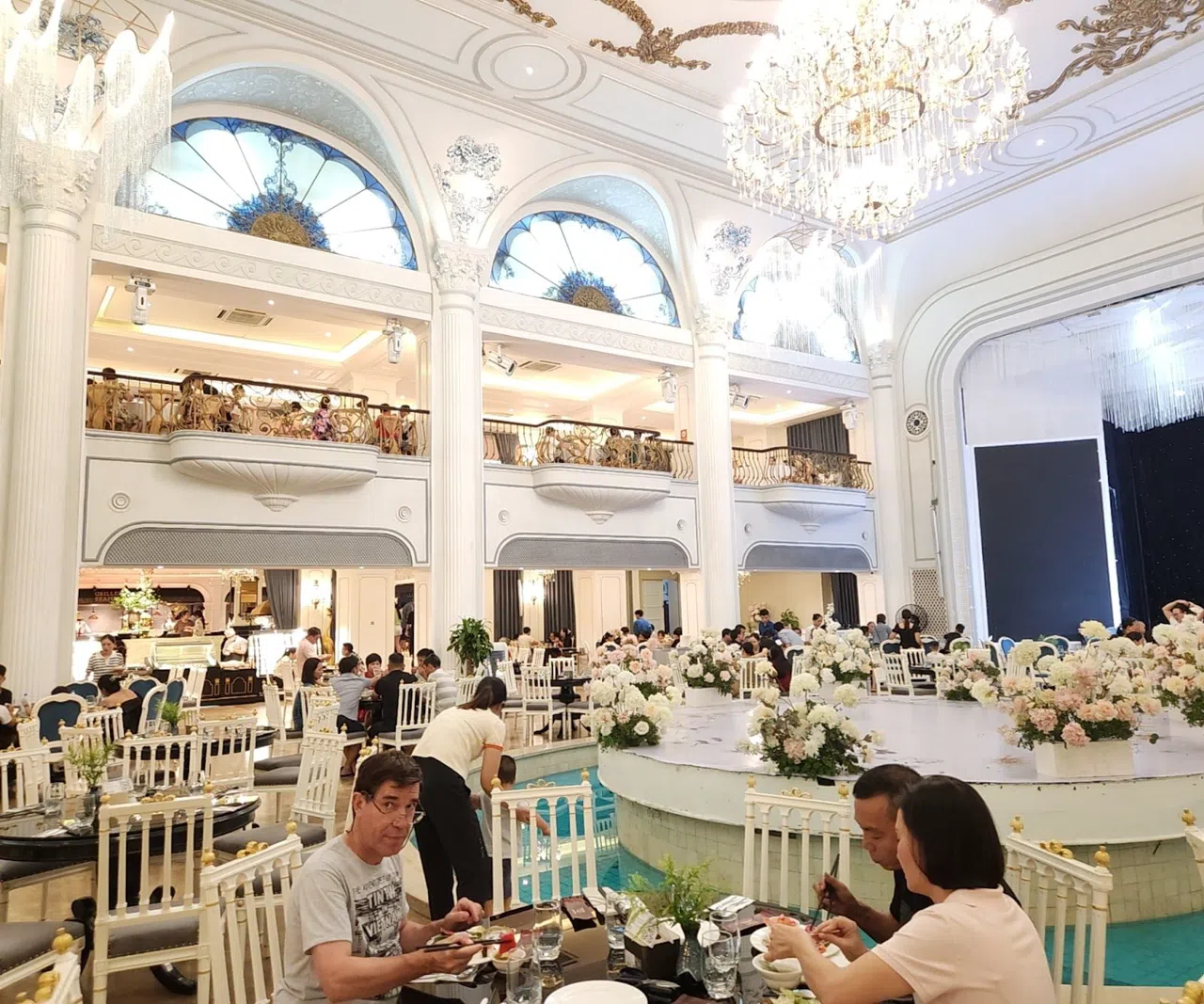
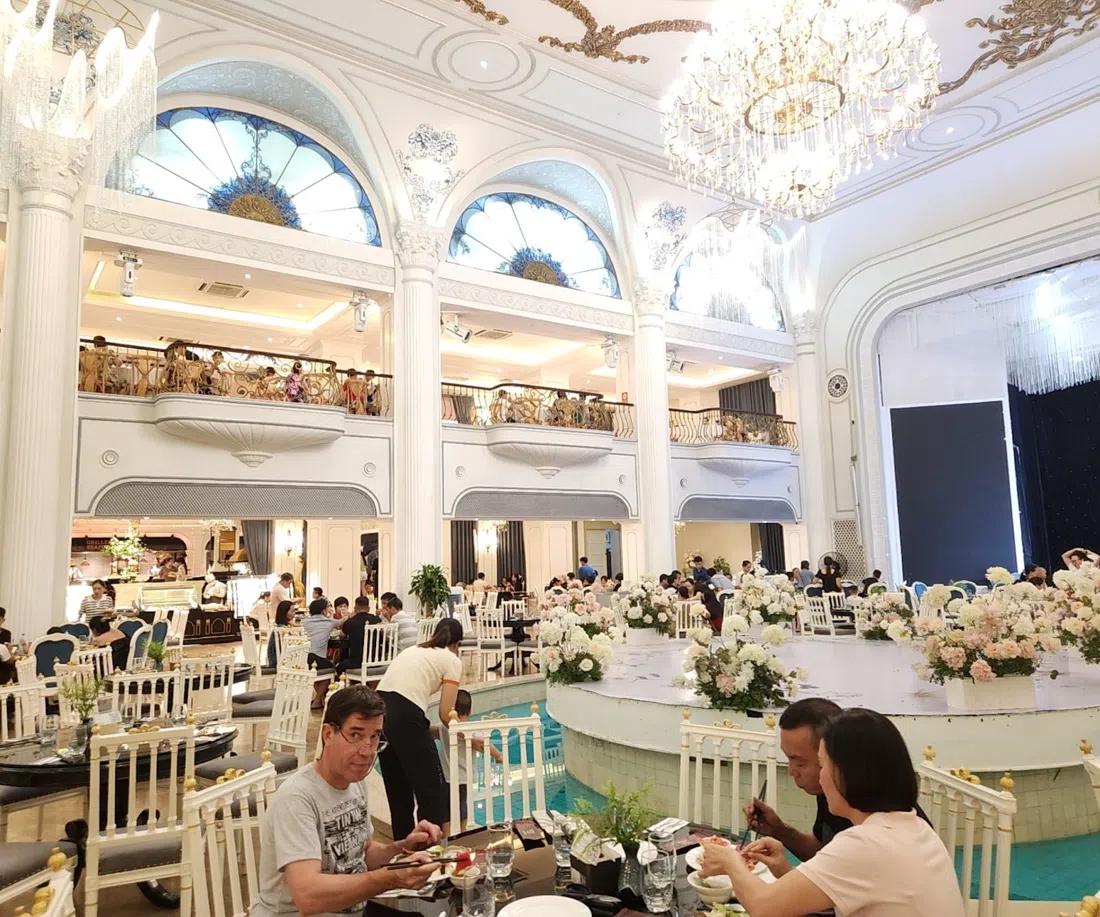
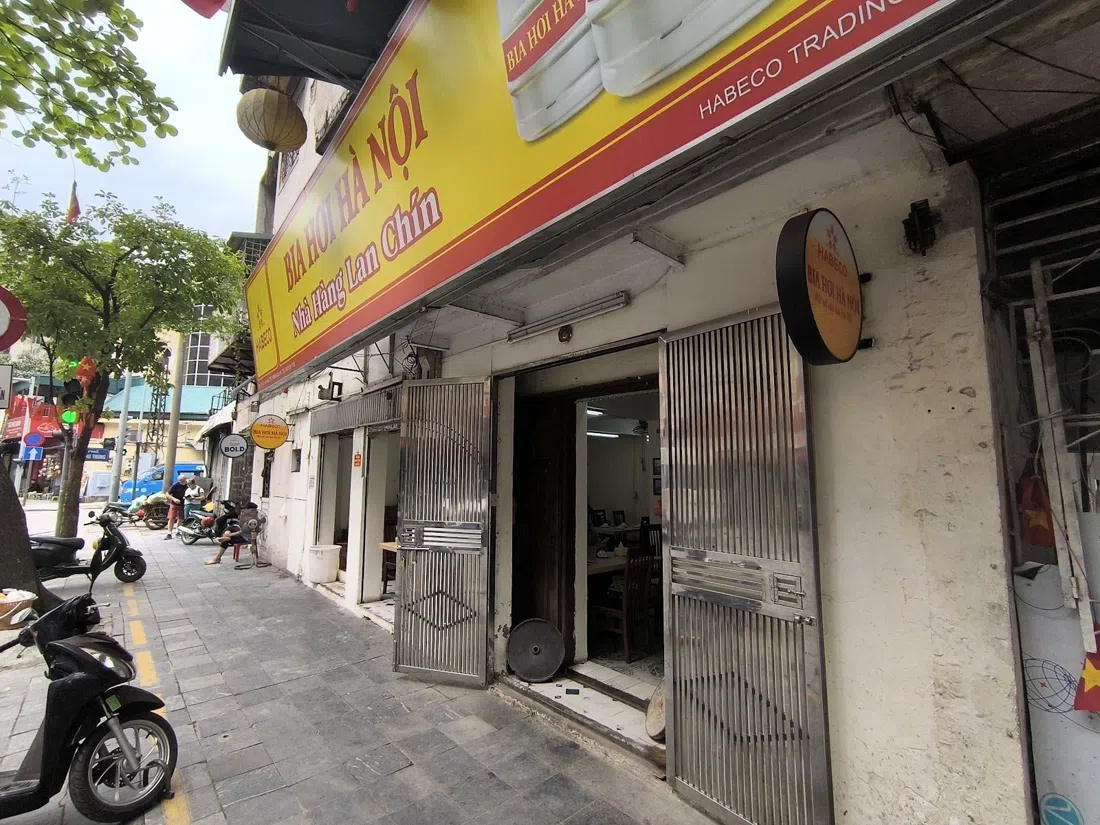
Bia Hoi Lan Chin, a named operator with decades behind it rather than an anonymous corner, runs large tables and a full Vietnamese menu alongside its bia hoi taps, which makes it an easy sit-down stop for a group that wants food as much as beer. Pricing tracks the same bia hoi range for the drink itself, with shared plates pushing the total to roughly $5–10 a head — still a fraction of what a comparable meal costs almost anywhere else, but with an actual kitchen sending out food rather than a snack cart.
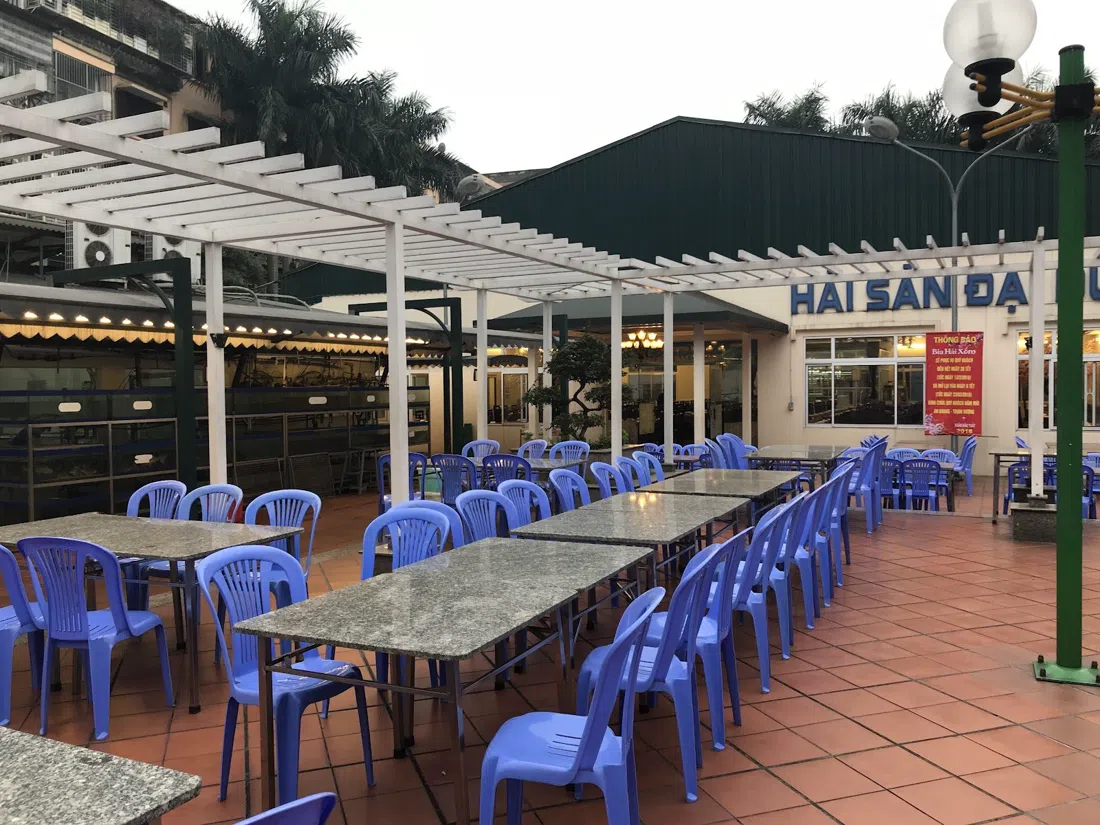
Bia Hoi Hai Xom is a genuinely local chain — not a tourist-branded imitation — spread across several branches, and it leans hard into loud, big-table, big-group energy. The beer is priced at standard bia hoi rates and the reason to come is the grilled-snack menu, which runs from 20,000–60,000 VND and stretches well past the usual peanuts-and-crisps offering into chicken hearts, dried squid, and fried tofu. It's the pick for a group that wants bia hoi's economics with a menu that actually holds attention between rounds.
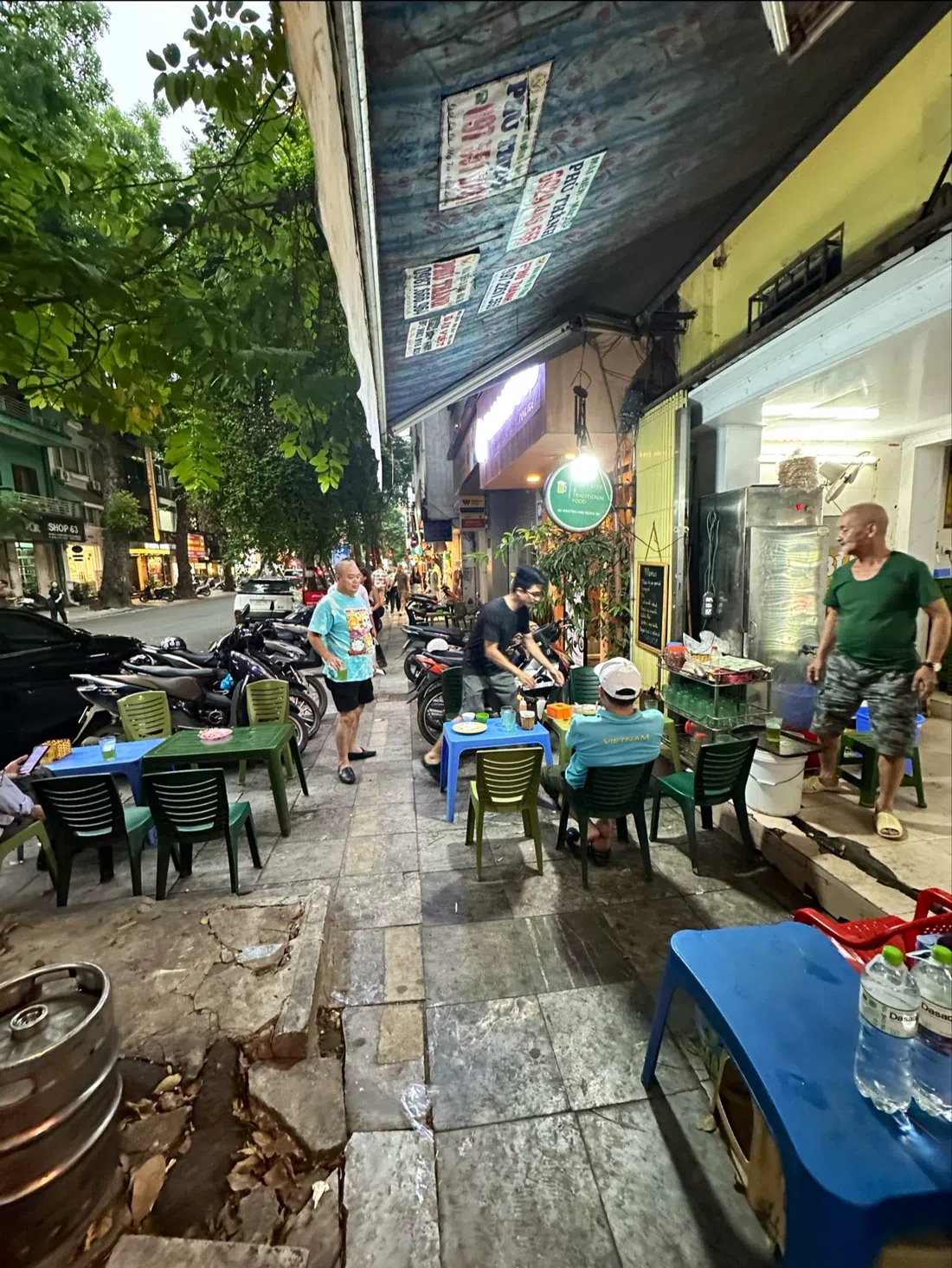
HaNoi Draftbeer & Traditional Food sits at the smaller, quieter end of this category — sit-down tables that suit four to eight people better than a large party, at prices in line with other Old Quarter bia hoi spots, but with a kitchen turning out genuinely good home cooking rather than the tourist snack plates that show up elsewhere. It has a family-run feel that Ta Hien, by its nature, can't offer, and it's worth choosing on a night when the point is the meal as much as the beer.
Where the Ritual Went Next: Hanoi's Craft Answer
Bia hoi's influence didn't stop at its own corners. A newer generation of taprooms has taken the same underlying idea — beer meant to be drunk fresh, in the open, standing or crowded around shared tables rather than seated at careful distance — and rebuilt it with independent recipes and modern equipment. None of these are bia hoi in the technical sense, but they're the clearest evidence of what the tradition set in motion.
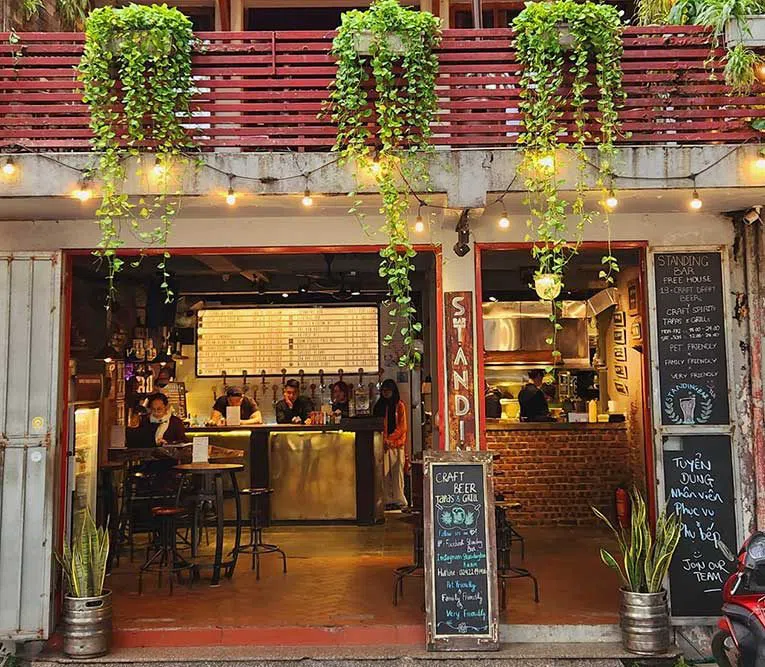
Standing Bar, positioned near one of the city's lakes, is built explicitly for groups: a taproom format with shared tables and a mixed expat-and-local crowd that treats the space as somewhere to gather rather than pass through. Expect 60,000–150,000 VND ($2.40–6) a glass — several times bia hoi prices, but still modest by international standards — for beer poured with more technical care and a lake view bia hoi's street corners don't offer.
Furbrew has been running since 2016, which makes it Hanoi's first independent craft brewery and the natural stop for a reader who wants to taste where fresh-beer culture went after the Soviet-era kegs. It's a small, casual taproom, better suited to a group of four to eight than a large party, with pours in the 70,000–130,000 VND range.

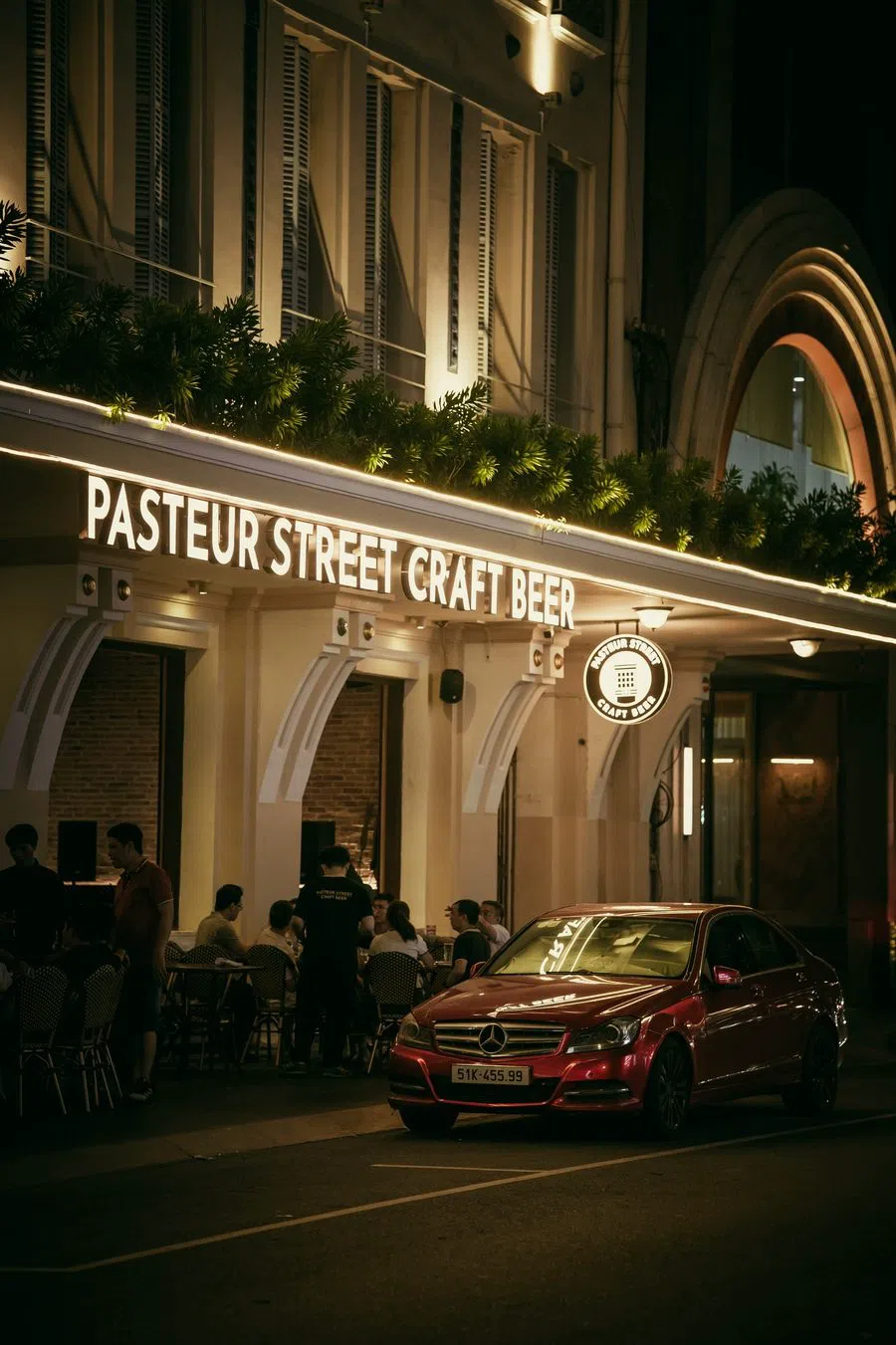
Pasteur Street Brewing Co., at its Cua Bac taproom, is the polished counterpoint to everything above: full restaurant service, easy booking for larger groups, and a menu of food alongside the beer at $3–7 a pour. It's Vietnam's best-known craft brand by some distance, and while it runs three locations in Hanoi under the same operator, Cua Bac is the one worth building an evening around rather than treating as a stop on the way somewhere else.
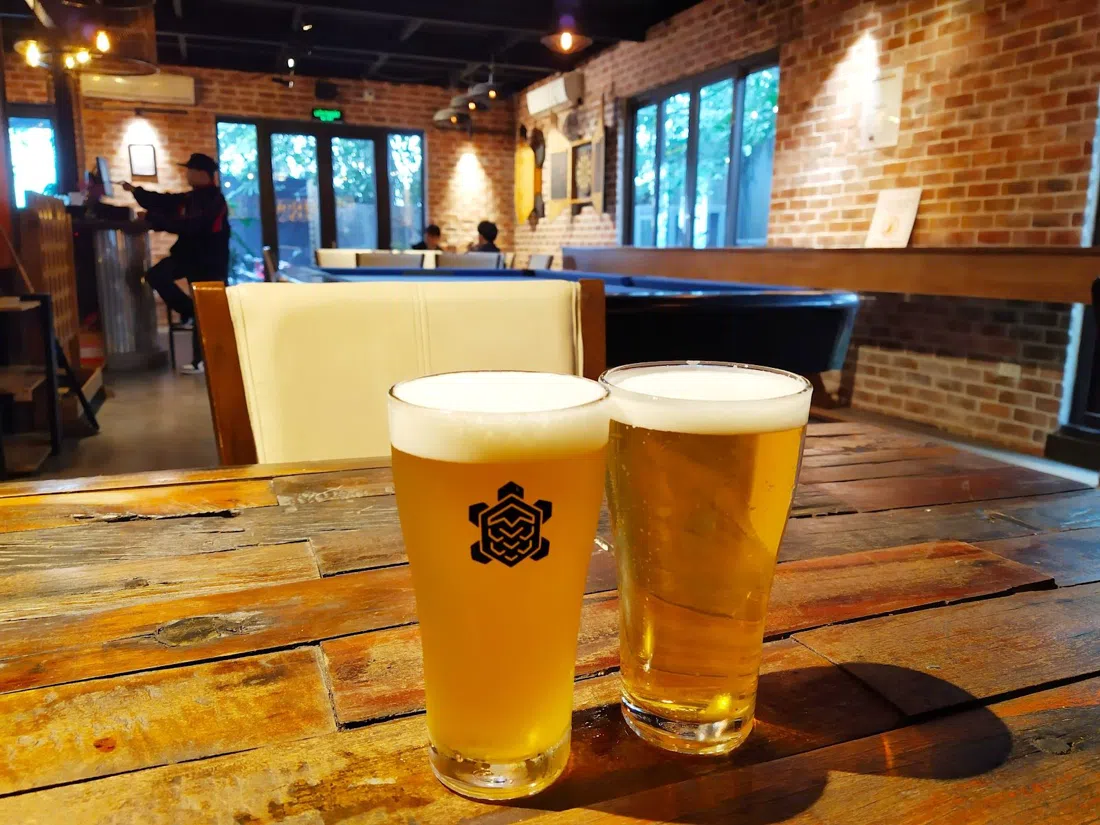
Turtle Lake Brewing has the biggest footprint of anything on this list — a proper beer garden with lakeside outdoor seating and pub games, priced at roughly $3–6 a pour. It's the easiest venue here to bring a large group to without a booking fight, and the most spatially dramatic beer venue the city has, which makes it a reasonable place to end a day that started on a bia hoi stool a few kilometres away.
The Quiet Closing Stop
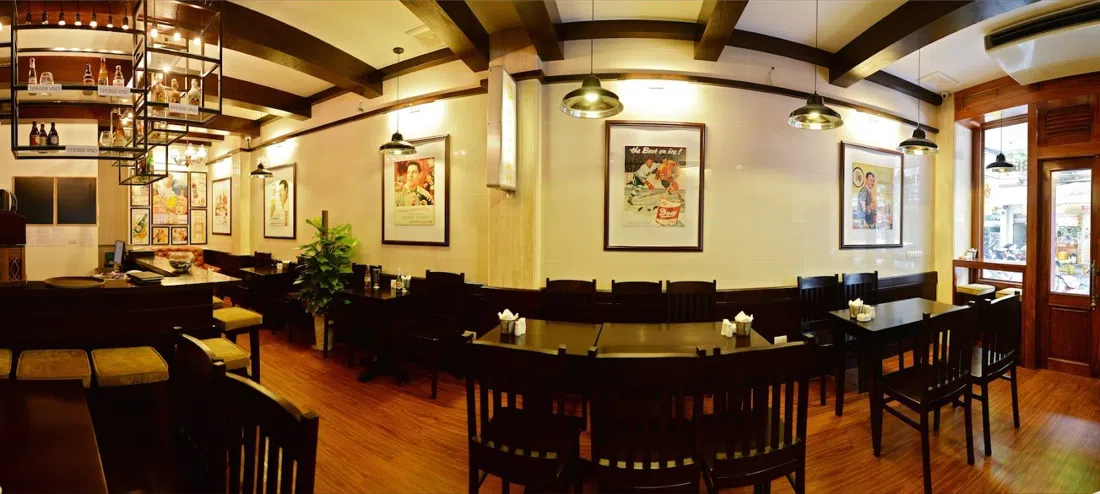
After a few hours moving between stools and shared tables, not every group wants a fifth loud room. New Gentry Beerhouse sits in the same Old Quarter neighbourhood as the street corners but runs at a deliberately calmer pace — cosy rather than cavernous, with a wide beer list that suits two or three people who've had enough of pulling extra stools together and want a proper seat for the last drink of the night. It's mid-range on price and it doesn't try to compete with Ta Hien's volume, which is exactly why it works as a closer.
Getting There, Paying, and Timing It Right
The Old Quarter corners — Bia Hoi Junction, Bat Dan, Lan Chin, Hai Xom, HaNoi Draftbeer — are all walkable from each other and from most central accommodation, so there's little reason to take transport between them; a Grab or taxi only becomes useful once you're heading out to the lake-side craft venues like Standing Bar or Turtle Lake Brewing, both a short ride from the centre. Cash is still the default at street corners — small denominations of Vietnamese dong, since nobody at a bia hoi stall is running a card machine — while the craft taprooms generally accept cards.
Timing shapes the experience more than venue choice does: bia hoi corners fill from around 6pm and peak between 7 and 9pm, when the stools are packed and the kegs are flowing fastest; arrive much later and the best-known spots start thinning out. A night built entirely around bia hoi corners and restaurants can run to a few dollars a head including food; add one or two craft stops and a reasonable evening still stays under $20–25 per person. For anyone building a longer stay around this kind of evening, a Hanoi hotel search based in or near the Old Quarter puts almost every corner in this piece within walking distance, and the wider Hanoi guide covers what to do with the rest of the day before the stools come out.