
By the time the sun has properly cleared the rooftops around Hoan Kiem Lake, Hanoi has already lived through its best two hours. The fishmongers at Long Bien have sold most of what they unloaded in the dark, the tai chi groups on the lake's eastern path have folded their fans and gone home for breakfast, and the pho stalls that never really stopped simmering are onto their second pot of broth. This is the version of the city that vanishes the moment the motorbikes take the streets back — and it is available to anyone willing to set an alarm for five.
Hoan Kiem Lake Before the City Notices You
Hoan Kiem is the pivot the whole morning turns around, and it earns that role by doing almost nothing dramatic. Between about 5:15 and 6:30am the paved loop around the water fills with small, self-organised clusters: tai chi practitioners moving through slow forms near the water's edge, badminton pairs batting a shuttlecock across an invisible net with no posts to hold it, groups of women doing aerobics to a speaker propped on a bicycle seat, tinny and slightly too loud. Nobody is performing for a visitor. It is a neighbourhood routine that happens to be visible, and the honest way to watch it is from a bench with a coffee rather than a camera pushed into anyone's circle. The lake itself needs no entry fee and no booking — you simply arrive, and the earlier you arrive, the more of it is still just for the people who live around it. Ngoc Son Temple and the red curve of The Huc Bridge are part of the same walk if you're circling the water anyway, but the draw at this hour is the ritual on the pavement, not the postcard.
The Markets Have Already Finished Their Real Work
Hanoi's wholesale markets run on a clock that has nothing to do with tourism, which is exactly why they're worth seeing — the produce moves whether or not anyone is watching.
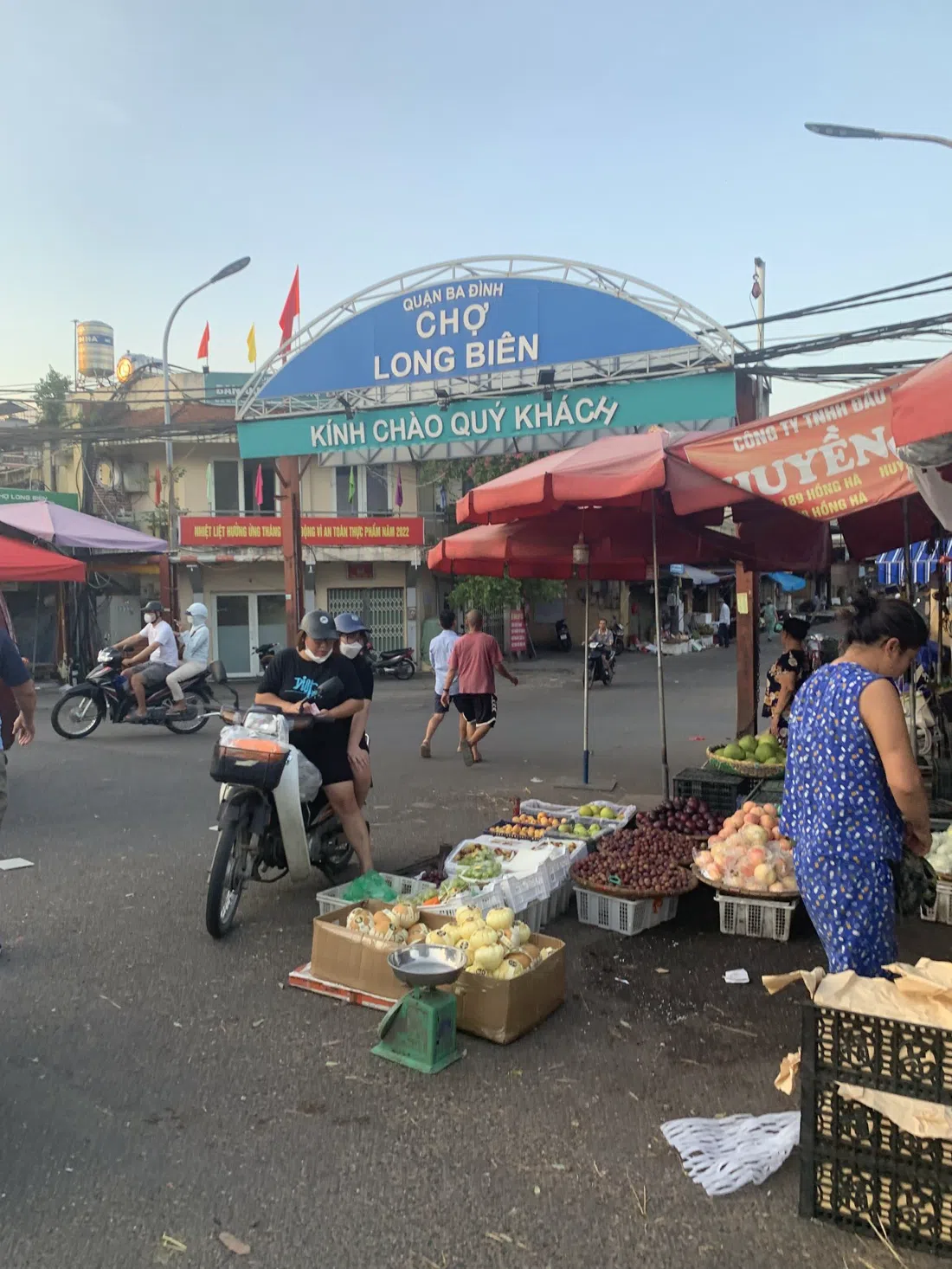
Long Bien Market (near Long Bien Bridge, north edge of the Old Quarter) is the rawest version of this: peak trade runs from about 2 to 4am, so by 5am you are catching the tail end — porters clearing crates, the last boats of fruit and vegetables being weighed and paid for, the floor being hosed down. There are no formal tours here, and that's the point; it's a working space, not an attraction, so go with a local guide, keep your group small, and stay out of the way of anyone carrying something heavy. It bridges neatly into the rest of the morning too, since trade is tapering out just as the tai chi crowd is gathering at Hoan Kiem twenty minutes' walk south.
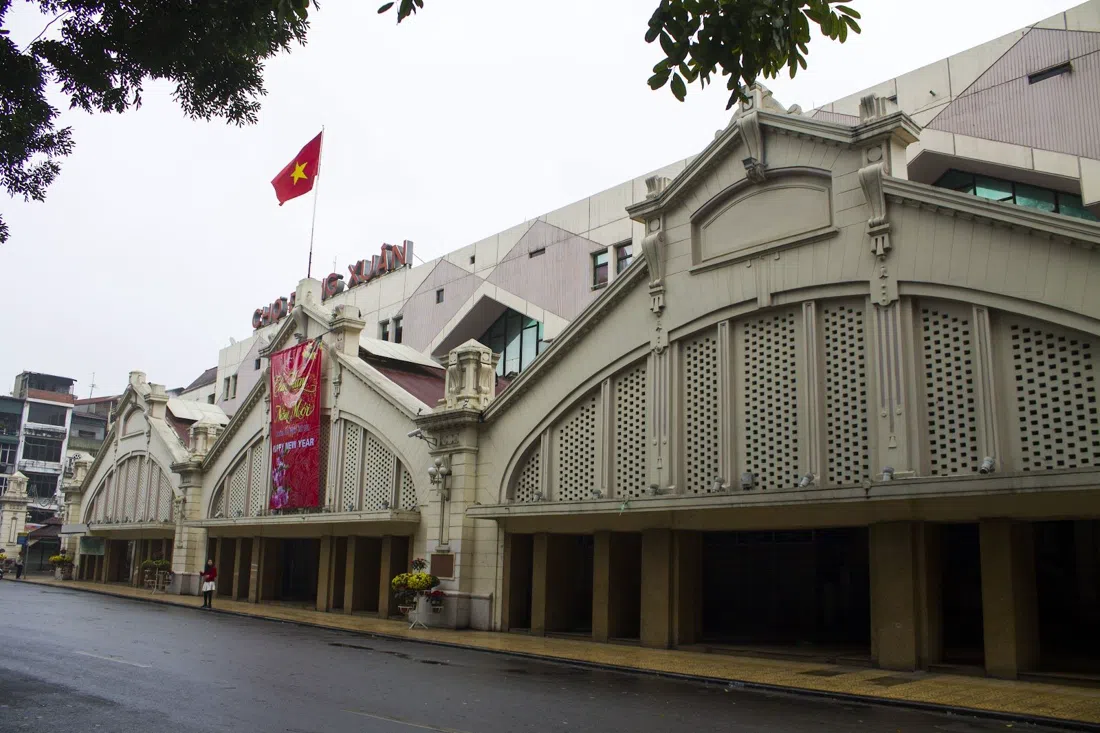
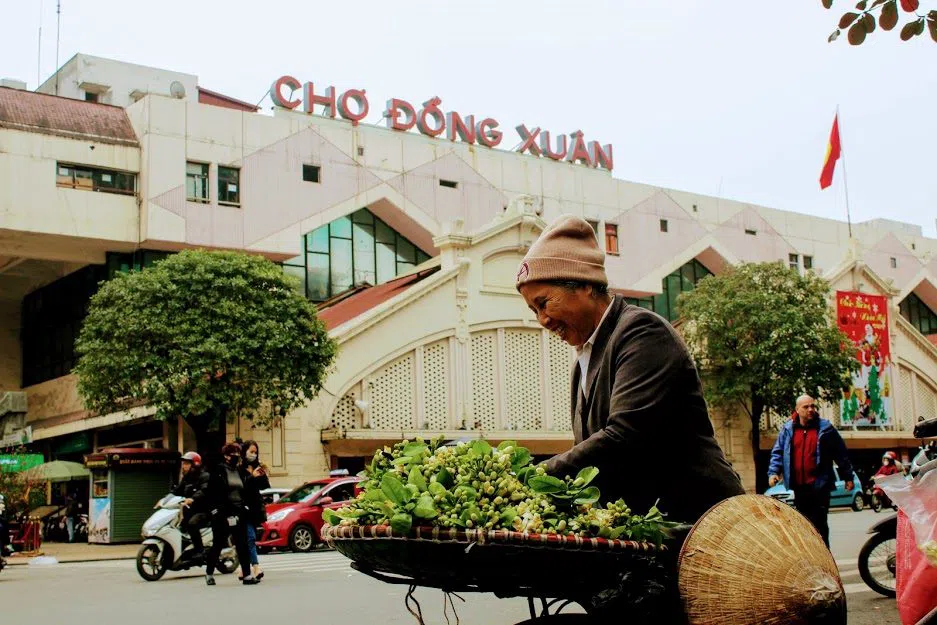
Dong Xuan Market (Dong Xuan Street, Old Quarter) is the more accessible counterpart — a large, formal wholesale building where vendors start receiving stock as early as 4am, so a 5:30 or 6am visit still catches genuine unloading rather than a market already mid-morning and settled. It's free to browse, open to groups of any size, and a guide earns their keep here by explaining what you're actually looking at: which floor handles textiles, which handles fresh produce, and why certain stalls have been run by the same families for decades.
Hang Be Market (Hang Be Street, Old Quarter) is smaller and more local again — the market Hanoians themselves cross town for rather than the one aimed at anyone passing through. It sits inside the Old Quarter's street grid rather than in a dedicated building, which makes it an easy, low-commitment add-on if you're already walking between Dong Xuan and the pho stalls further south. Free to browse, fine for a small group, best appreciated with someone who can translate what's being sold and why the prices move by the hour.
Three Bowls Before the Rest of Hanoi Wakes Up
Breakfast in Hanoi is not a leisurely affair for the people actually eating it, and the best dawn stalls reward the same brisk approach: sit, order, eat, make room for the next person on the stool.
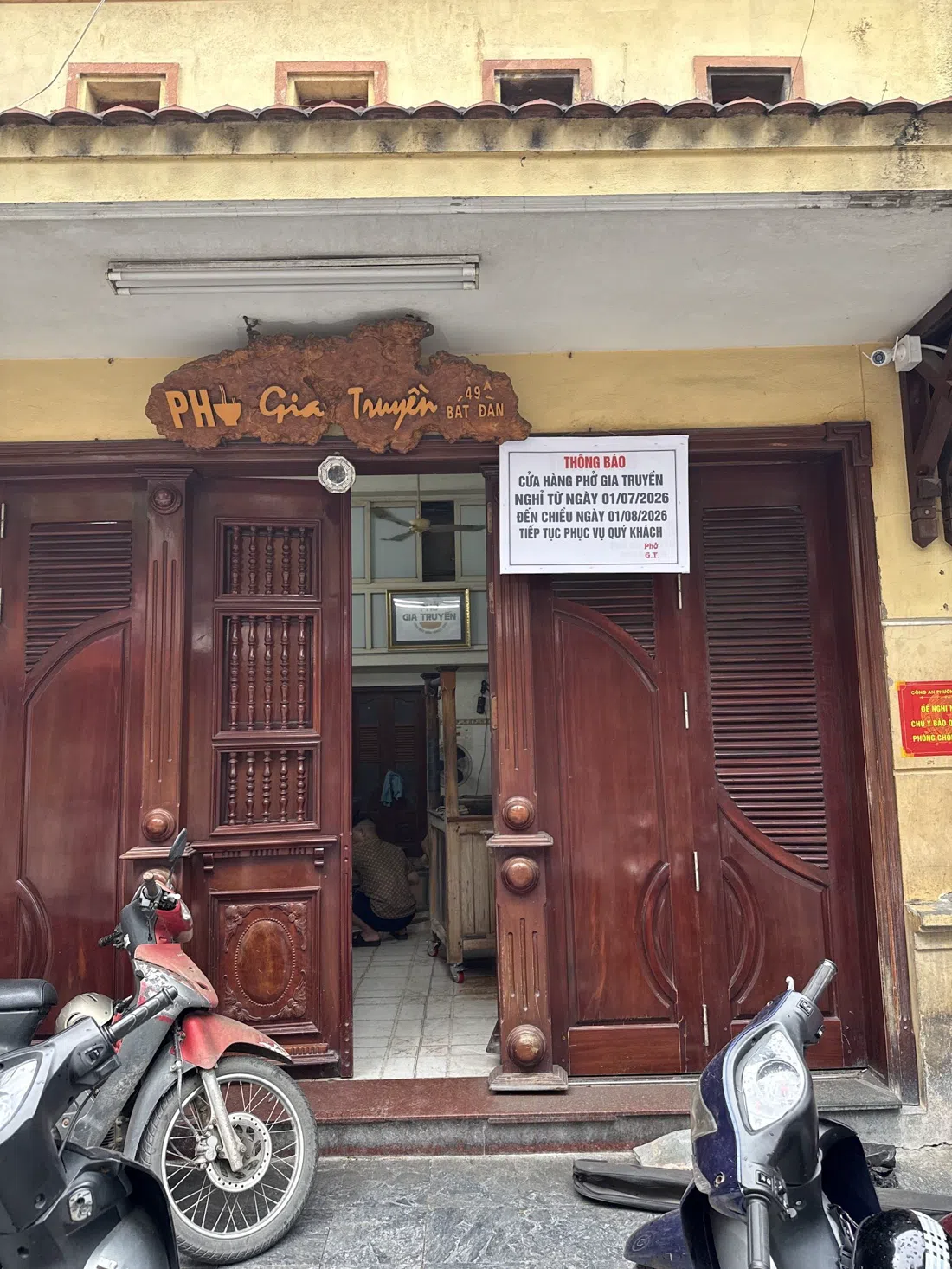
Pho Gia Truyen (49 Bat Dan, Old Quarter) is the stall the whole "three generations at dawn" idea traces back to. It's a Michelin Bib Gourmand pick, family-run since the mid-20th century, open only 6–10am and again 6–8:30pm — there is no lunch service, no all-day version of this pho. Seating is a scatter of low plastic stools on the pavement, room for maybe twenty people at once, and there is no accommodating a group: parties of four or more should plan to split up, eat in shifts, or simply accept the wait. A bowl runs 50,000–70,000 VND (roughly $2–3). Go early in the window rather than late — by 9am the queue outside can be longer than the eating itself.
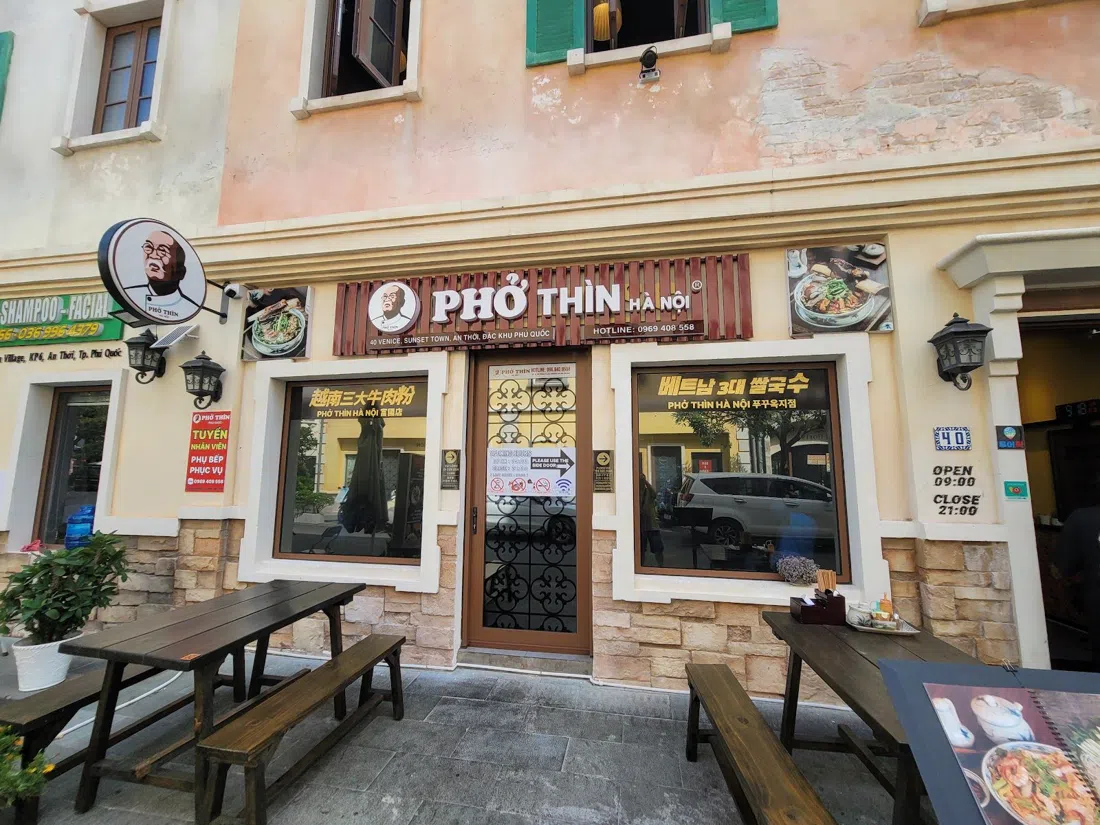
Pho Thin (13 Lo Duc, south of the Old Quarter) is the other essential stop, founded in 1979 by Nguyen Trong Thin and still turning out a version of pho built on stir-fried beef and heavy garlic rather than the purer broth at Gia Truyen — the two are genuinely different styles, not competing versions of the same bowl, which is the argument for doing both if your morning allows it. Tables are narrow and packed close, so this is realistically a stop for pairs or solo travellers rather than a group outing. Expect to pay 60,000–80,000 VND.
Banh Cuon Ba Hoanh (Old Quarter) covers the other essential dawn dish — steamed rice-flour rolls in the Thanh Tri style, Michelin-Selected in their own right, filled with minced pork and wood-ear mushroom and served with a light fish-sauce dip. It's a proper stall, not a restaurant, with casual bench seating that handles two to four people comfortably, though it gets genuinely busy at the peak of the breakfast hour, around 7am. A plate is 40,000–60,000 VND, and pairing it with a bowl of pho elsewhere on the same morning is a completely normal way to eat in Hanoi, not excess.
Xoi Yen (Old Quarter, a few doors from Cafe Giang) is the sticky rice option, open from 6am, with fillings from shredded chicken to Chinese sausage to a fried egg pressed into the xoi. It's walk-in only, no booking, and loose enough with seating — a scattered mix of stools and small tables — that a group of six to eight can generally find room, even if not all together. Expect 30,000–50,000 VND a portion.
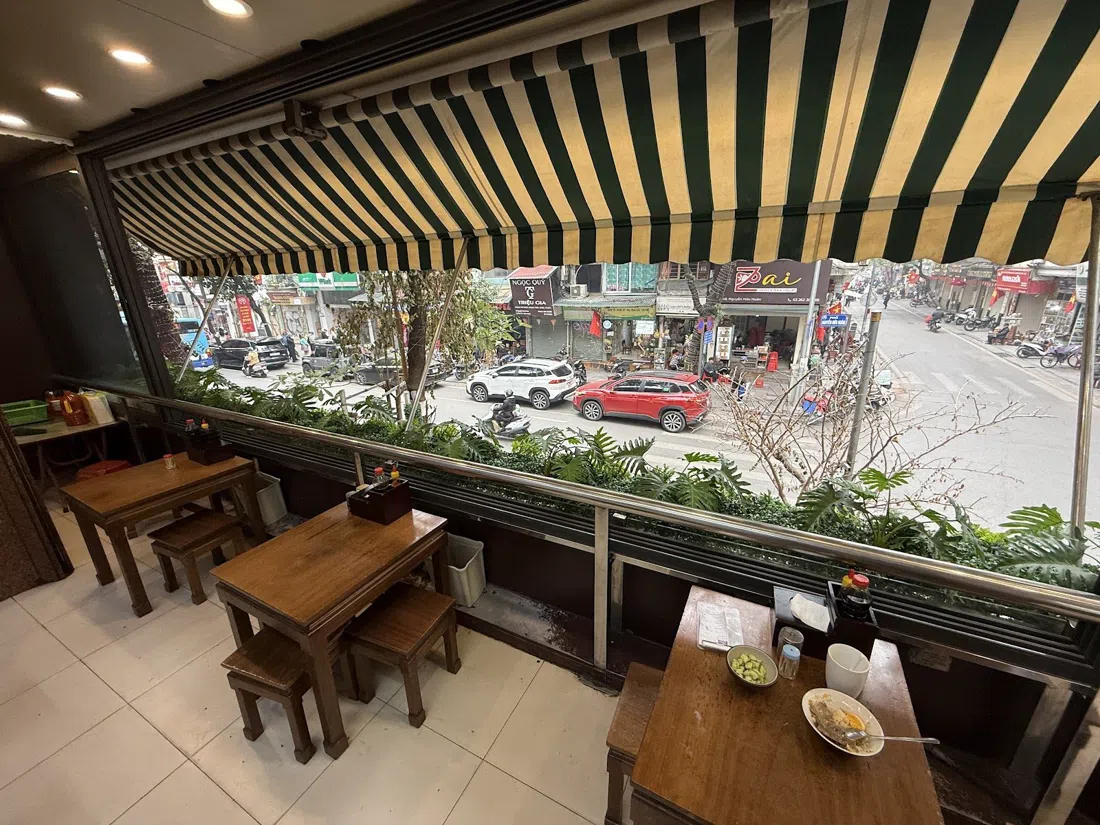
Cafe Giang (Old Quarter, near Xoi Yen) is the natural last stop, since it doesn't open until 7am — by which point you've already covered the lake, at least one market, and breakfast. This is the birthplace of ca phe trung, egg coffee, invented here in 1946 during a condensed-milk shortage and still made to the same method: whipped egg yolk and sugar folded over hot black coffee. The space is narrow, with stairs and tight tables, so it suits two to four people rather than a larger group trying to sit together. A cup is 25,000–40,000 VND.

The Old Quarter's Quarter-Hour of Silence
Old Quarter Dawn Streets — specifically the stretch around Hang Bac and Ta Hien — is the direct answer to what most people picture when they imagine Hanoi at 5am: narrow lanes with their shutters still down, no motorbike horns, no beer-street crowd, just the occasional broom sweeping the previous night off the pavement. It needs no booking and suits any group size because it isn't a venue at all, just a self-guided walk, and it rewards going slowly rather than covering ground. The window that matters is 5:30–6:30am — after that, shutters start rising and the street reclaims its usual noise.
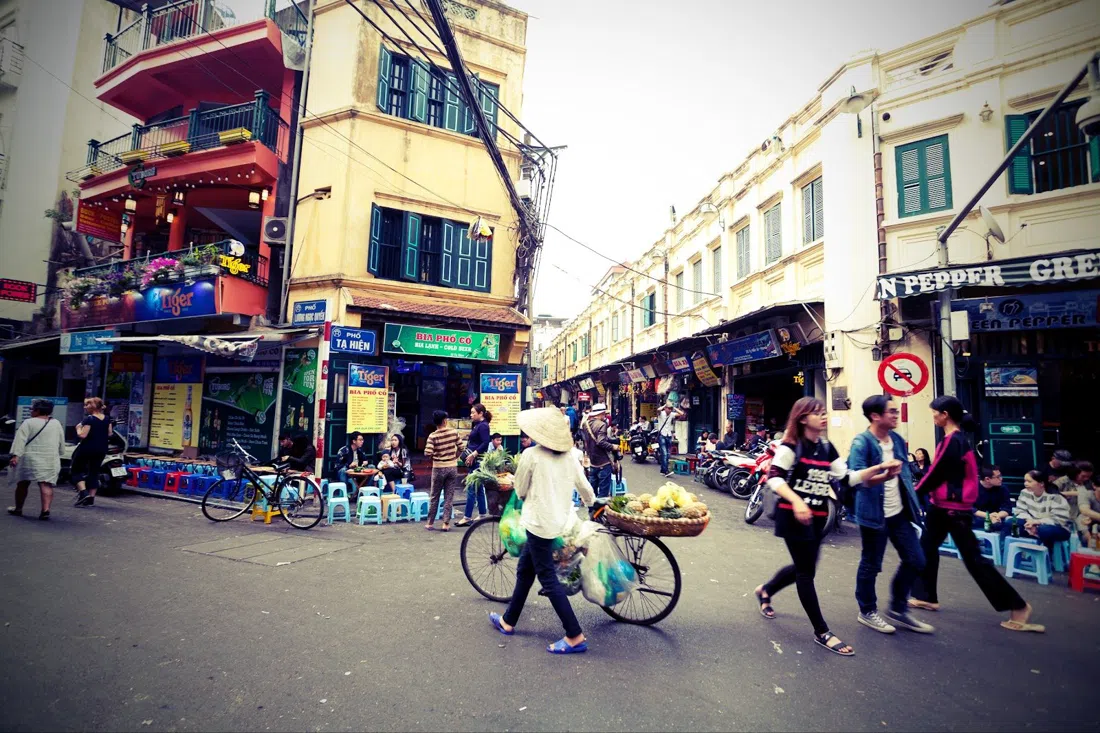
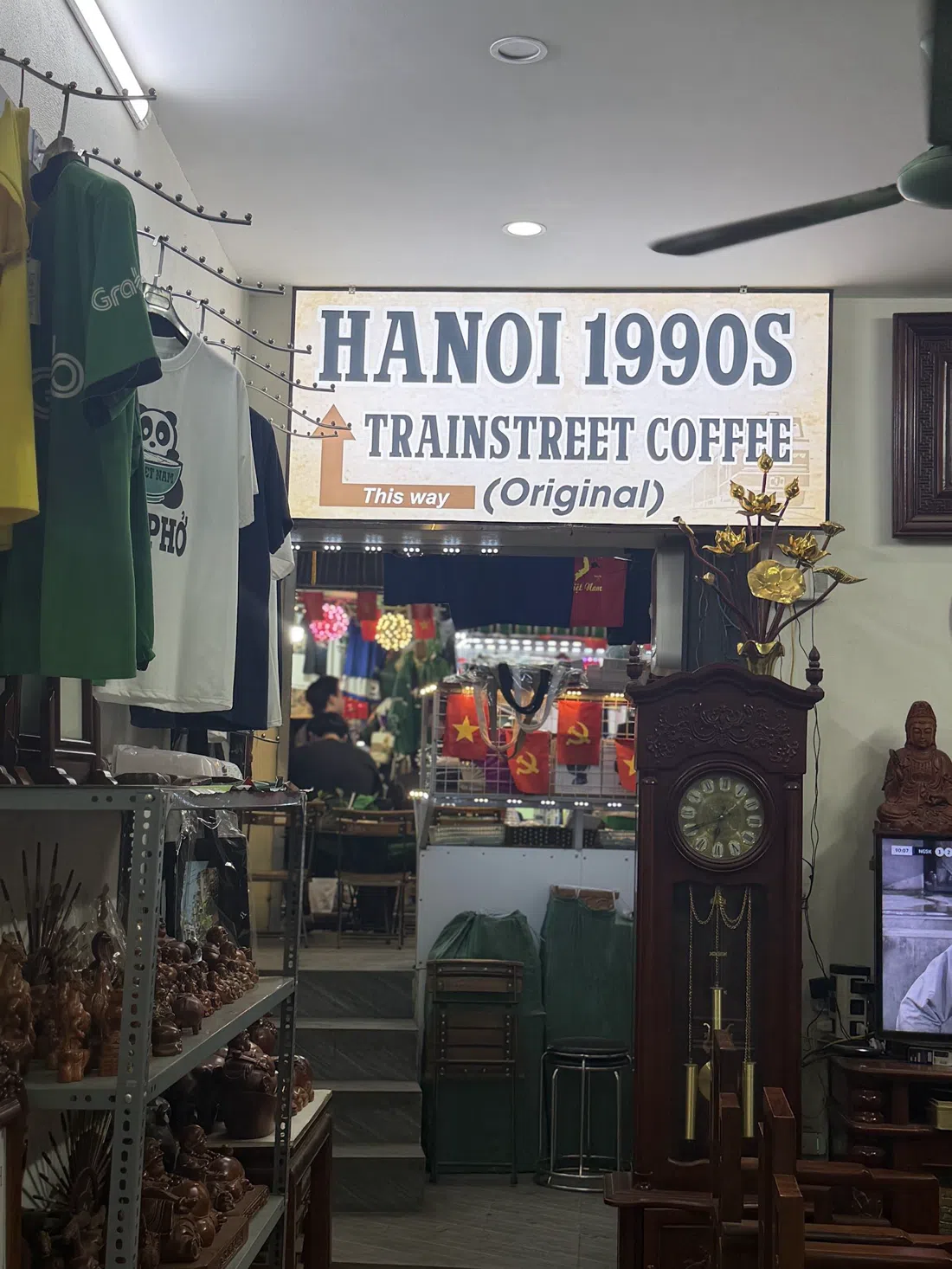
Hanoi Train Street, on the Le Duan section, is worth a slight detour for the photograph alone rather than any promise of a train. This stretch is open access, fine for small groups, and distinct from the Phung Hung section, which is gated and requires buying a drink at one of the cafés lining the tracks to sit and watch. Be honest with yourself about the odds: morning train timings on this line are unreliable, and the route through the city has faced rerouting discussions that may well have changed the picture again by the time you're reading this in 2026 — so treat it as a quiet-street diversion, not a scheduled event.
West Lake, for Anyone Who Wants More Room
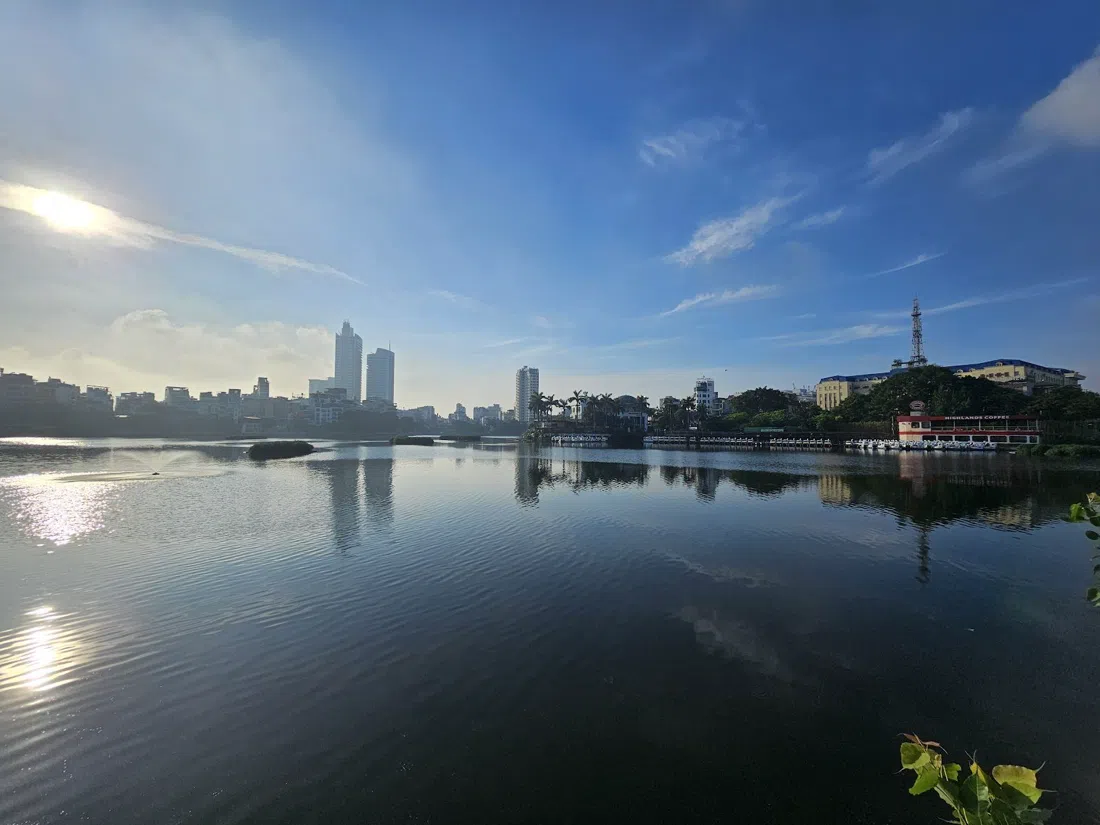
West Lake (Ho Tay), the largest body of water in the city, is the counterpoint to Hoan Kiem rather than a replacement for it — bigger, quieter, and less concentrated with any single ritual. It's fully open, free, and welcomes any group size with no booking required, and the same 5:30–6:30am window that works for Hoan Kiem and the Old Quarter applies here too, before the ring road around it fills with traffic. If Hoan Kiem is Hanoi's dawn stage, West Lake is its dawn walk — joggers, a scatter of anglers, the odd fisherman with a net rather than a rod, and enough shoreline that you're rarely sharing a view with more than a handful of other early risers.
If You'd Rather Have Someone Explain It
Doing this morning alone is entirely possible — nothing above requires a reservation except a working alarm clock. But the market stalls and stall culture can be genuinely opaque to a first-time visitor who doesn't speak Vietnamese and isn't sure which pho is worth the wait. A Taste of Hanoi's Morning Food Walking Tour is built specifically for this hour, with small-group and private options and English-speaking guides who can move you through the Old Quarter's stalls and markets with context attached to each stop — why this pho differs from that one, what's actually being traded at the market stalls, which shortcuts avoid the tourist-facing version of a dish. It runs $35–50 per person, and it's the one guided option worth factoring in if the idea of navigating dawn Hanoi cold feels like more logistics than you want on a holiday morning.
Getting Up For It: The Practical Part
Timing. The whole loop above — lake, one market, two or three food stops, maybe a stretch of Old Quarter walking — comfortably fits between 5am and 8am. Set the alarm for 5, be walking by 5:20, and you'll catch the lake at its fullest and the markets still winding down rather than finished. By 8am the city has switched over: shops are raising shutters, traffic is building, and the specific quiet you came out for is gone.
Transport. At this hour, walking is genuinely the best way to move if you're staying anywhere near the Old Quarter or the lake — the streets are empty enough to cross without the usual negotiation with motorbike traffic. For anything further, like reaching Long Bien Market or West Lake from a hotel further out, a Grab (the regional ride-hailing app) or a metered taxi is more reliable than trying to flag anything down; drivers are scarce before 5:30am, so book a few minutes ahead rather than assuming you'll find one on the street.
Cash. Every stall in this guide — the pho, the banh cuon, the xoi, the egg coffee — runs on cash, and small notes matter, since a 50,000 VND note for a 30,000 VND bowl at 6am can genuinely stall a queue while someone hunts for change. Withdraw VND the day before; card readers and QR pay are common in Hanoi generally but not at pavement stalls.
Budget. A full dawn breakfast crawl — pho, a xoi or banh cuon stop, and an egg coffee to finish — runs somewhere around 150,000–250,000 VND per person (roughly $6–10), before you've spent anything on transport. The guided food tour is the bigger single spend at $35–50 per person but bundles several of these stops with commentary attached.
Where to base yourself. The single biggest factor in whether this morning actually happens is how far you are from Hoan Kiem when the alarm goes off — anyone staying twenty minutes away by taxi is far more likely to hit snooze. If you're planning the trip around mornings like this one, it's worth booking somewhere inside or immediately bordering the Old Quarter; start with a Hanoi hotel search filtered to that area before you lock in dates. For the rest of what the city offers once the sun is properly up, the full Hanoi guide covers it.