The Hanoi issue
Hanoi in September When the Storms Set the Itinerary
September has low rates and cooling air, and it still catches the tail ends of Gulf of Tonkin storms. Here is how to build a Hanoi week that survives a washed-out afternoon.

By Rui MarquesTwo unhurried days, not nine temples
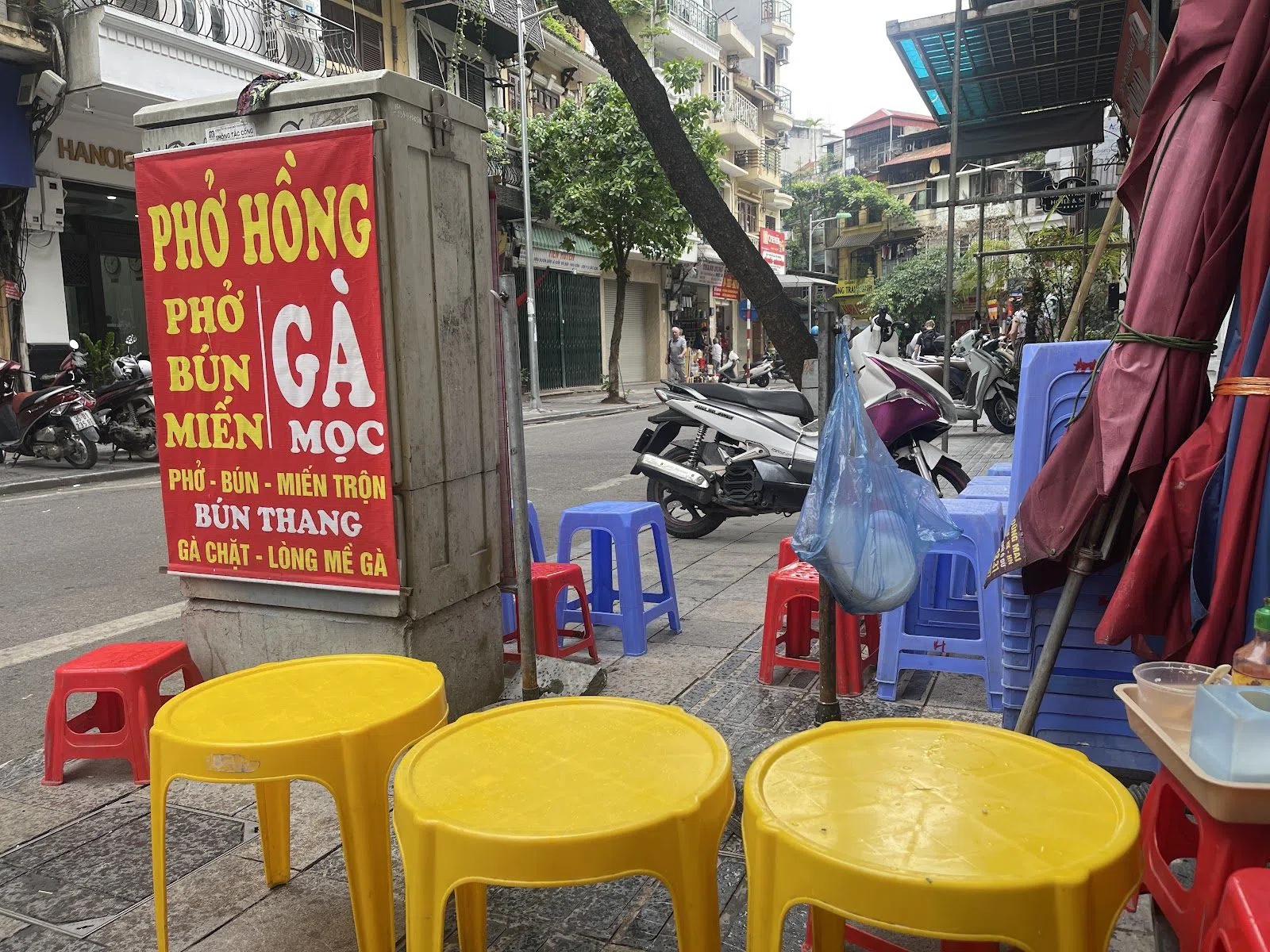
Rain in Hanoi in September rarely takes the whole day. A squall builds over the Red River, the Old Quarter runs ankle-deep for forty minutes, and then the light comes back and the pavement steams while a woman rethreads her flower baskets onto a bicycle. Plan around that rhythm instead of against it and September becomes one of the more forgiving months here. The heat has come off its June edge, rooms are cheap, and the season's young green rice is on every second stall.
What the month actually does
September sits at the end of Hanoi's wet season and the start of its short, genuinely pleasant autumn. Expect daytime highs around 31–32°C, nights near 25°C, humidity that never fully lets go, and somewhere in the region of 240–260mm of rain spread across roughly half the days of the month. That last number is the one people misread. The rain arrives as a handful of violent hours attached to otherwise usable days rather than as drizzle spread evenly through them.
The storm half of the equation is real and worth respecting. The Gulf of Tonkin takes tropical storms from June through November, with the heaviest activity August to October. Hanoi is 100km inland, so what reaches the city is usually the weakened tail (sustained heavy rain, gusty wind, and drainage that gives up in the older streets) rather than a coastal hit. The coast is a different proposition, which matters if you have a boat booked, and I come back to that at the end.
Two dates shape the calendar. National Day on 2 September is a public holiday, and the days either side of it are the busiest domestic travel window of the month: trains sell out, central hotels fill, and the streets around Ba Đình are managed for ceremony. Late September brings Mid-Autumn, and in the fortnight before it Hàng Mã in the Old Quarter fills end to end with lanterns and star-shaped frames, which is the best free hour of the month if the sky holds.
Book a central room on a refundable rate; the Hanoi hotel search shows how far September prices sit below the November peak. Put the walking on the mornings, because storms here overwhelmingly favour the afternoon.
Plan your Hanoi trip
Live prices from our booking partners.
Free cancellation on many rooms. We may earn a commission when you book.
Bowls worth building a morning around
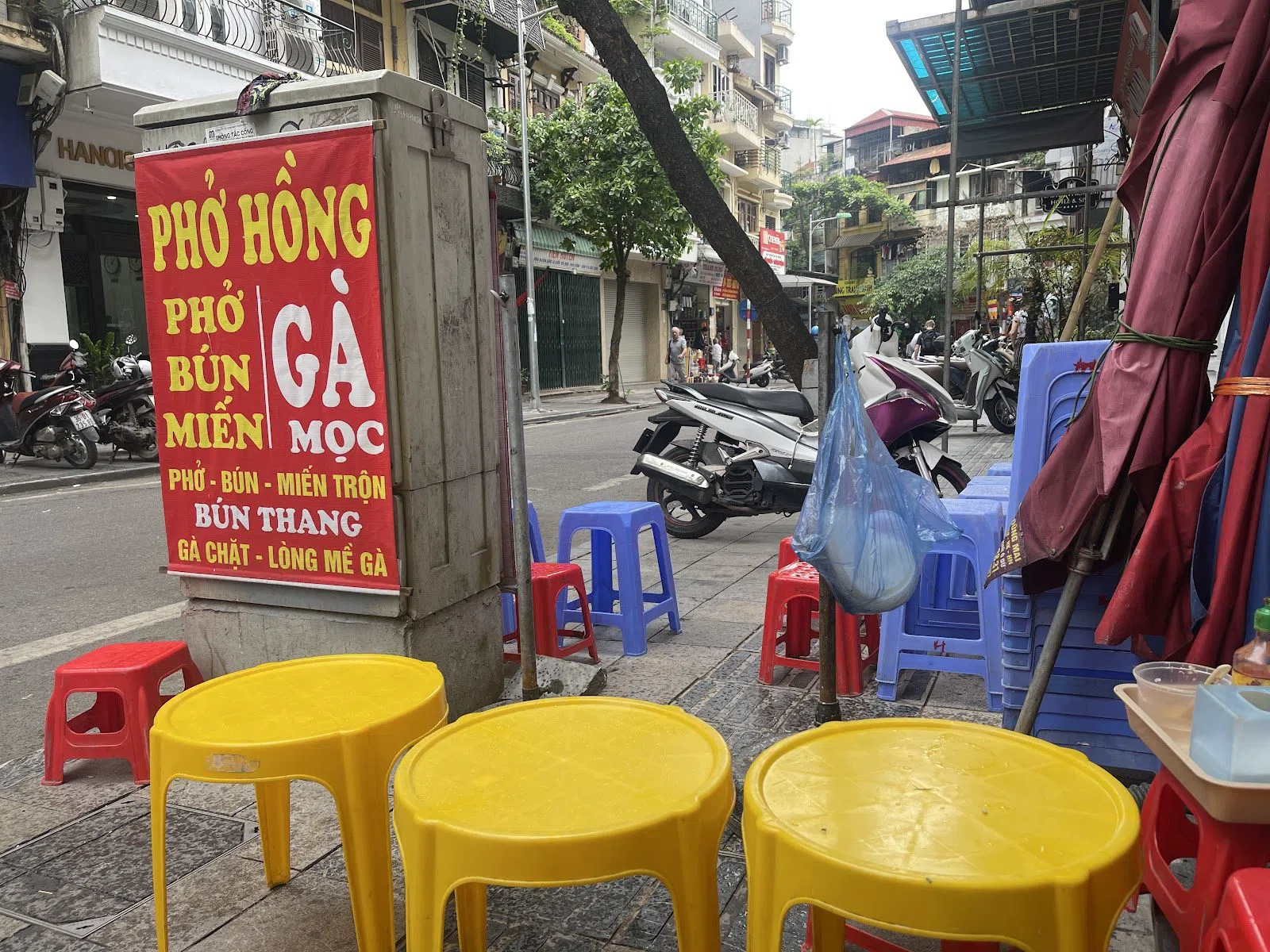
Phở Hà Hàng Hòm (Old Quarter) took a Bib Gourmand in the 2026 Michelin Guide and remains, at 50,000–90,000 VND (~$2–3.50) a bowl, the best-value hot food within walking distance of the lake when a squall traps you indoors. It is walk-in only, no reservations. Four to six people can eat if you split across tables; above that it becomes awkward for everyone including the staff. Go early, or take the 21:00–23:30 lull, and understand that the xôi gà, sticky rice with chicken, sells out well before closing.
Bún chả Hương Liên (Lê Văn Hưu, Hai Bà Trưng) has been unavoidably famous since the Obama–Bourdain meal in 2016, and the shrine to it is now part of the furniture. Ignore that and order the combo at 85,000–150,000 VND (~$3.50–6): charcoal-grilled pork, cold noodles, a bowl of sweet-sour dipping broth. Several floors and fast turnover mean groups of six to ten are handled without fuss, though there are no bookings and no lift, stairs only, which is worth knowing if anyone in your party can't manage them. The tour-group hour lands around noon; eat at 11:00 or after 13:30.
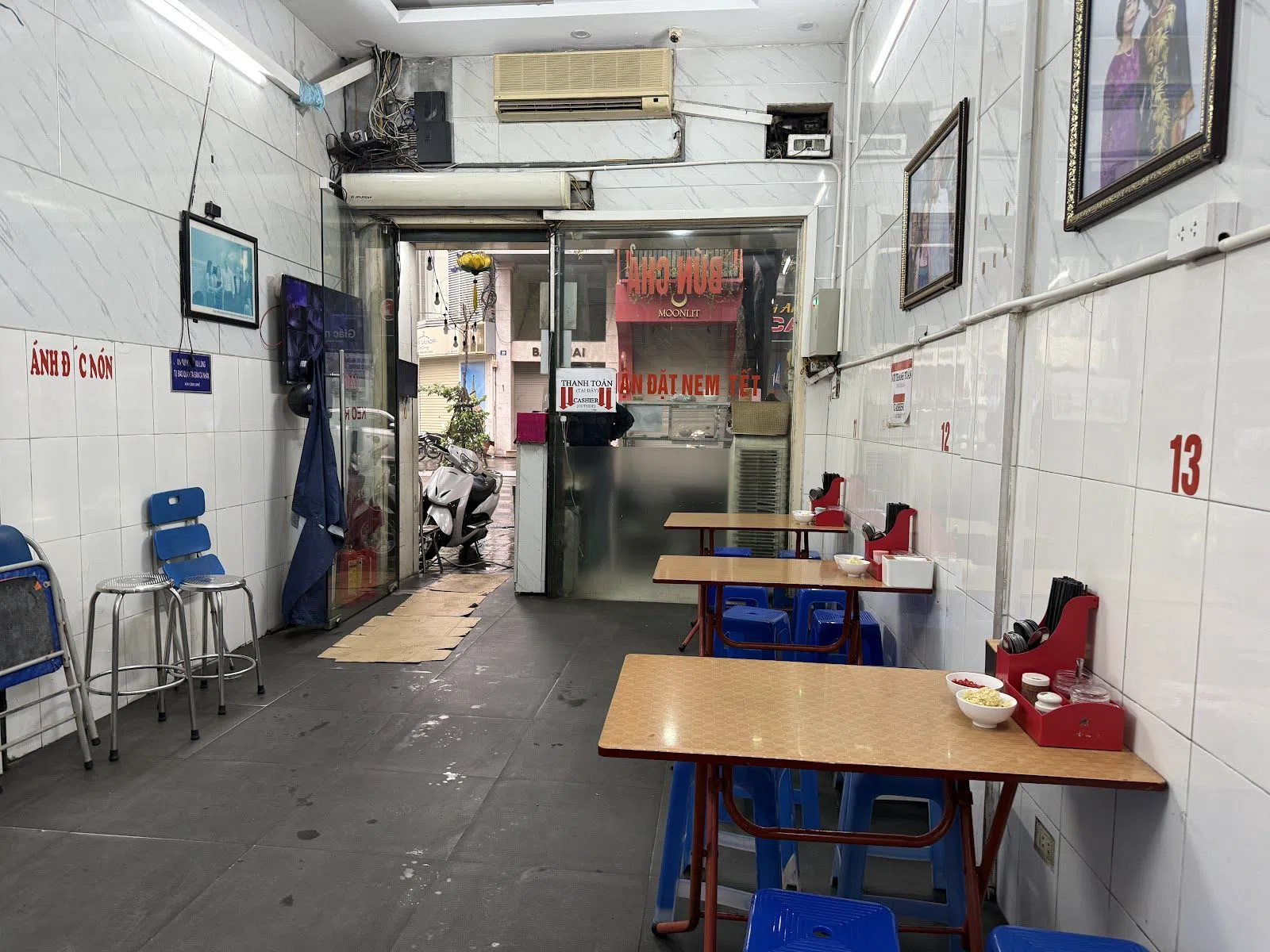
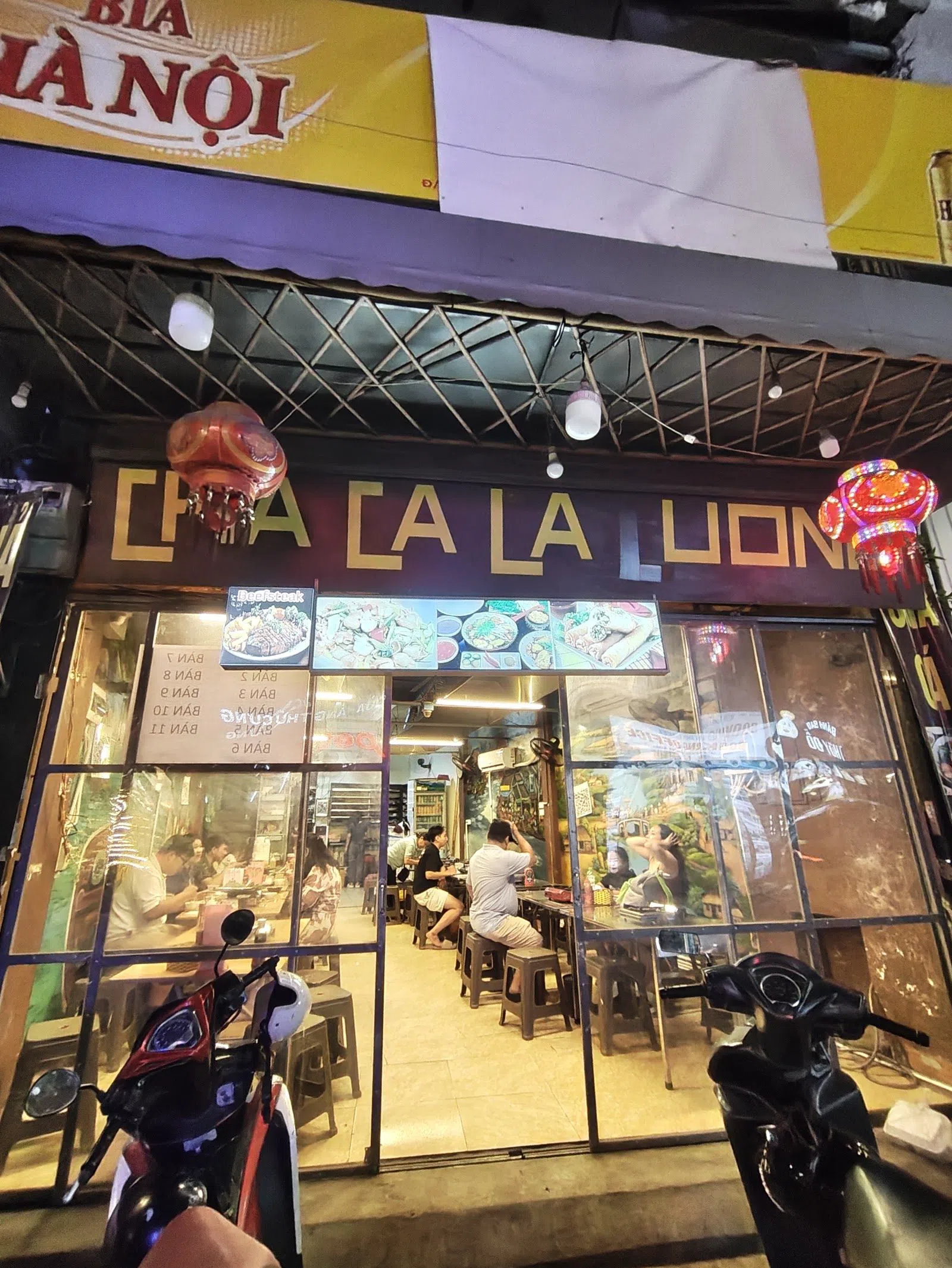
Chả Cá Thăng Long (Old Quarter) is the one to hold in reserve for a wet night. One dish, done for decades, another Bib Gourmand: turmeric-marinated fish finished at the table over a brazier with dill, spring onion and rice noodles, at 170,000–250,000 VND (~$7–10) a head. Because the cooking happens communally in front of you it is genuinely good for groups. Book ahead for six or more, and note that three branches sit on the same street, so overflow gets absorbed. On a night when the rain is coming sideways, a brazier on the table is reason enough to go.
Forty minutes and a small glass
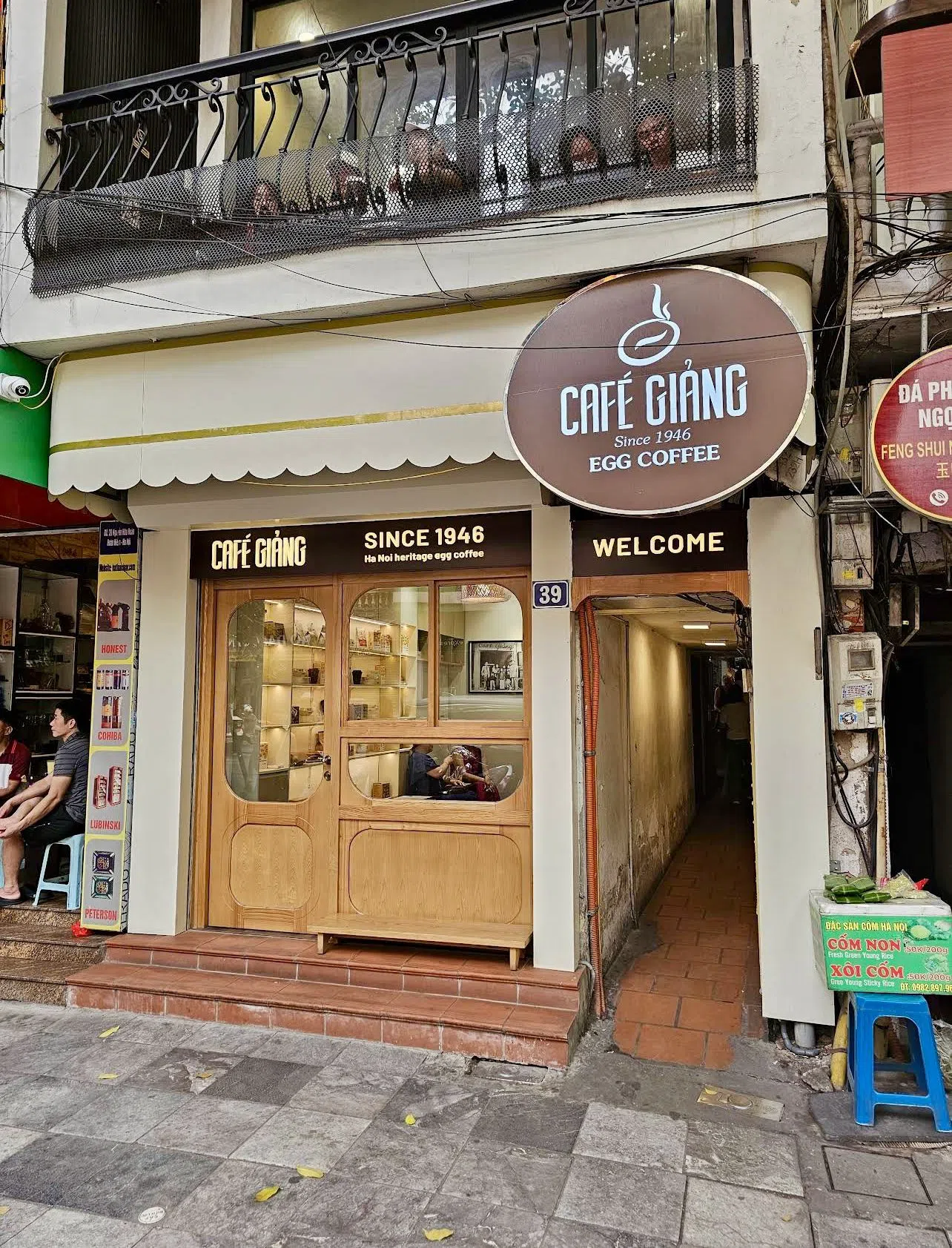
Cà Phê Giảng (Nguyễn Hữu Huân, Hoàn Kiếm) invented egg coffee in 1946, when milk was scarce and whipped egg yolk stood in for it, and the founder's son still runs it. A cup is 30,000–45,000 VND (~$1.20–1.80) and buys you the right to sit while a downpour empties itself over the Old Quarter. The trade-off is space: the mezzanine seats a handful, the stairs are steep, and it works for twos and threes. Larger parties should split between floors or take the cup away. Order it hot. The iced version is pleasant, but the warm custard sitting on the coffee is the point of the drink.
Two dinners to reserve before you fly
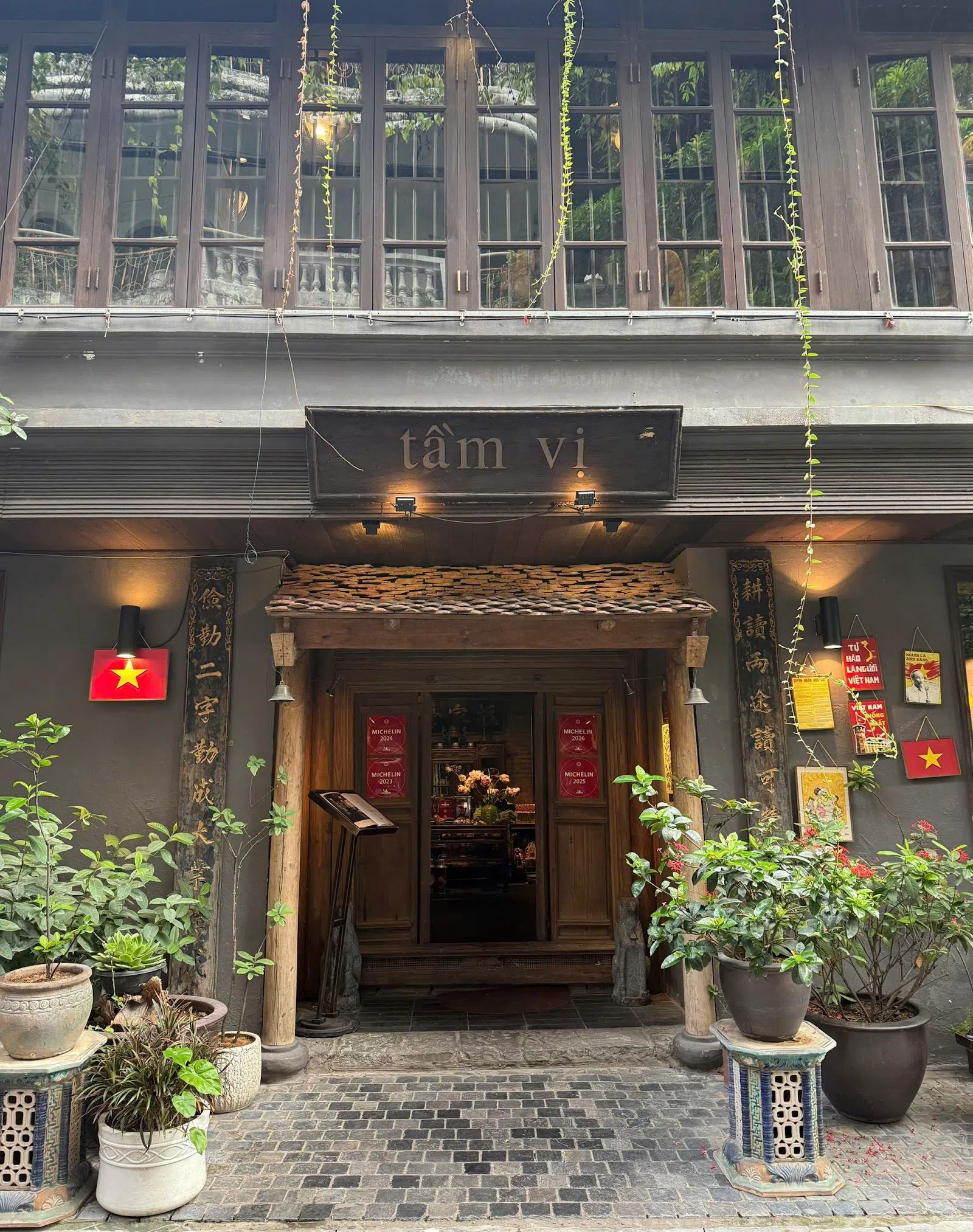
Tầm Vị (Ba Đình) held its Michelin star in 2026 for northern home cooking, run by a mother-and-daughter kitchen, and at 400,000–800,000 VND (~$16–32) a head it is close to the cheapest starred meal you will eat anywhere. It is built for sharing rather than for a tasting-menu procession: private rooms take six to twelve, reservations go through direct message, and days of notice is the realistic ask, not hours. There is a covered courtyard, which is exactly the feature you want in September.
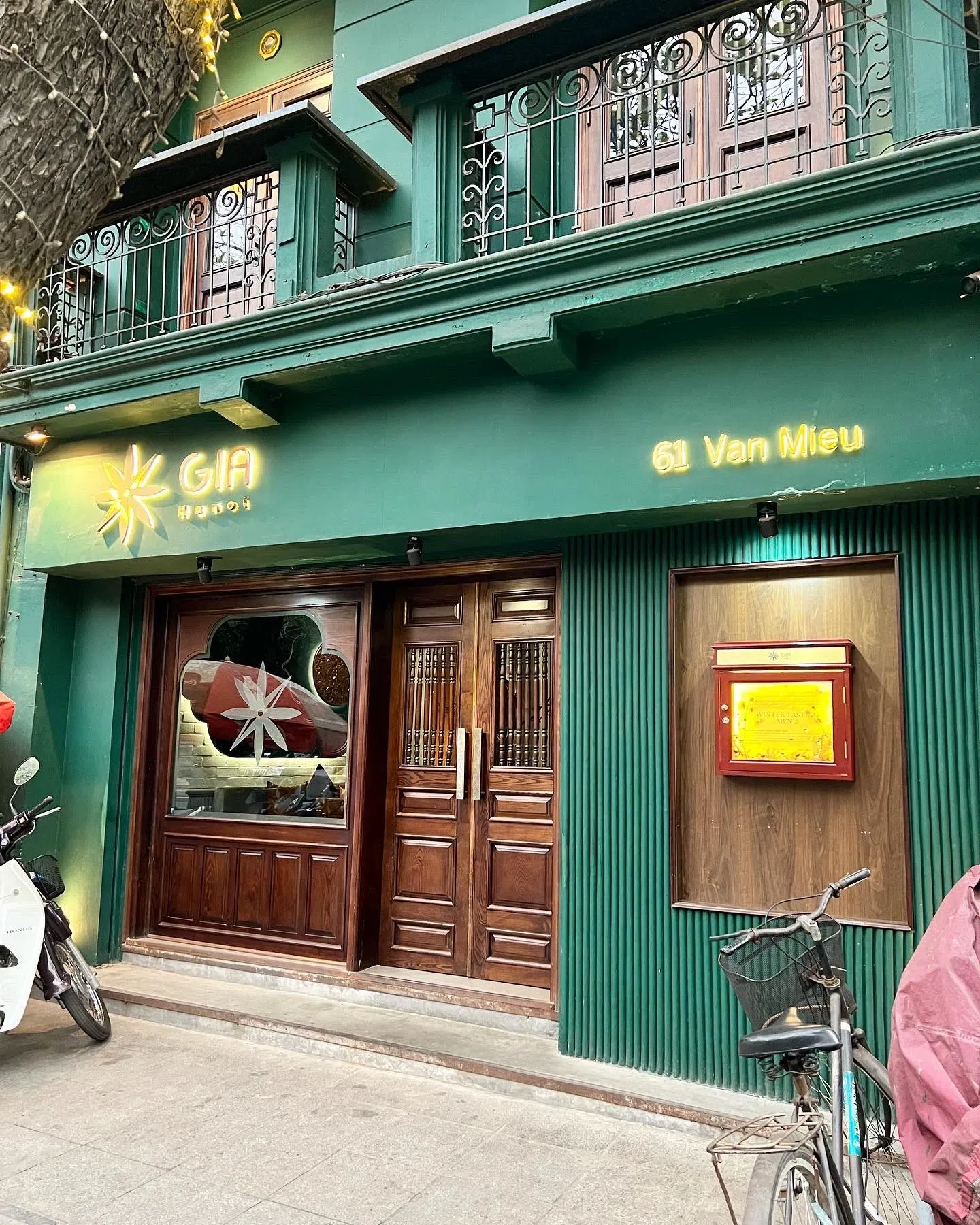
Gia (Văn Miếu, Đống Đa) has held a star every year since Vietnam's inaugural guide, and its tasting menu tracks the calendar, which in September means river fish, cốm, and the first autumn herbs. Reckon on 1,500,000–2,500,000 VND (~$60–100) a person. The room is small and runs one seating, so six to eight is the practical ceiling and the whole party takes the same menu; if someone in your group has restrictions, say so at the point of booking rather than on arrival. Reserve well ahead.
Bars with a roof over them
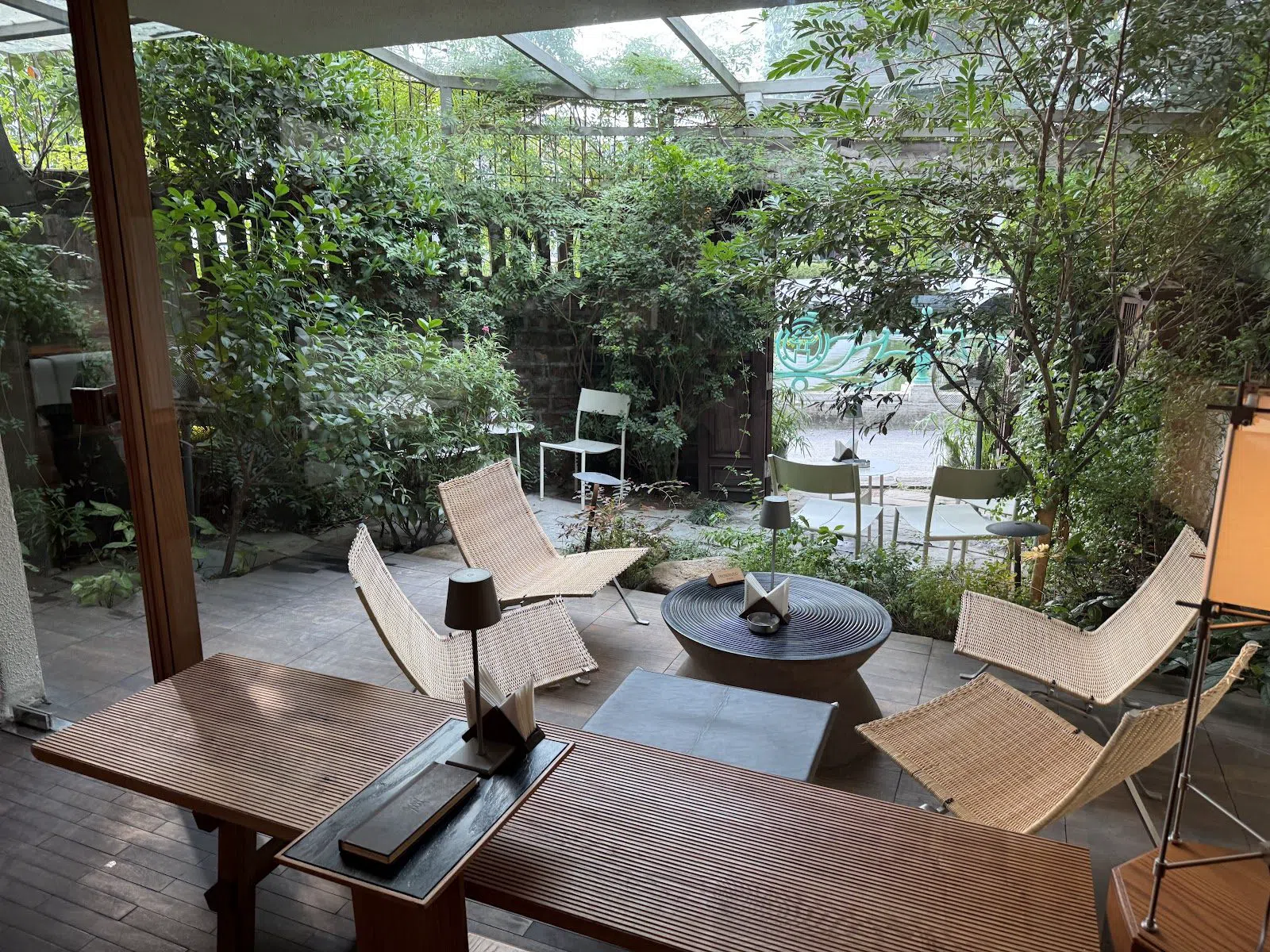
Workshop14 (Tây Hồ) came in at No. 34 in Asia's 50 Best Bars 2026 and took both Best Bar in Vietnam and Best New Opening. There is no door policy, but it is a small room: walk in with two to four and you'll be fine, message ahead for six or more. Doors at 16:00 daily, cocktails 250,000–400,000 VND (~$10–16). The taxi out to the lake in the rain is a fifteen-minute annoyance and the drinks justify it.
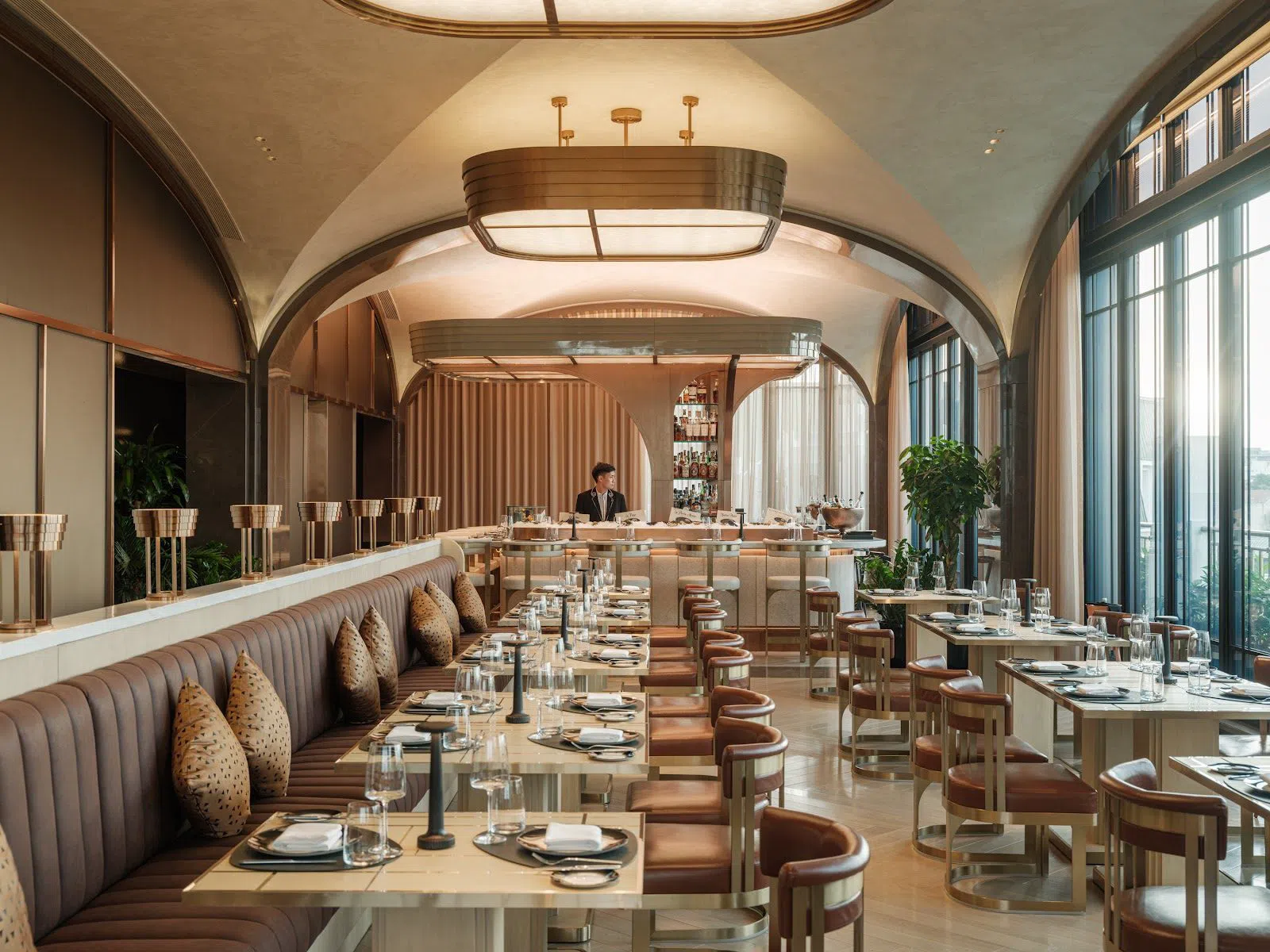
The Hudson Rooms (Hoàn Kiếm) sits at No. 46 on the same list and is the rooftop that still functions when the terrace is streaming, because there is a proper enclosed interior behind it. Reservations are essential and the smart-elegant dress code is enforced at the door: shorts and flip-flops will not get you a table, and there is no arguing it once you are standing there. Book direct rather than turning up; groups are accepted but seating is finite. Cocktails run 300,000–500,000 VND (~$12–20), with happy hour 17:30–19:30 daily, which is the sensible window.
Indoor hours that hold whatever happens
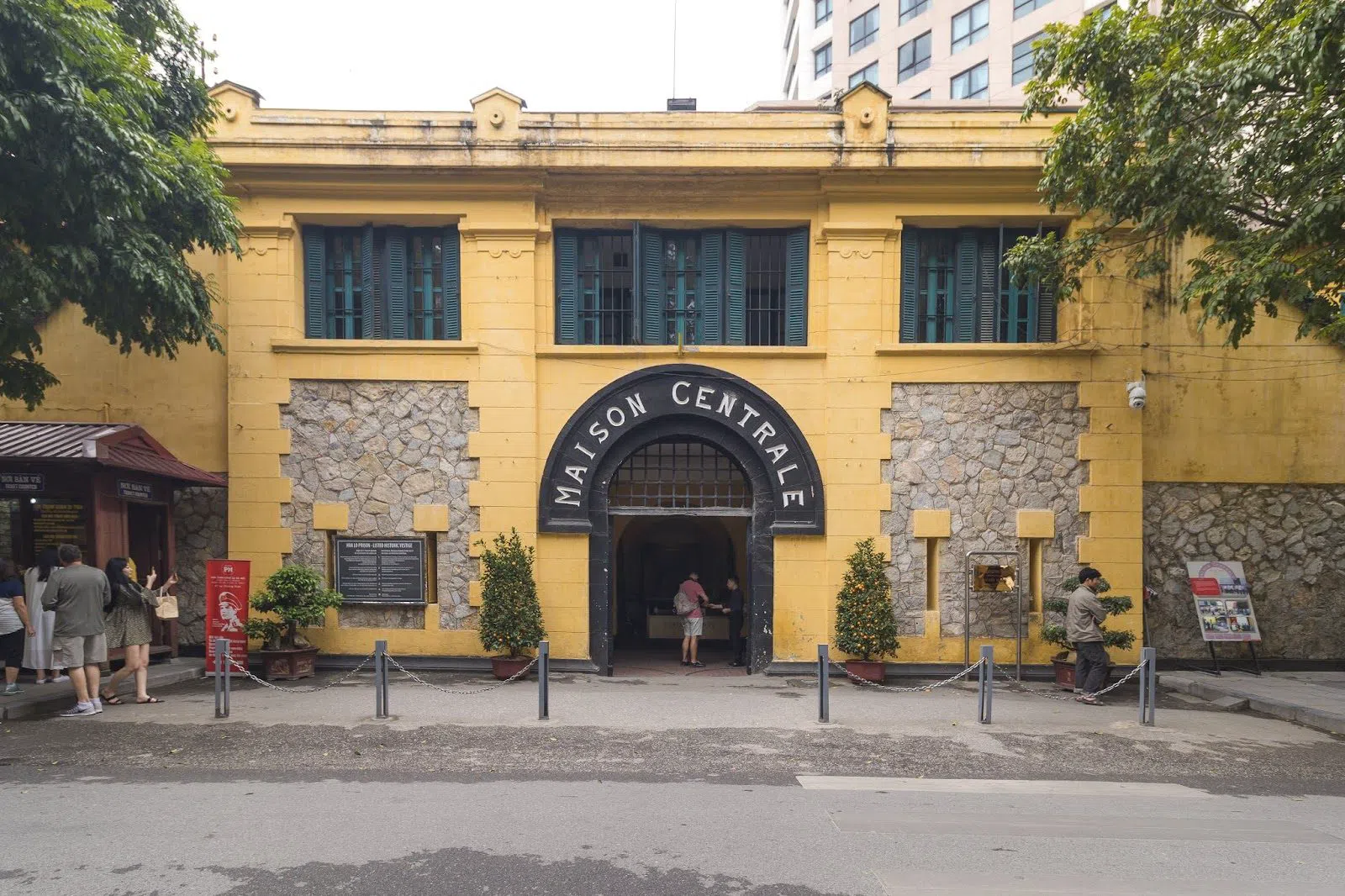
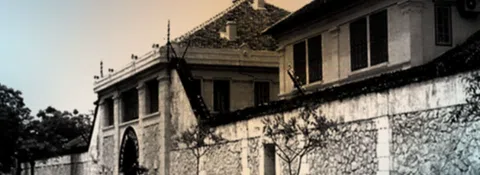
Hỏa Lò Prison Relic (Hoàn Kiếm) is the most carefully staged museum in the city and entirely covered. Day entry is 50,000 VND (~$2) and needs no planning at any group size. The Friday and Saturday 19:00–21:00 'Sacred Night' tour works differently: live reenactment, tea brewed from the courtyard almond tree, numbers capped strictly, and booking that closes out one to two weeks ahead. From about 400,000 VND (~$16). Groups should treat that as a book-before-you-arrive item.
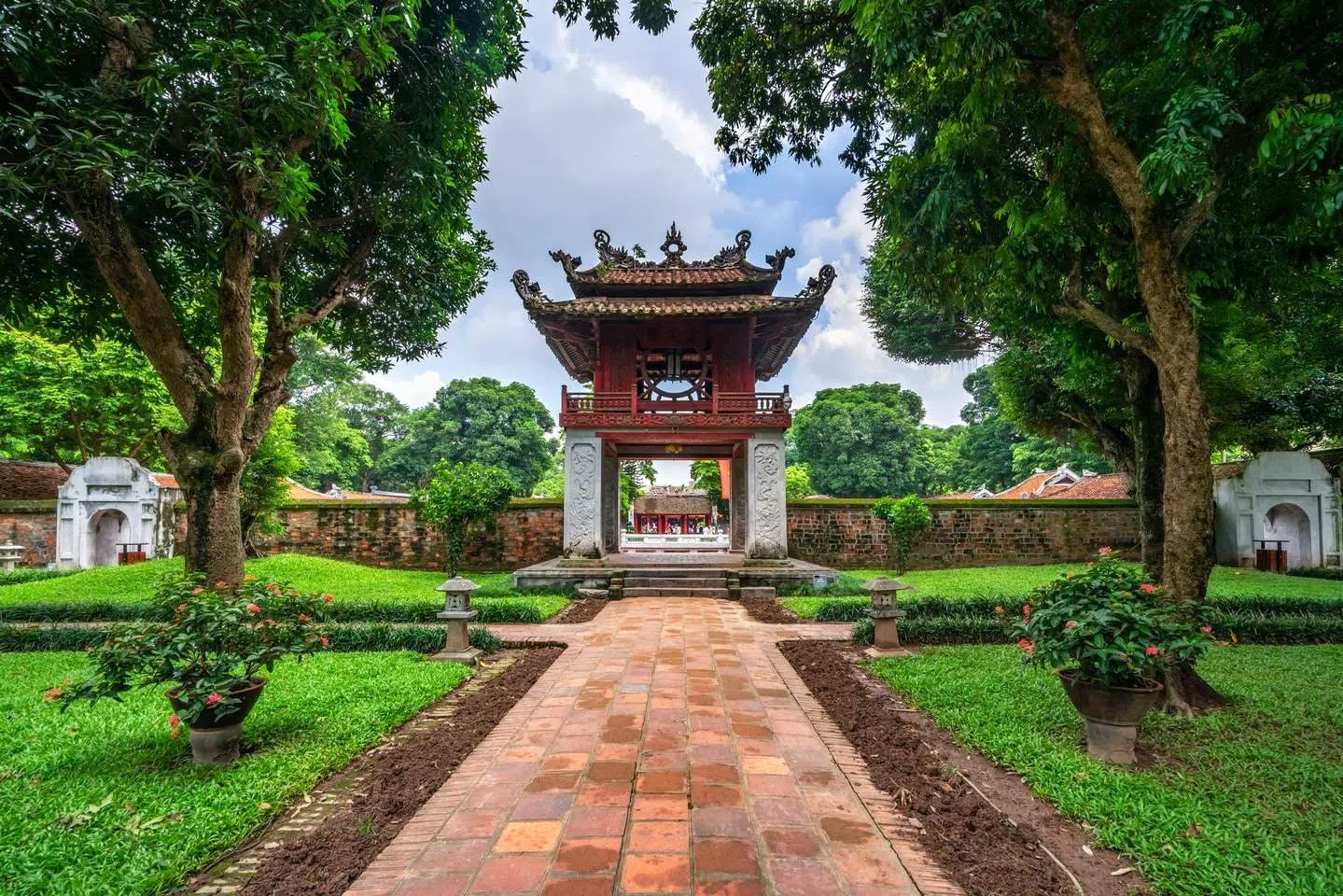
Văn Miếu – Quốc Tử Giám (Văn Miếu, west of the centre) was Vietnam's first university, founded in 1070, and the roofed galleries housing the doctors' stelae give you somewhere to stand out a shower without abandoning the visit. Day entry is 70,000 VND (~$3). In warm wet weather the night programme is the better call: Wednesday, Saturday and Sunday, 18:30–22:30, ticketed separately at 199,000 VND (~$8), with 3D projection mapping across the courtyards. Pre-book it.
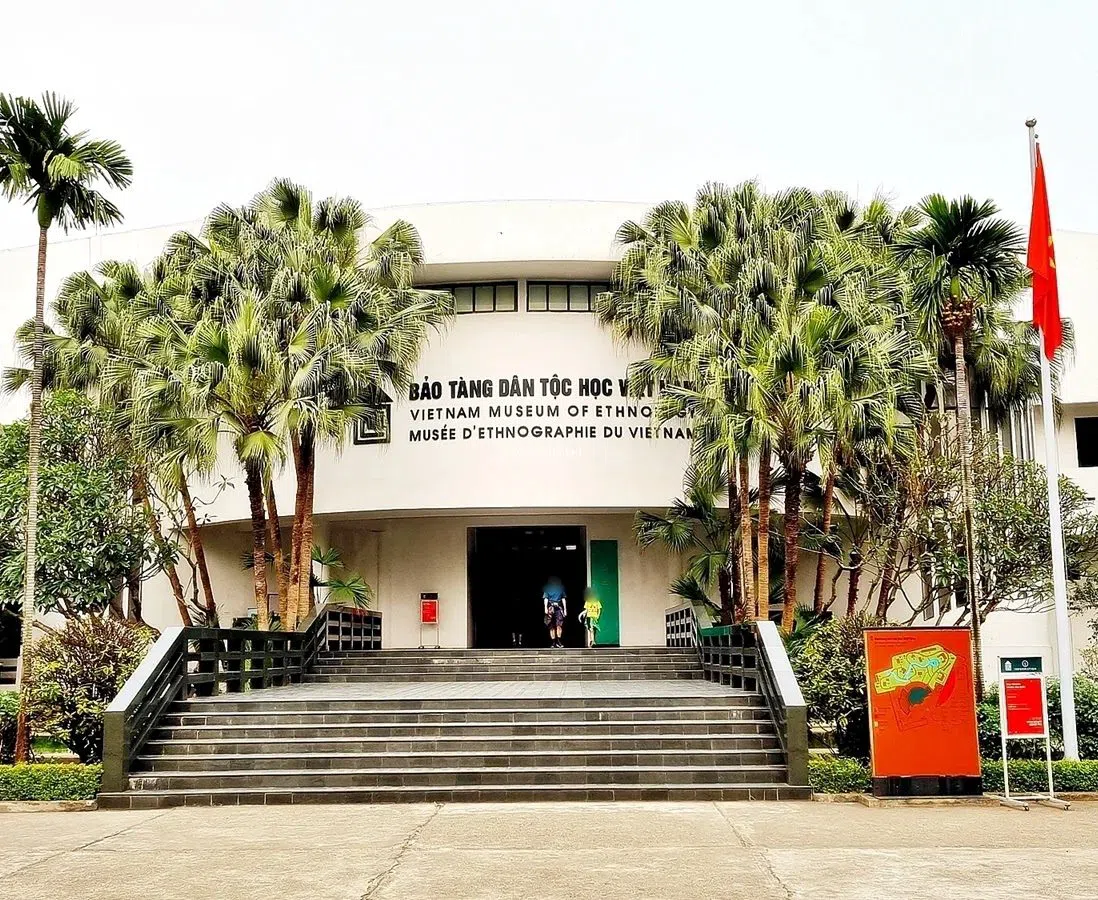
Vietnam Museum of Ethnology (Cầu Giấy) is the substantial one, the collection that explains the north's 54 ethnic groups properly rather than decoratively. Entry is 40,000 VND (~$1.60), audio guide extra, open Tuesday to Sunday 08:30–17:30 and closed Mondays. It absorbs coach groups without strain. The layout gives you an obvious weather strategy: do the indoor halls while it's raining and walk the open-air houses in the dry window afterwards.
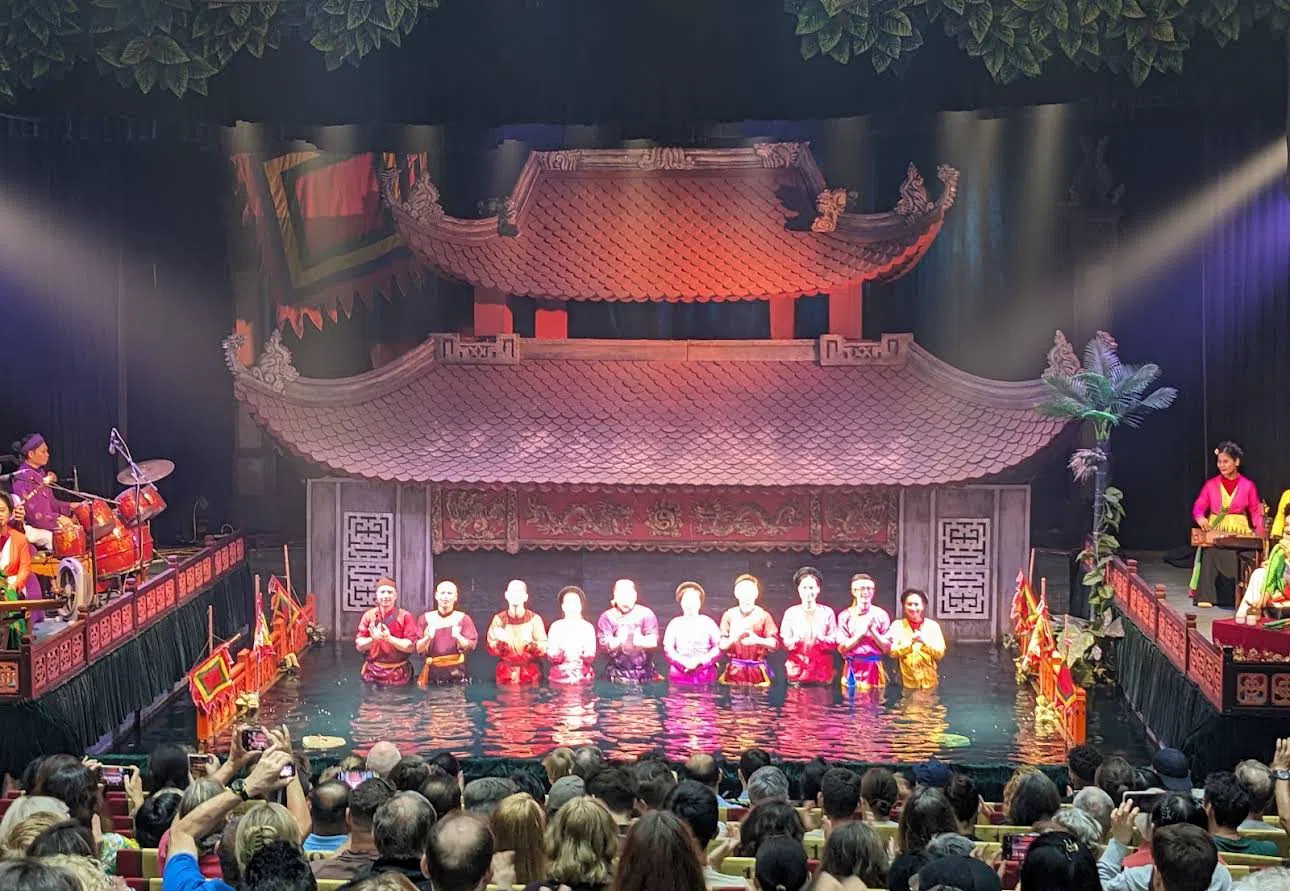
Thăng Long Water Puppet Theatre (northeast corner of Hoàn Kiếm lake) is fifty minutes, no dialogue, entirely indoors, and it runs whatever the sky is doing. Tickets are tiered, 100,000–200,000 VND (~$4–8), with up to seven shows a day. Weekday early performances take walk-ins; Saturday evenings and Sunday afternoons go two to three days ahead. It is a straightforward group booking and the reliable answer when a storm has cancelled the rest of your evening.
When the afternoon is already lost
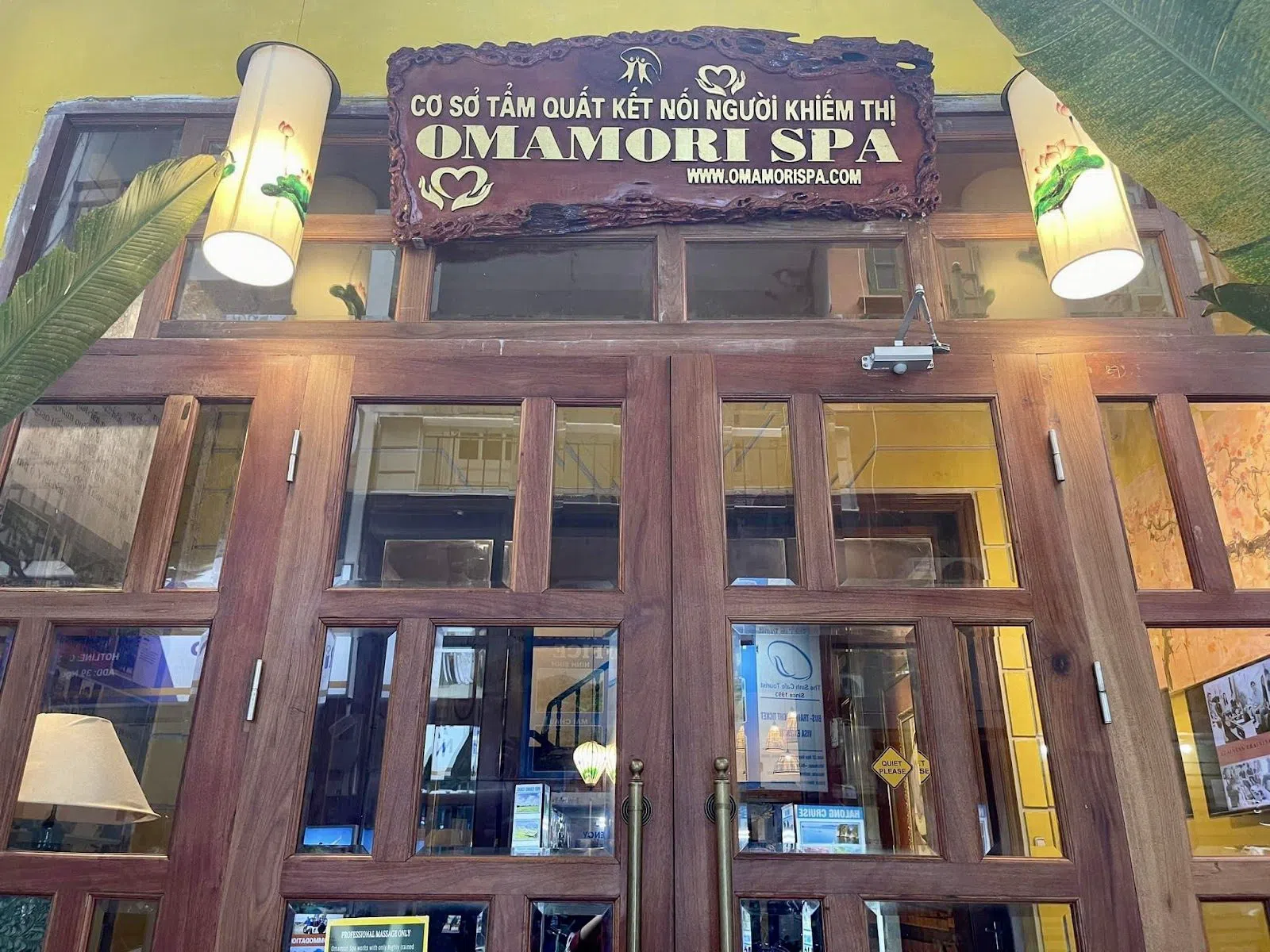
Omamori Spa (branches across the centre) is a Blind-Link social enterprise employing trained visually impaired therapists in dry-technique acupressure. Prices are fixed from 300,000 VND (~$12) per 60 minutes and there is a strict no-tipping policy. Do not press it, because it is part of how the business is structured. Multiple branches mean a group of four to eight can be booked in together with notice.
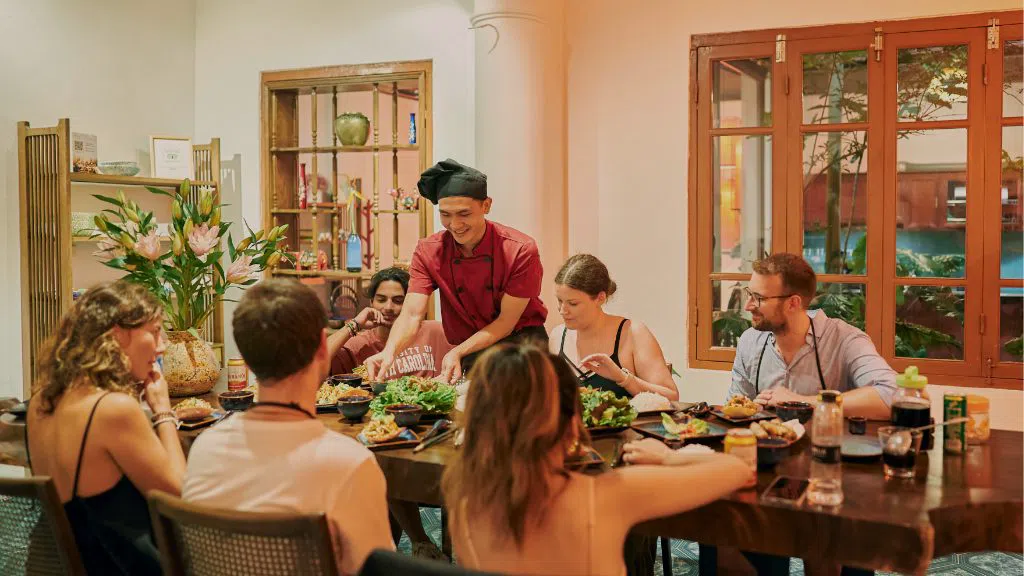
Rose Kitchen (Old Quarter pick-up and drop-off included) runs a market walk followed by a hands-on class covering an appetiser, three mains and a dessert, at 800,000–1,200,000 VND (~$32–48) a person. Private classes are available and all skill levels are taken. It belongs in a September itinerary for structural reasons: the market half may get wet, but the cooking half runs indoors regardless, so a washout costs you an hour rather than the booking.
Leaving the city, and the weather clause
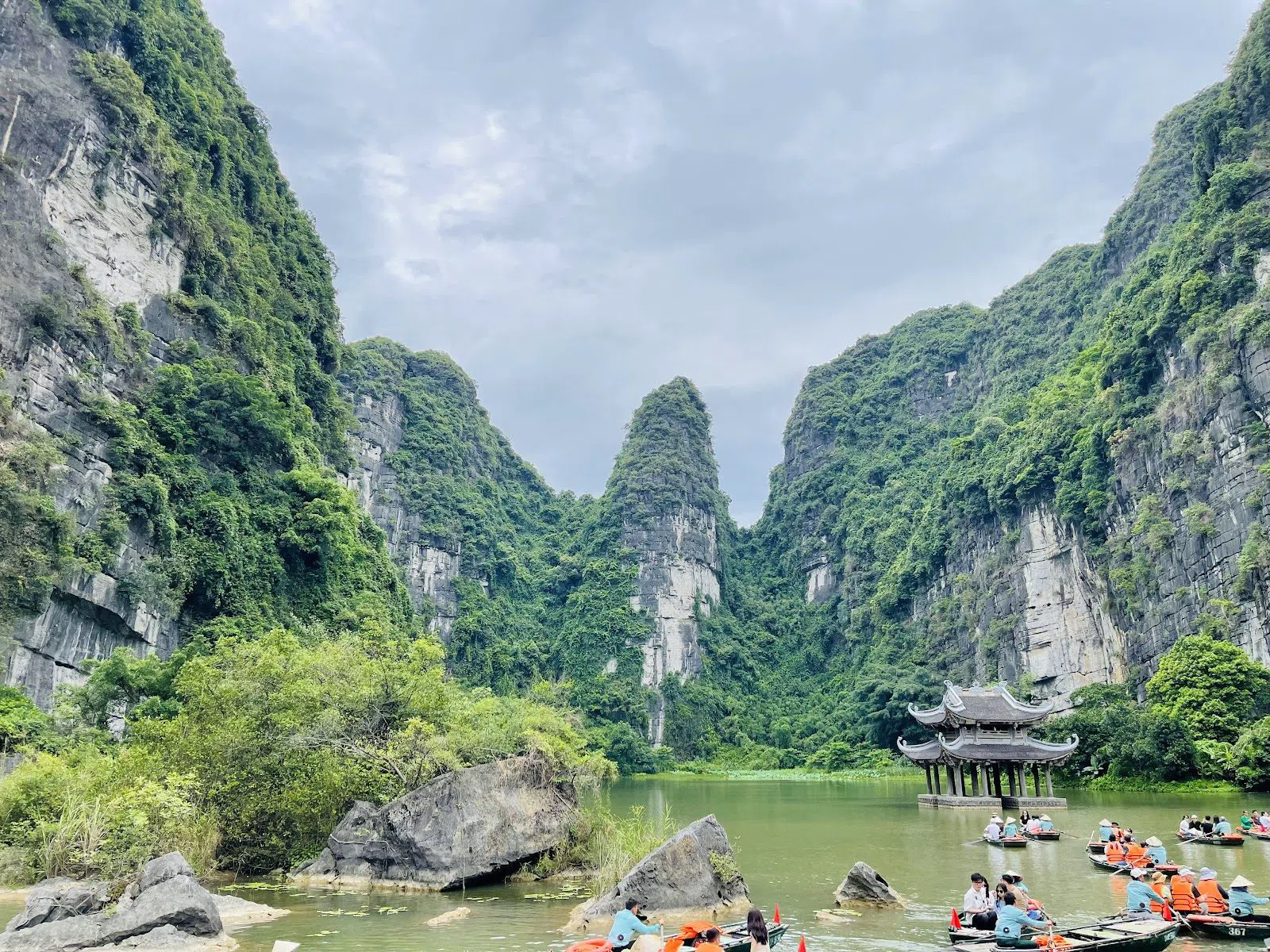
Tràng An Landscape Complex is the day trip that usually still runs. It is UNESCO-listed, roughly two hours' drive south each way, open 07:00–17:00, and 300,000 VND (~$12) covers both entry and your rower. Boats seat four or five, so a group splits across several. Arrange a private transfer rather than a coach seat so you can move your departure by a couple of hours when the radar says to. Being inland, it is far less exposed than the coast, and it stays open on days when boats elsewhere do not.
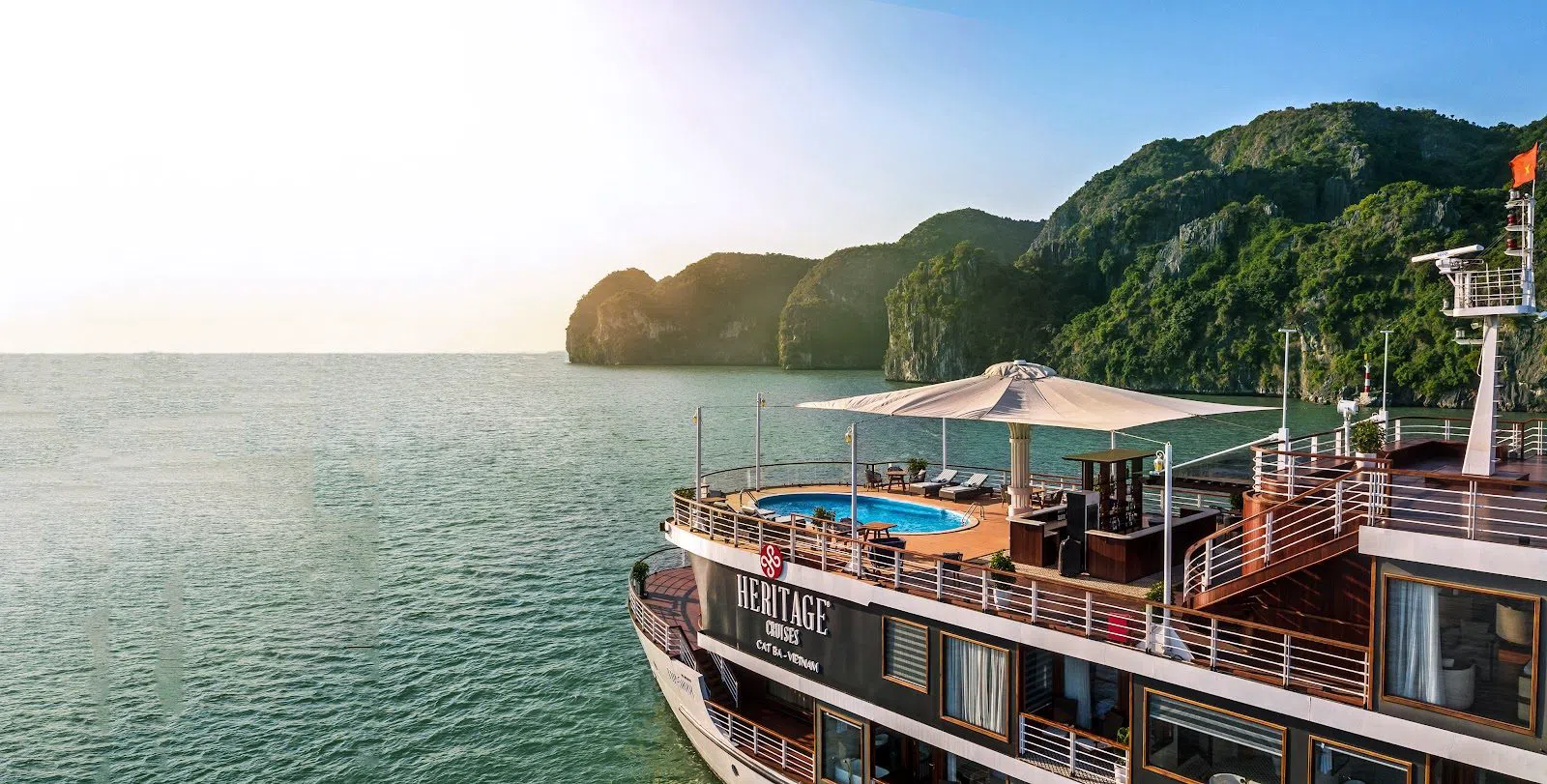
Heritage Cruises Bình Chuẩn sails Lan Hạ rather than the crowded central routes, with 20 cabins, which makes multi-cabin group bookings and private charter straightforward. From roughly 6,000,000 VND (~$240) per person for two days and one night. Port authorities suspend all sailings on a typhoon warning, full stop, and no operator can overrule that. Book direct so you are dealing with the company rather than an agent when it happens, confirm the reschedule-or-refund terms in writing before you pay, and keep a spare day in the itinerary rather than putting the cruise on the night before your flight. Take travel insurance that covers weather disruption; in September you will want it.
Practical notes
Getting around. Grab is the default for both cars and motorbike taxis; fares surge hard the moment rain starts, so order before the sky opens rather than after. Two metro lines now run, the Cát Linh–Hà Đông line and the elevated Nhổn section, both dry, cheap and limited in reach; neither replaces walking the Old Quarter. Nội Bài airport is about 27km out, 45–60 minutes in normal traffic and longer in a storm, with a fixed-price taxi around 350,000–400,000 VND (~$14–16).
Money. Vietnamese đồng, cash for anything at street level, cards accepted at the starred restaurants and the better bars. Carry small notes; a 500,000 VND note at a phở counter is a nuisance. ATMs are everywhere in Hoàn Kiếm and charge per withdrawal, so take out more, less often. Tipping is not expected and is refused outright at Omamori.
Timing. Sightsee in the morning, book the indoor thing for late afternoon, eat late. Avoid arriving into the 2 September holiday window unless you have rooms and trains locked in. Late September is the better half of the month: drier, cooler, and carrying the Mid-Autumn lanterns.
Budget. A comfortable day runs about 1,200,000–1,800,000 VND (~$48–72) a person with street breakfasts, one museum, a spa hour and a mid-range dinner. Add a starred meal and a cocktail round and you are near 3,000,000 VND (~$120). For the rest of the city, where to stay and what the other seasons look like, start with the Hanoi guide.
Before you go
Is September a bad month to visit Hanoi?
No, but it is a month that punishes rigid plans. Highs sit around 31 to 32°C, humidity is high, and roughly 240 to 260mm of rain falls across about half the days, usually in violent afternoon bursts rather than all-day drizzle. Room rates are well below the November peak, and late September is noticeably cooler and drier than the first week. Build mornings around walking and hold an indoor booking for each afternoon.
Will a typhoon cancel my overnight bay cruise, and do I get my money back?
It can, and port authorities make that call. The operator cannot overrule a suspension order. Book Heritage Cruises Bình Chuẩn direct rather than through an agent, get the reschedule-or-refund terms confirmed in writing before paying, and leave a spare day in the itinerary rather than sailing the night before your flight. Weather-disruption travel insurance is worth having in September.
What should I reserve before I arrive?
Gia and Tầm Vị both need days of notice, Tầm Vị by direct message. The Hỏa Lò 'Sacred Night' tour caps numbers and sells out one to two weeks ahead. The Temple of Literature night programme and weekend water puppet shows want two to three days. Phở Hà Hàng Hòm and Bún chả Hương Liên take no bookings at all, so turn up outside the peak hour.
Does the 2 September National Day holiday affect a trip?
Yes. It is the busiest domestic travel window of the month: trains sell out, central hotels fill and rates rise, and the area around Ba Đình is managed for ceremony. If your dates are flexible, arrive after the holiday weekend. If they are not, lock in rooms and any long-distance transport well in advance.
What is there to do in Hanoi when it rains for a whole afternoon?
Plenty of it is fully covered: Hỏa Lò Prison Relic, the indoor halls of the Vietnam Museum of Ethnology, the roofed stelae galleries at the Temple of Literature, and a fifty-minute water puppet show that runs in any weather. A 60-minute session at Omamori Spa from 300,000 VND or the indoor half of a Rose Kitchen cooking class will also fill the time.