Hanoi's food day starts at Chợ Long Biên around eight in the evening, when the first trucks back into the yard, and ends when the last stools come off the kerb on Tạ Hiện twenty-six hours later. In between, the city does its shopping in covered halls and half-streets that most first-time visitors walk past without registering. Get the hours right and you will eat better here on 150,000đ than you will on ten times that in a hotel restaurant.
The clock matters more than the map
Every market in this article has a window, and outside that window you are looking at shutters or at the sad end of somebody's stock. Wholesale markets trade at night. Neighbourhood wet markets do their serious business between six and nine in the morning, then run a second, smaller peak around five in the afternoon when people buy for dinner. Cooked-food alleys mostly open late morning and close when the food runs out, which on a good stall is well before the stated closing time. Nothing here takes a reservation and nothing here has a door policy. The constraint is space, not status, and a group of eight in a lane one motorbike wide is a problem for everyone including you.
Distances inside the Old Quarter are walkable in ten to fifteen minutes. Anything in Tây Hồ, Cầu Giấy or Hai Bà Trưng is a Grab ride. If you are still deciding where to base yourself, the Hanoi guide covers the districts; for this itinerary, anywhere inside Hoàn Kiếm puts nine of the fourteen places below within a walk.
Đồng Xuân and the lanes hanging off it
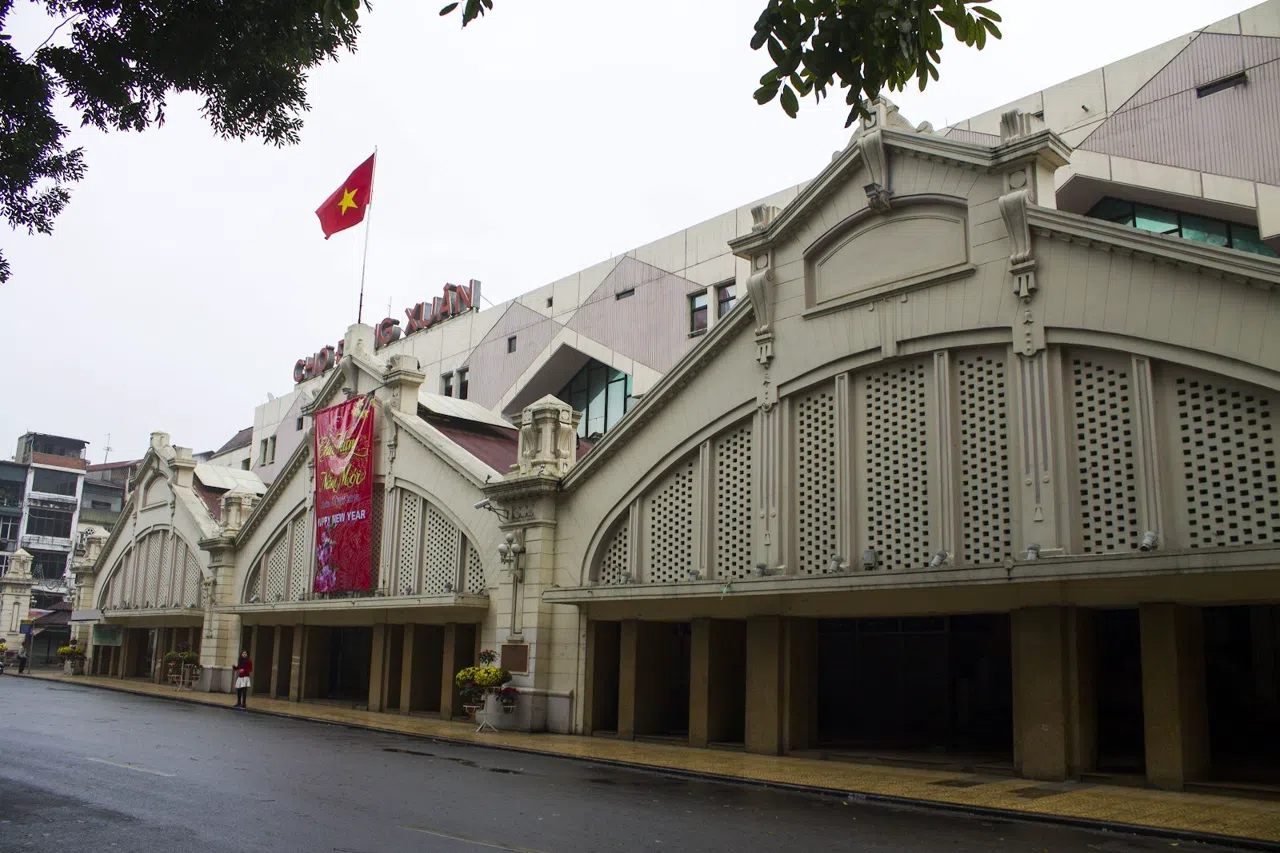
Chợ Đồng Xuân (Old Quarter, northern edge) is the anchor and the obvious first stop. Free to enter, open all day, and structured in floors: ground level is wet market and dry goods, upper floors are clothing and haberdashery. Fabric and dry goods sell at wholesale rates and haggling is expected, so assume the first number is a starting position. Snacks and drinks inside run 20,000–60,000đ. The operator is upgrading the building rather than rebuilding it, so it trades as normal; ignore anyone who tells you it is shut. The aisles are single-file wide, which matters if you arrive with a group: eight people cannot walk two abreast here, so string out and agree the north door as your regroup point before you go in. Licensed walking and food tours run through it all day, so you will not be the only outsider in the aisle.
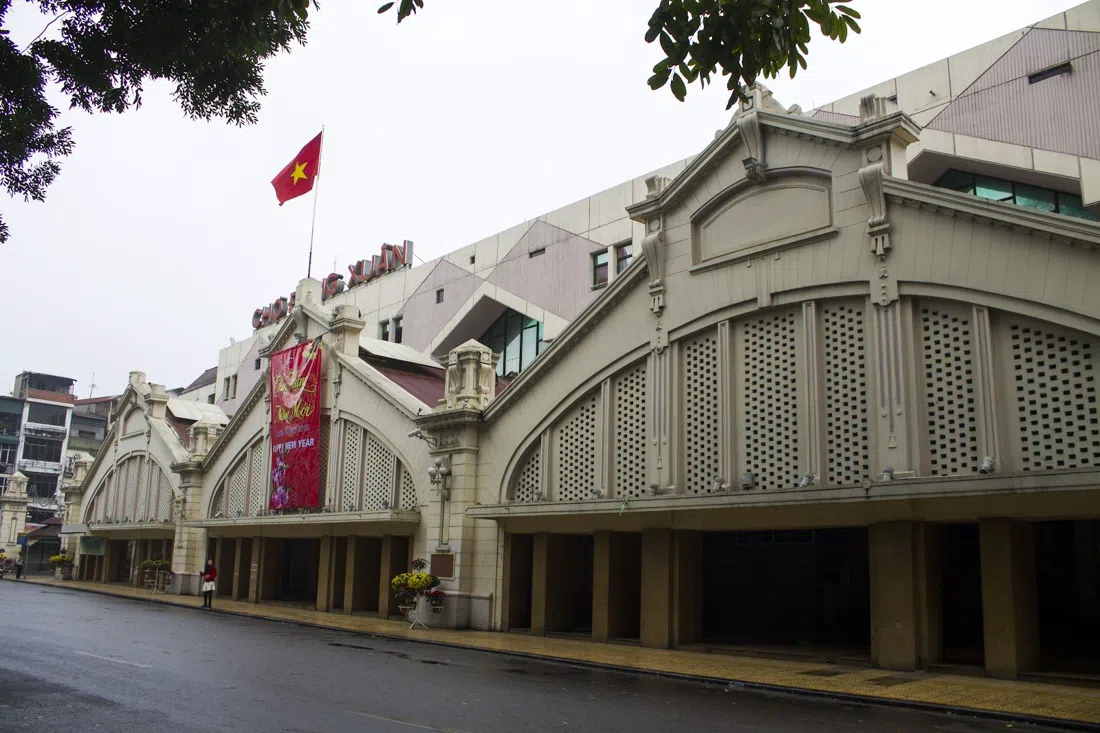
On Friday, Saturday and Sunday evenings the same market extends outdoors, down Hàng Đào, Hàng Ngang and Hàng Đường to the lake. Whatever the signage suggests, that is not a separate night market. It is Đồng Xuân after dark, with more T-shirts and fewer vegetables.
Ngõ Đồng Xuân (the food alley off the market's east side) is the best grazing run in the Old Quarter and the reason to come back hungry. Walk-in only, no bookings, and individual stalls seat six or eight at a squeeze, so a larger party should split across neighbouring stalls and pass plates. Order in this sequence: bánh tôm at the mouth of the alley while you decide, then bún ốc, then bún chả que tre, which is pork grilled on bamboo skewers rather than the flat patties you get elsewhere, then nộm bò khô, and finish with chè. Dishes are 20,000–50,000đ; 100,000–150,000đ feeds one person very well across four or five stalls. These are independent family businesses, not market concessions, and most open late morning and trade into the evening.
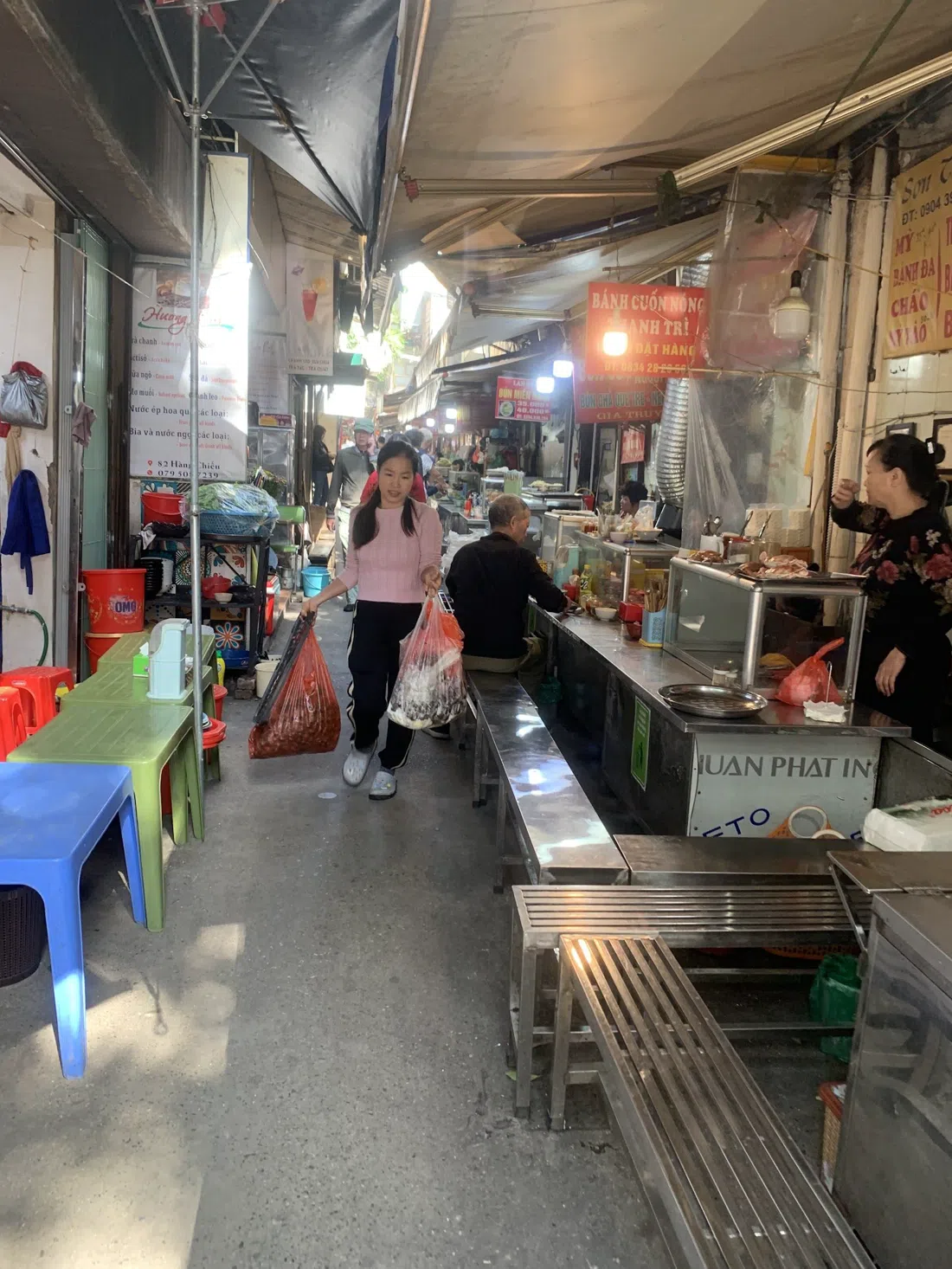
Chợ Hàng Bè (Gia Ngư and Cầu Gỗ, five minutes from Hoàn Kiếm lake) is where you see what a Hanoi household buys for dinner, as opposed to what a restaurant plates up. It outgrew Hàng Bè street itself years ago and now runs along Gia Ngư as an open-air cooked-food market: braised fish, grilled pork, prepared vegetables, whole poached chickens dressed with a rose in the beak. Cooked portions run 40,000–120,000đ, and at festival time the ceremonial roast chickens go past 1,000,000đ. Busiest late morning and again around 17:00. The lane is one motorbike wide and motorbikes use it, so this is a place for pairs; food tours generally move through rather than stop, and you should plan to do the same unless you have somewhere to sit.
The two markets that trade while you sleep
Chợ Long Biên (beneath the Long Biên bridge, ten minutes north of Đồng Xuân) sets the hours for everything else. Trucks unload from around 20:00, the floor peaks roughly midnight to 02:00, and by six in the morning it is over. Produce moves by the crate, not the kilo, so you are not shopping here. You are watching the supply chain that fills every other market in this article. Street-cart cà phê and bánh mì around the edges cost 15,000–40,000đ and are the reason to stay standing.
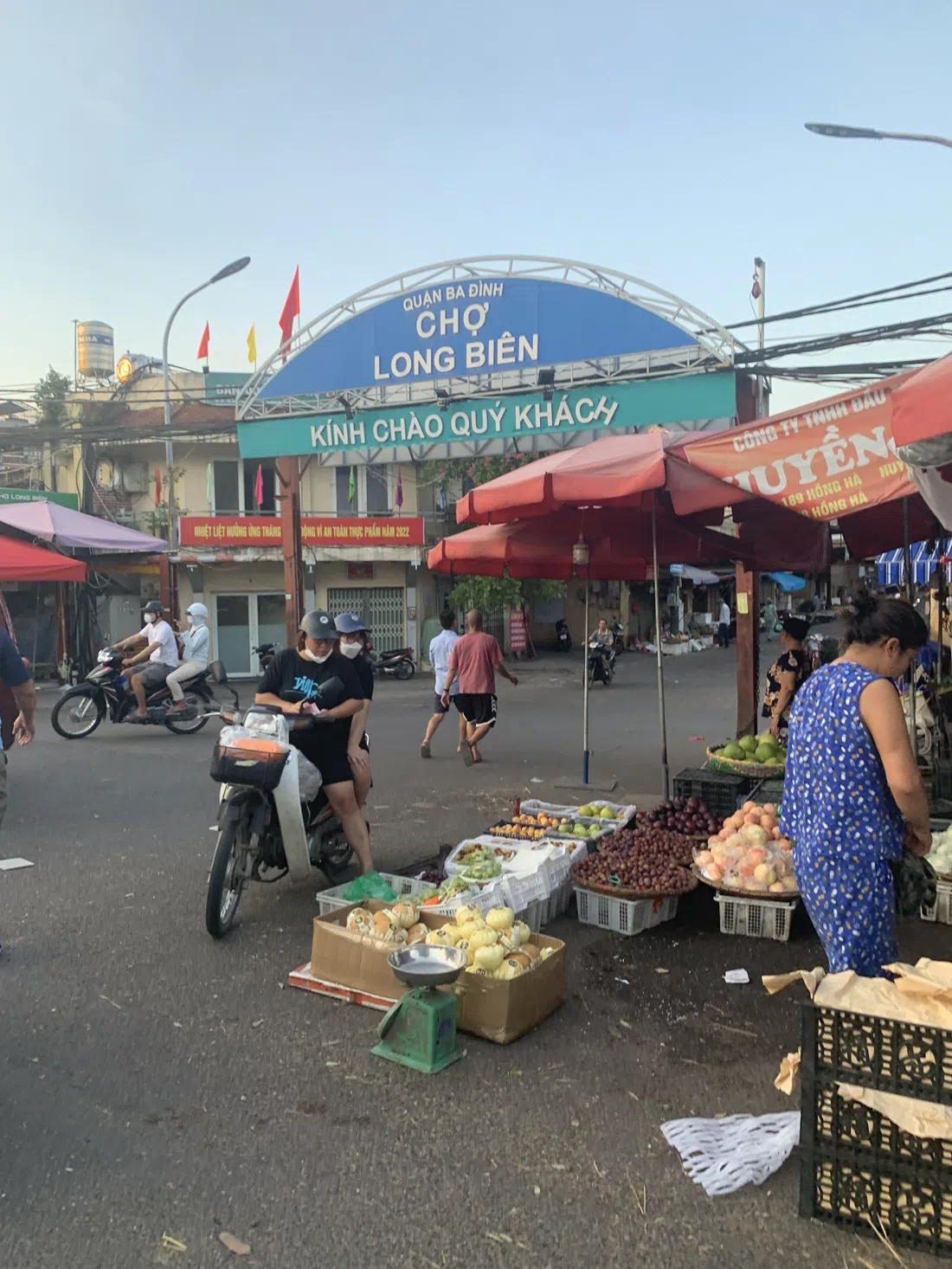
It is a working wholesale yard: loud, wet underfoot and physically busy, with women carrying loads on shoulder poles at speed through gaps you did not think were gaps. There is no door policy because there is no door, but go in twos to sixes at most, stay out of the cart lanes, and take a guide if you want to know what is actually being traded and at what price. It is the one market in Hanoi that repays a deliberately awkward hour.
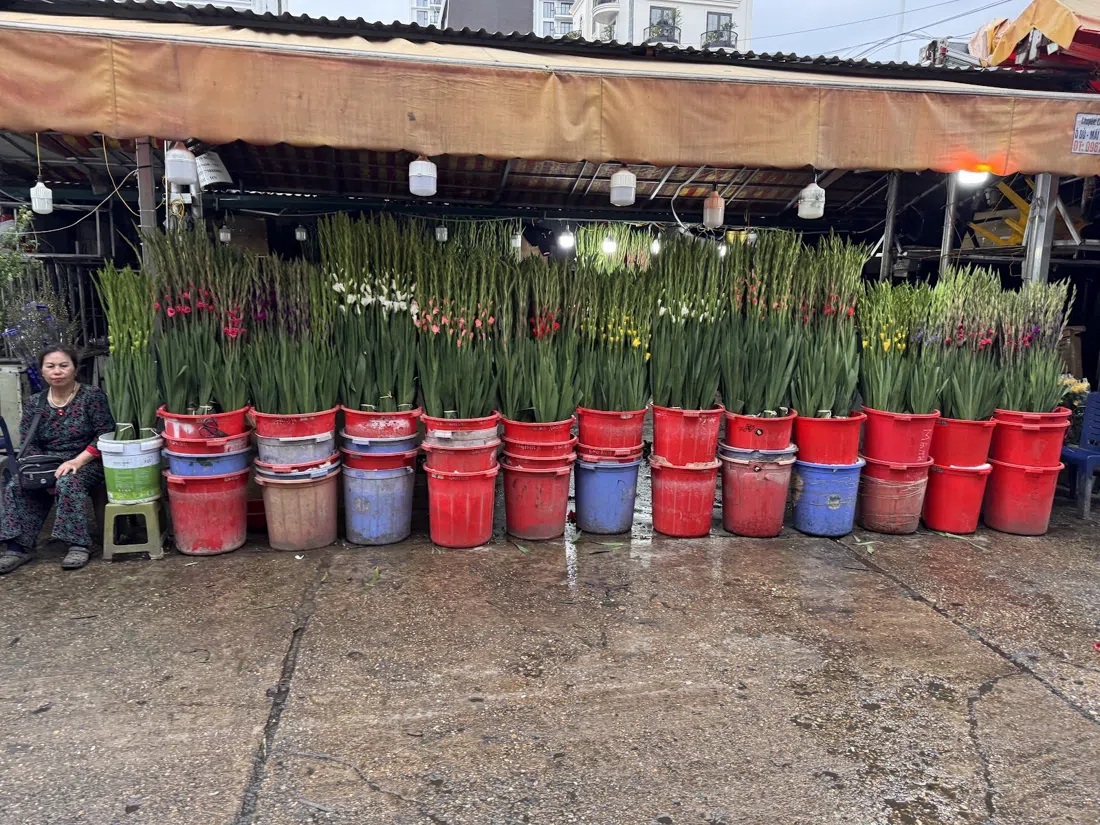
Chợ hoa Quảng An (Quảng An, on the West Lake side of Tây Hồ) trades roughly 23:00 to 06:00, and it is the gentler of the two night markets. Roses, lilies, chrysanthemums and gladioli arrive by the motorbike-load and leave the same way; a wholesale bunch of roses is typically 50,000–150,000đ depending on season. In the run-up to Tết, and on the lunar 1st and 15th of each month, it starts earlier and is several times the size. Anyone can turn up and groups are fine in practice, but the buyers are working against a clock, so keep off the loading strip along the road edge. Time it for the last hour before dawn and walk it into a circuit of West Lake as the light comes up.
Markets where nobody is trying to sell you anything
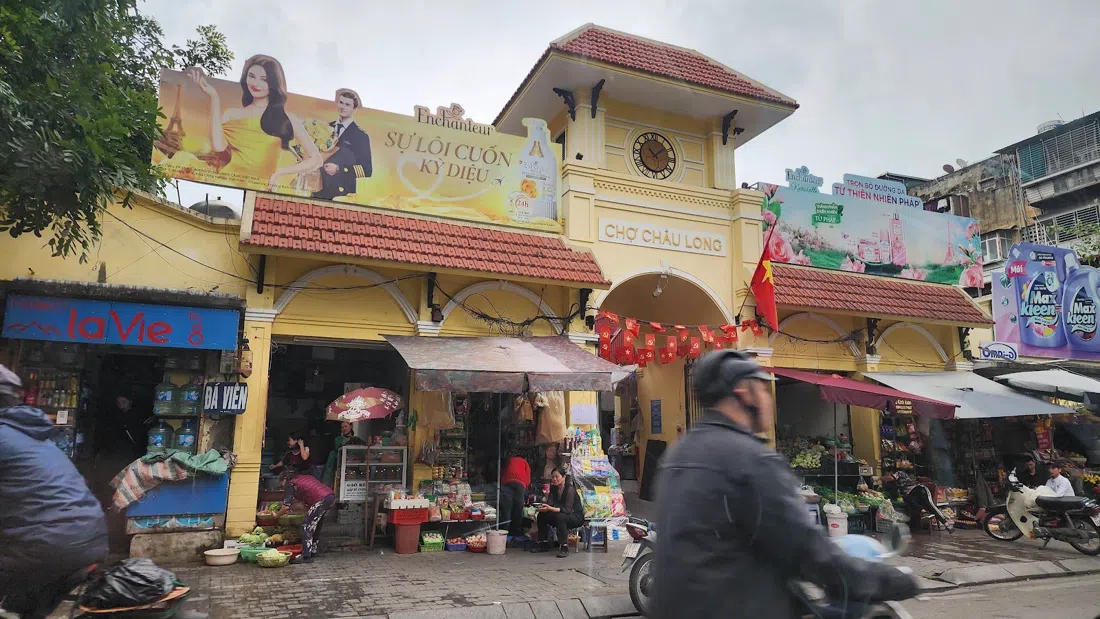
Chợ Châu Long (Trúc Bạch, Ba Đình) is small, and small is why it works. In about twenty minutes you can identify every single ingredient in a bowl of phở (the bones, the star anise, the spring onion, the sawtooth herb) with none of the Old Quarter's hard sell. Prices are what locals pay: a full bag of herbs and vegetables comes in under 100,000đ. Couples and groups of four or five fit comfortably; more than that and you are blocking the aisle, so split. The long-running cooking school on Châu Long street no longer operates, so come for the market itself, not the class.
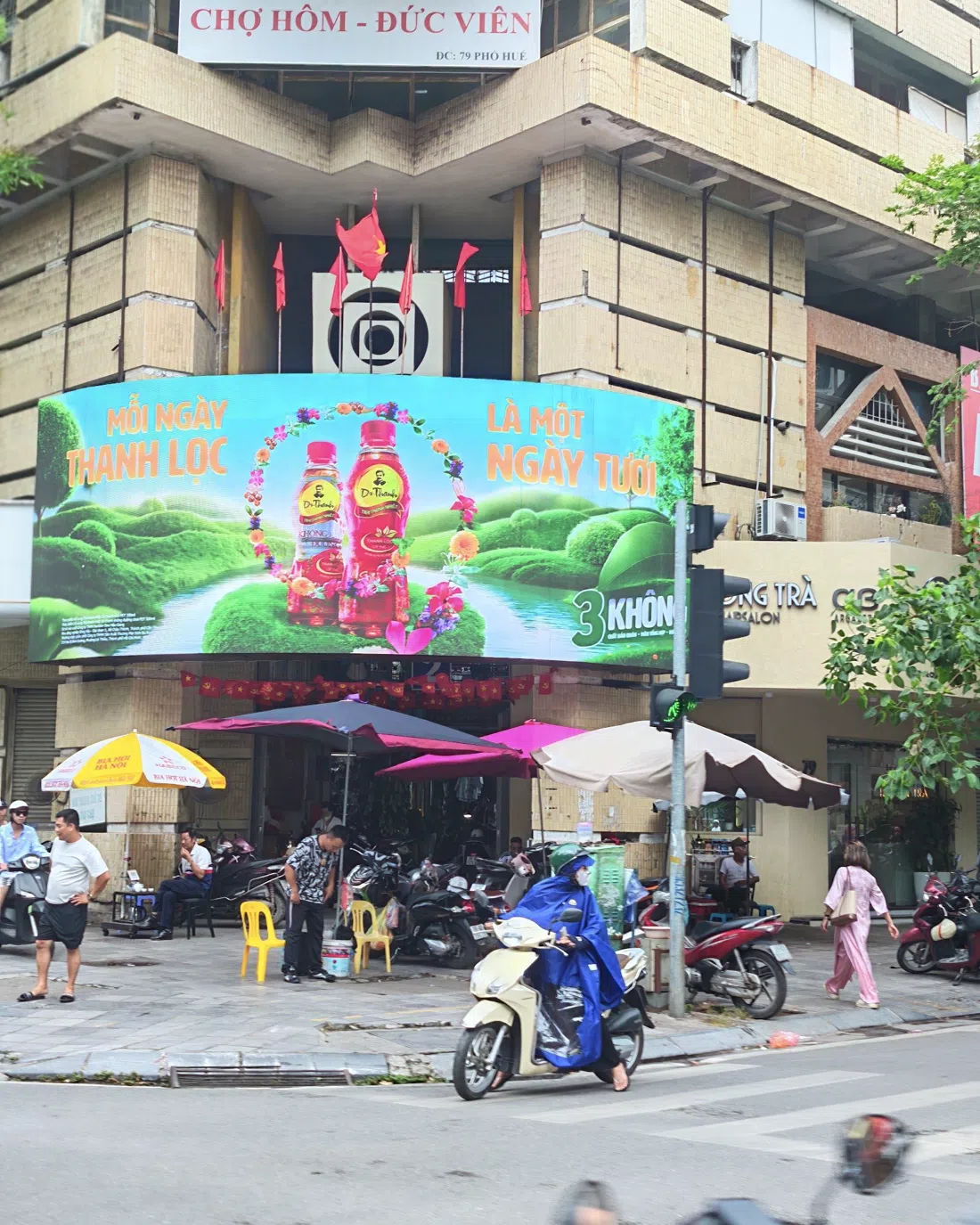
Chợ Hôm – Đức Viên (Hai Bà Trưng, south of the lake) is the fabric market and a useful counterweight to the tourist core. It is a proper public building with real circulation space, so groups move through it without the shuffling you get in the Old Quarter, and the tailoring stalls will deal with several people at once. Fabric starts around 80,000đ a metre; market food stalls run 25,000–60,000đ. The upper shopping-centre floors are half-empty and slow, and there is nothing for you up there. The life is on the ground floor and the fabric floor.
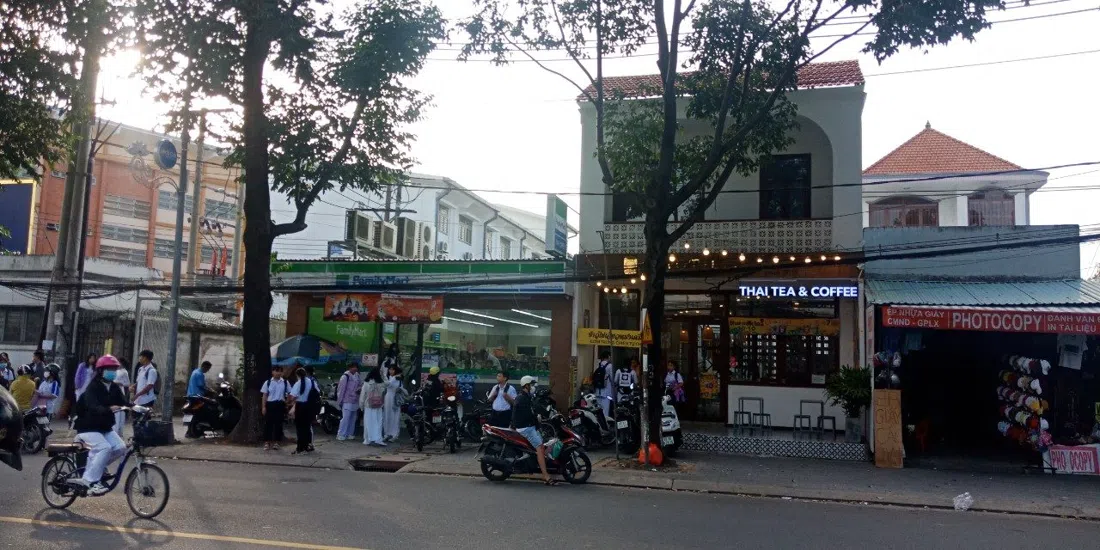
Chợ Nghĩa Tân (Cầu Giấy, out among the university blocks) is about as far from an itinerary as a Hanoi market gets, which is why it is here. The eating happens on the pavement outside the hall rather than inside it, which makes it easy for groups: stalls will push tables together without being asked. Snacks are 10,000–30,000đ a plate and a full meal rarely passes 60,000đ. This is a student snack ring attached to a residential market, not a sight; give it an afternoon if you want a few hours of ordinary city life. Go by Grab, it is a fair way from the Old Quarter.
Chợ Bưởi still keeps the lunar calendar
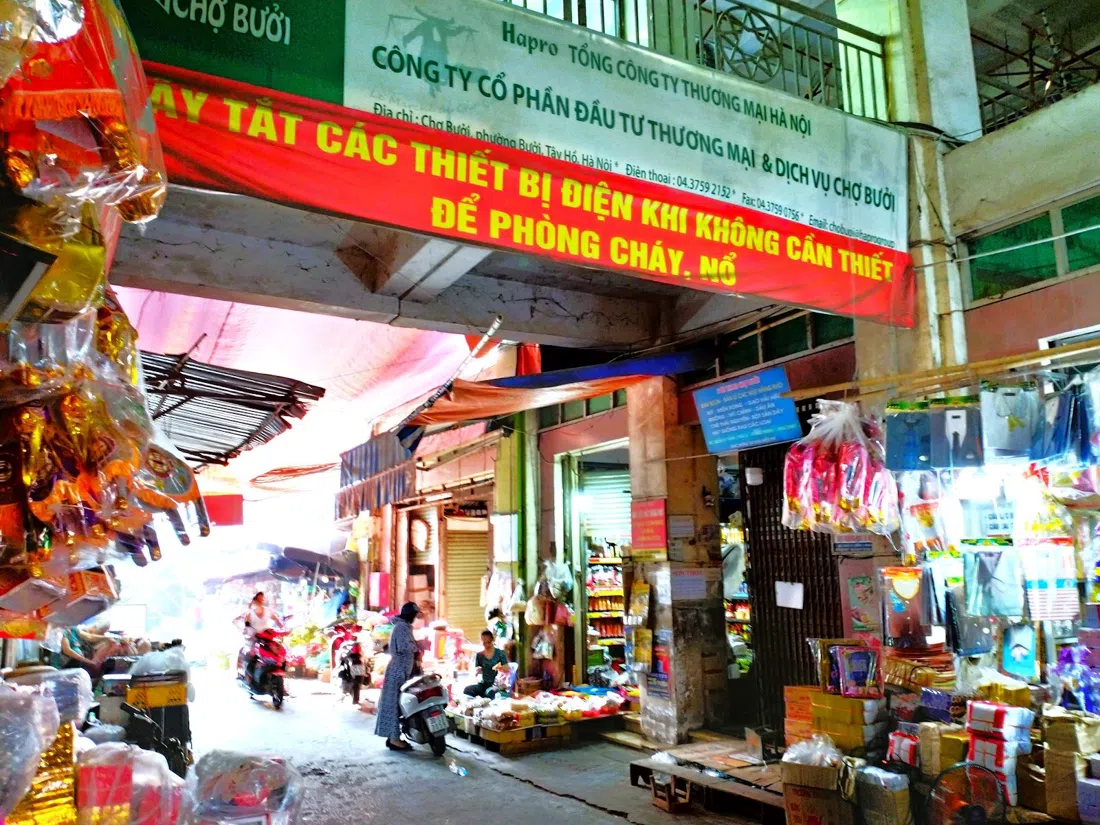
Chợ Bưởi (Bưởi, north-west of the centre) is one of the last markets in Hanoi running on the old periodic rhythm. Full sessions fall on lunar days ending in 4 and 9, so the 4th, 9th, 14th, 19th, 24th and 29th. Check the lunar date before you commit, because on an off day you will find a fraction of the stalls. Seedlings and small plants are 20,000–100,000đ; bonsai costs many multiples of that. It spreads along the street rather than sitting in a hall, so it absorbs a large group easily, and sellers pack up through the morning, so early is not optional.
Alongside the plants and the songbirds, live dogs, cats and fish are sold here. A lot of visitors find that distressing. If you think you will, skip this one, because there is no way to see the plant market without walking past the rest of it.
Eating streets after dark
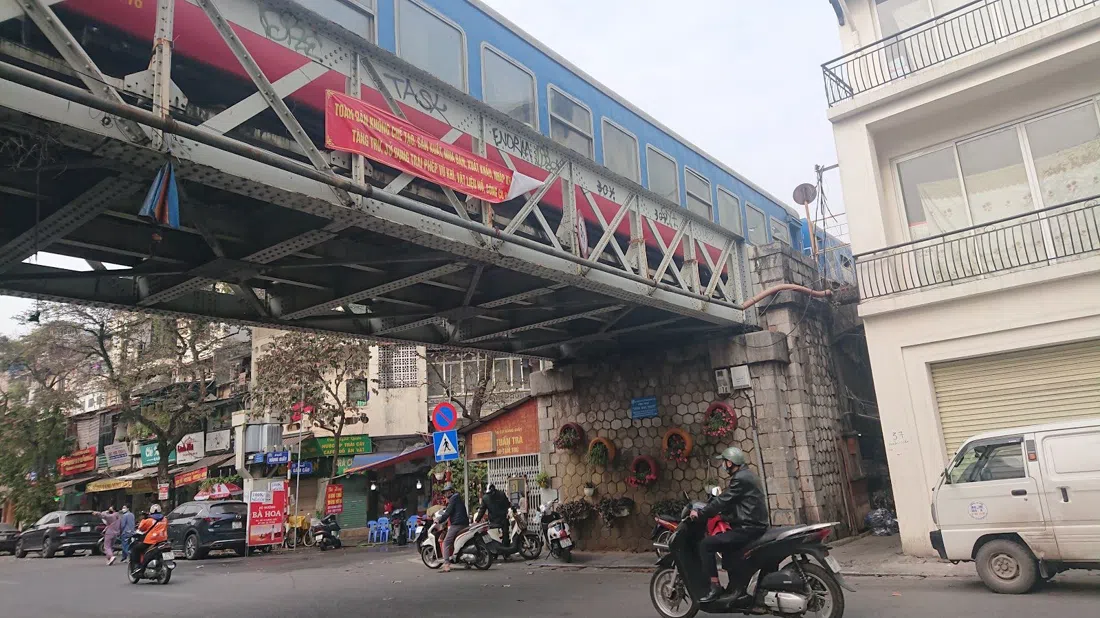
Phố Gầm Cầu (Old Quarter, under the railway viaduct, two minutes from Đồng Xuân) does grilled meat under the arches from about 17:00 to midnight, with the crush at 20:00–21:00. Kerbside restaurants take groups without fuss, but arrive before 20:00 if you want tables together. Expect 40,000–100,000đ a plate, or 150,000–250,000đ a head for a full grilled dinner with beer. The arches are the draw, and trains still run on the deck overhead.
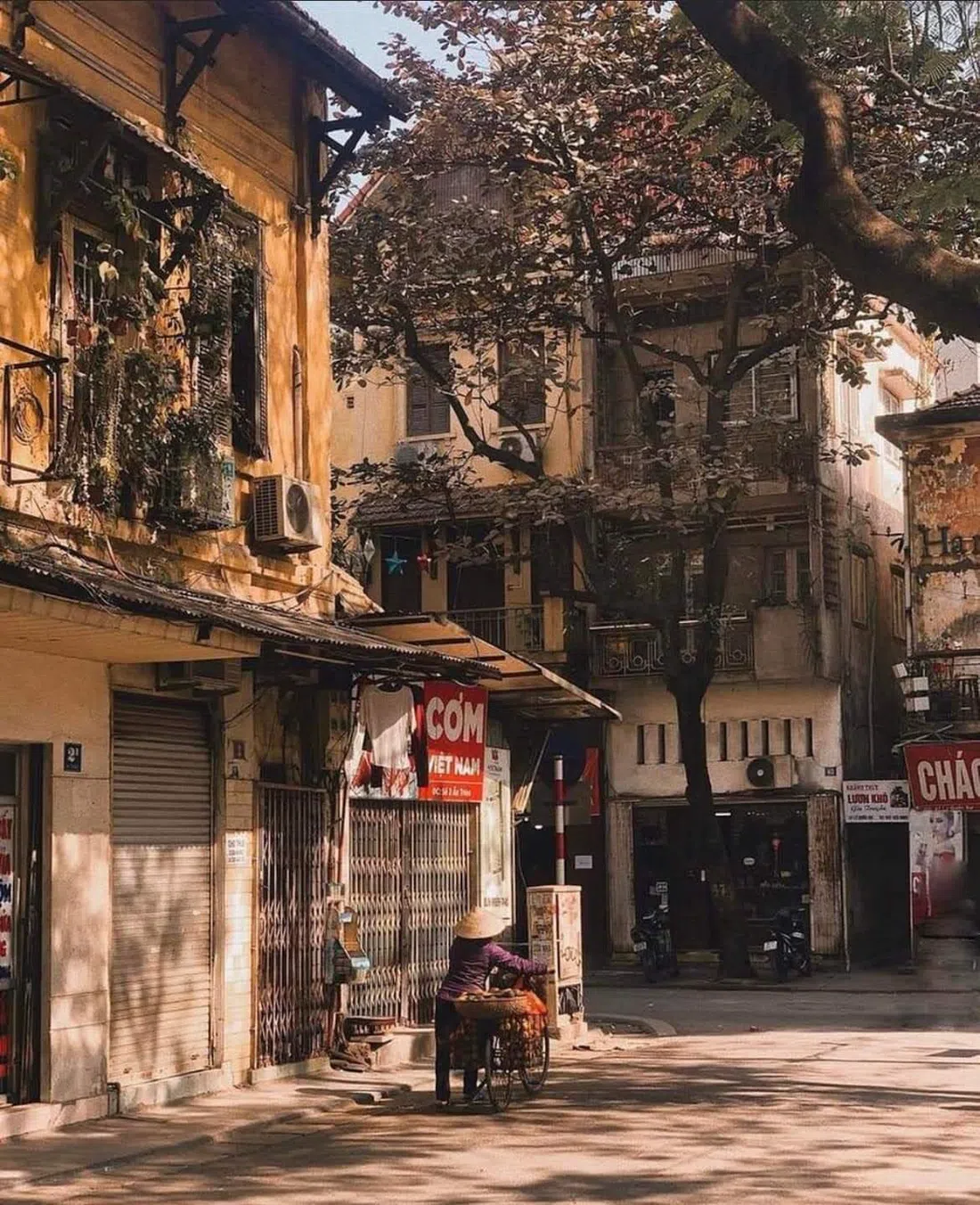
Ngõ Ấu Triệu (beside St Joseph's Cathedral, Hoàn Kiếm) is the easiest everyday eating street for a first-timer to find, because the cathedral is the landmark and the alley is thirty seconds off it. Grilled pork rolls over charcoal, 40,000–90,000đ a portion, busiest from dusk. The kitchens are small and groups of four to six are the practical ceiling; because the alley is a through-route, tables get cleared briskly, which works in your favour if you turn up early evening and against you if you plan to linger.
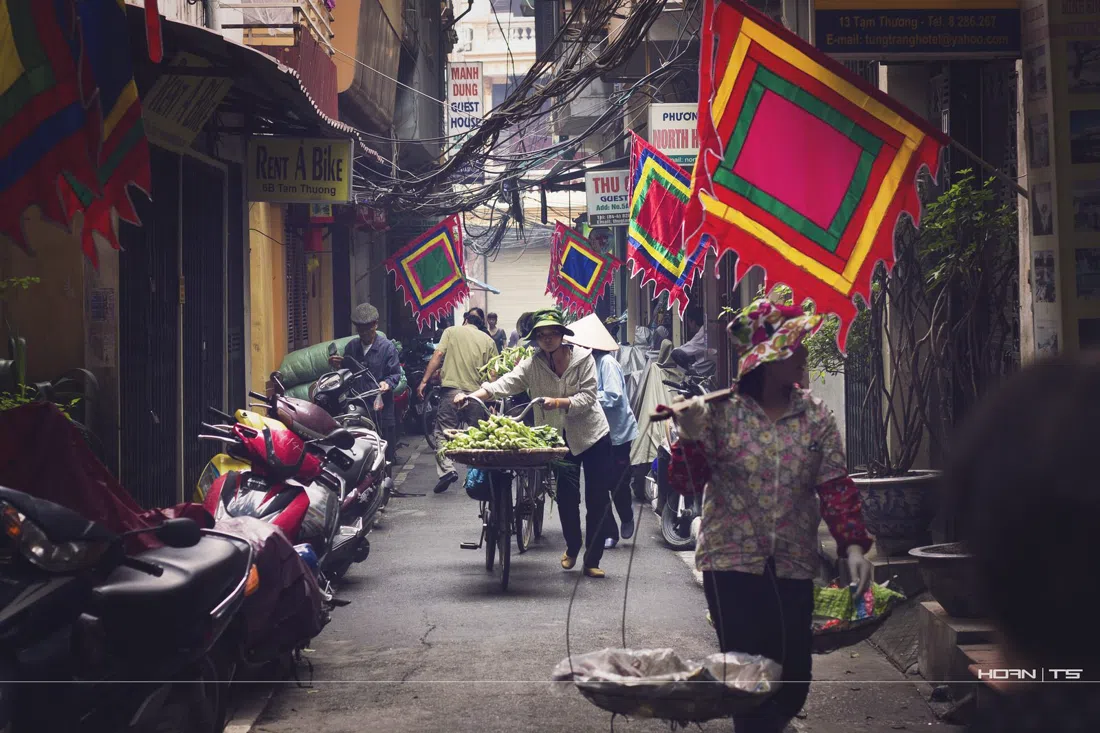
Ngõ Tạm Thương (off Hàng Bông, Hoàn Kiếm) is the deep-fried nem chua alley, a Hanoi teenage institution that visitors walk straight past because the entrance looks like a doorway rather than a street. Order the fried parcels with the herb plate and the chilli sauce, 5,000–10,000đ a piece, 50,000–80,000đ for a filling order. It runs from the afternoon into the evening when all the stalls are open. Four to six people per stall at most, and since neighbouring stalls are direct competitors, a bigger group should pick one and stay put rather than spreading across two.
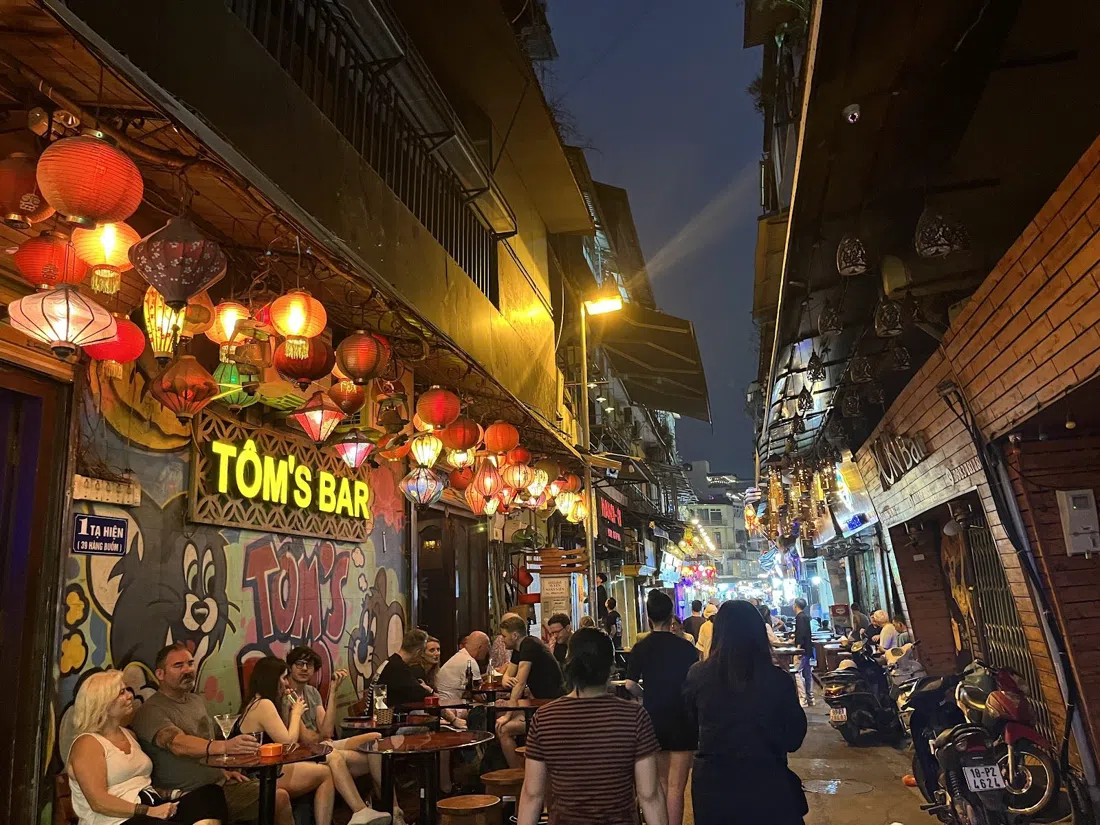
Phố Tạ Hiện (Old Quarter) is the loudest corner in the city. It is a drinking street first and an eating street second: draught bia hơi at 15,000–25,000đ a glass, grilled snacks at 30,000–80,000đ a plate, stools along the kerb, no reservations and no door policy. You take whatever gap opens. Groups are the norm and stalls will string a dozen stools together for you. Treat it as one early-evening hour rather than a whole night, and if the crush at the crossroads is too much, sit at the quieter Lương Ngọc Quyến end.
Phố ẩm thực Đảo Ngọc – Ngũ Xã (Trúc Bạch island, Ba Đình) is the opposite proposition and the best sit-down option on this list. Ngũ Xã and Nguyễn Khắc Hiếu close to motorbikes from 18:00 on Friday to midnight on Sunday, and in that window the tables come outside and the whole street works as a dining room. This is the home of phở cuốn, the flat rice sheet wrapped around grilled beef and herbs, and phở chiên phồng, the same noodle sheet cut and deep-fried into puffed pillows under beef and greens. Neither exists elsewhere in the city the way it does here. Dishes are 60,000–140,000đ and dinner for two lands around 300,000đ. Restaurants are proper sit-down operations that handle groups comfortably, which makes it the sensible choice for a party of eight that would be miserable in an alley.
Practical notes
Getting around: Old Quarter markets and alleys are all within fifteen minutes on foot of each other, and you should wear shoes you do not mind soaking, because wet-market floors are wet. Use Grab for Quảng An, Chợ Bưởi, Chợ Hôm – Đức Viên and Nghĩa Tân. For Long Biên at midnight, book the car both ways rather than assuming you will find one at 02:00.
Carry cash, in small notes. Stall holders at every market on this list price in 10,000đ and 20,000đ units and foreign cards are no use to them. A day of serious market eating (breakfast, a grazing run, a grilled dinner and beer) costs 250,000–400,000đ a head.
The hours, one line each: wet markets 06:00–09:00. Hàng Bè late morning and 17:00. Food alleys late morning to evening. Gầm Cầu and Ấu Triệu from dusk. Ngũ Xã Friday 18:00 to Sunday midnight. Quảng An 23:00–06:00. Long Biên midnight to 02:00. Chợ Bưởi on lunar days ending 4 and 9, early.
Basing yourself in Hoàn Kiếm puts most of this on foot and makes the 01:00 return from Long Biên short. Ba Đình and Tây Hồ trade that for quiet and easier access to Ngũ Xã and the flower market. Compare both in Hanoi hotel search.
One habit worth adopting: when a stall has a queue of people who are clearly on their way to work, join it. When it has empty stools at 11:30 on a weekday, there is usually a reason.