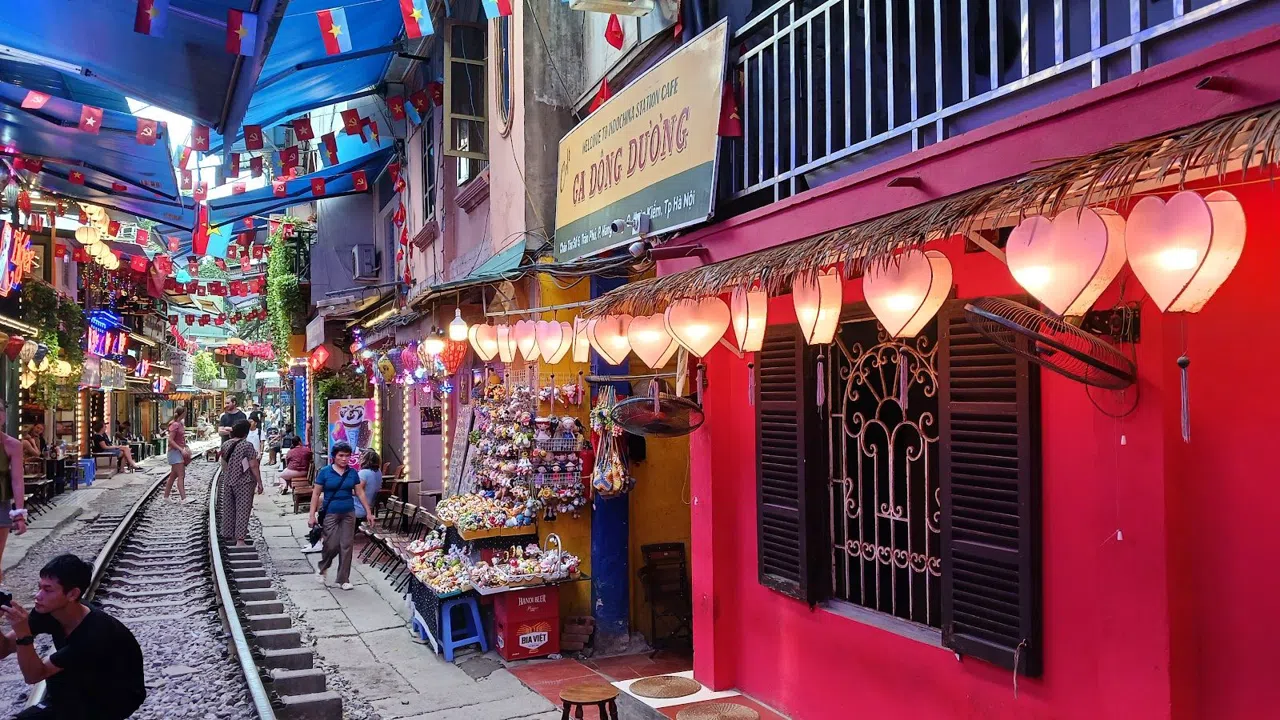
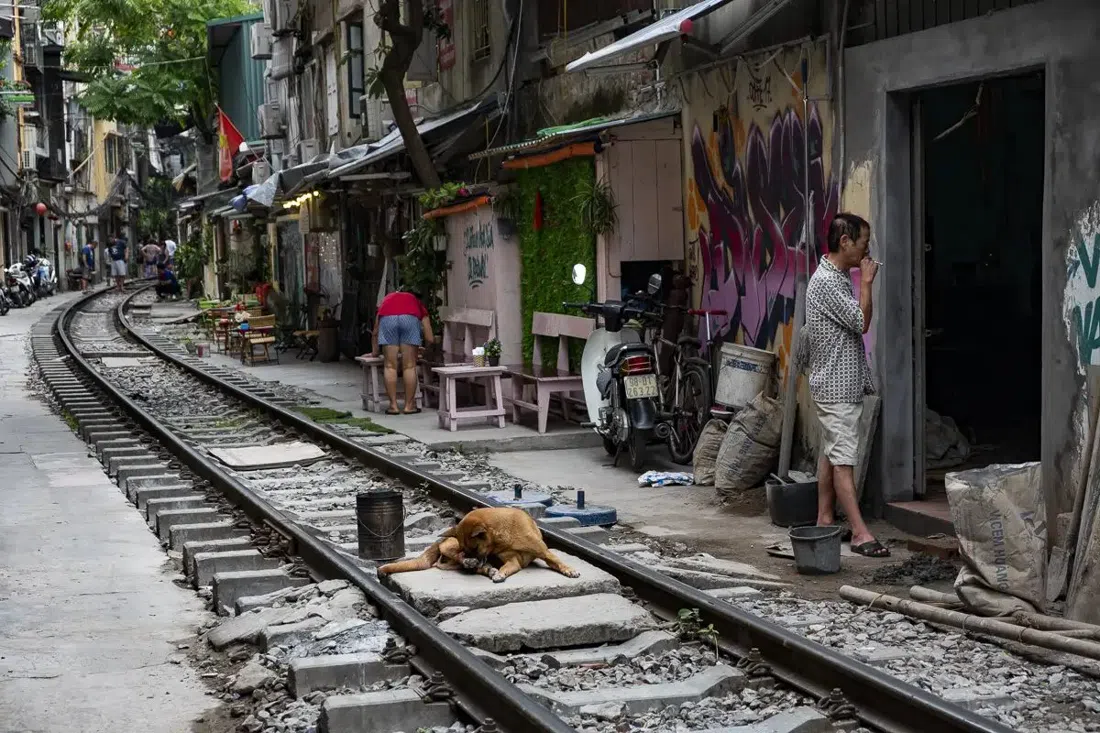
Twice a day, give or take, a diesel horn sounds somewhere past Long Biên and a narrow corridor of laundry lines, motorbike wing-mirrors, and café stools braces itself. For perhaps ninety seconds a train fills nearly every centimetre of the gap between two rows of century-old houses, close enough that the espresso machines get wheeled back from the platform edge before anyone asks. Then it passes, the stools come back out, and the street returns to being, before anything else, someone's front step.
Ground Zero: The Phung Hung Crossing
The line itself predates the tourism by more than a century. It was laid under French rule in the early 1900s as part of the network radiating out of Hanoi, and the houses along it were never meant to sit this close — they filled in the corridor informally over decades, as land along an active rail easement tends to get settled by people who need somewhere to live rather than by planners with a ruler. For most of that history the arrangement drew no particular notice: families cooked, hung washing, and raised children a door's width from the rails because that was simply where the available space was, and the trains passing through were a fact of the neighbourhood rather than a spectacle. What changed, sharply, around 2016, was the camera. A run of social-media posts turned one stretch of track near the Tran Phu and Phung Hung junction into a genuine attraction, and the cluster of cafés that now works that corner still trades on being first.
Café Ga Đông Dương, right at the Tran Phu/Phung Hung junction, is that corner. It's a walk-in operation — no reservations taken for large parties — and the owner personally marshals guests back off the rails in the minutes before a train comes through, which is worth watching almost as much as the train itself. A coffee runs 30,000–60,000 VND (roughly $1.50–2.50), and while the seating is tight, it copes fine with pairs or a small group of three or four. This is the spot every Train Street photo you've already seen was taken from or near, and it was still operating through 2026.
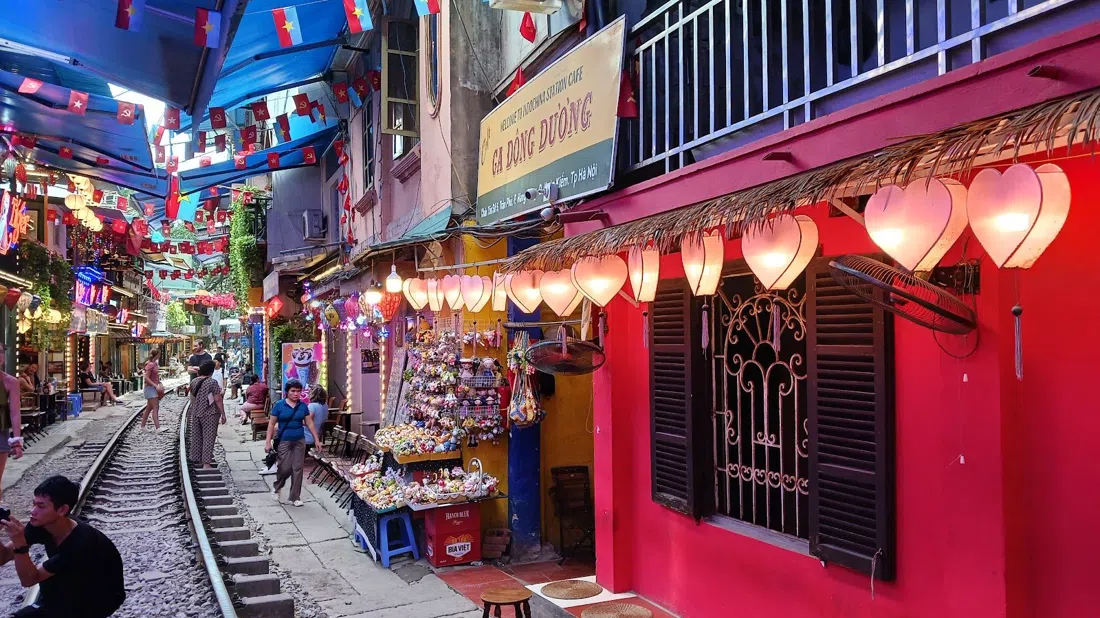
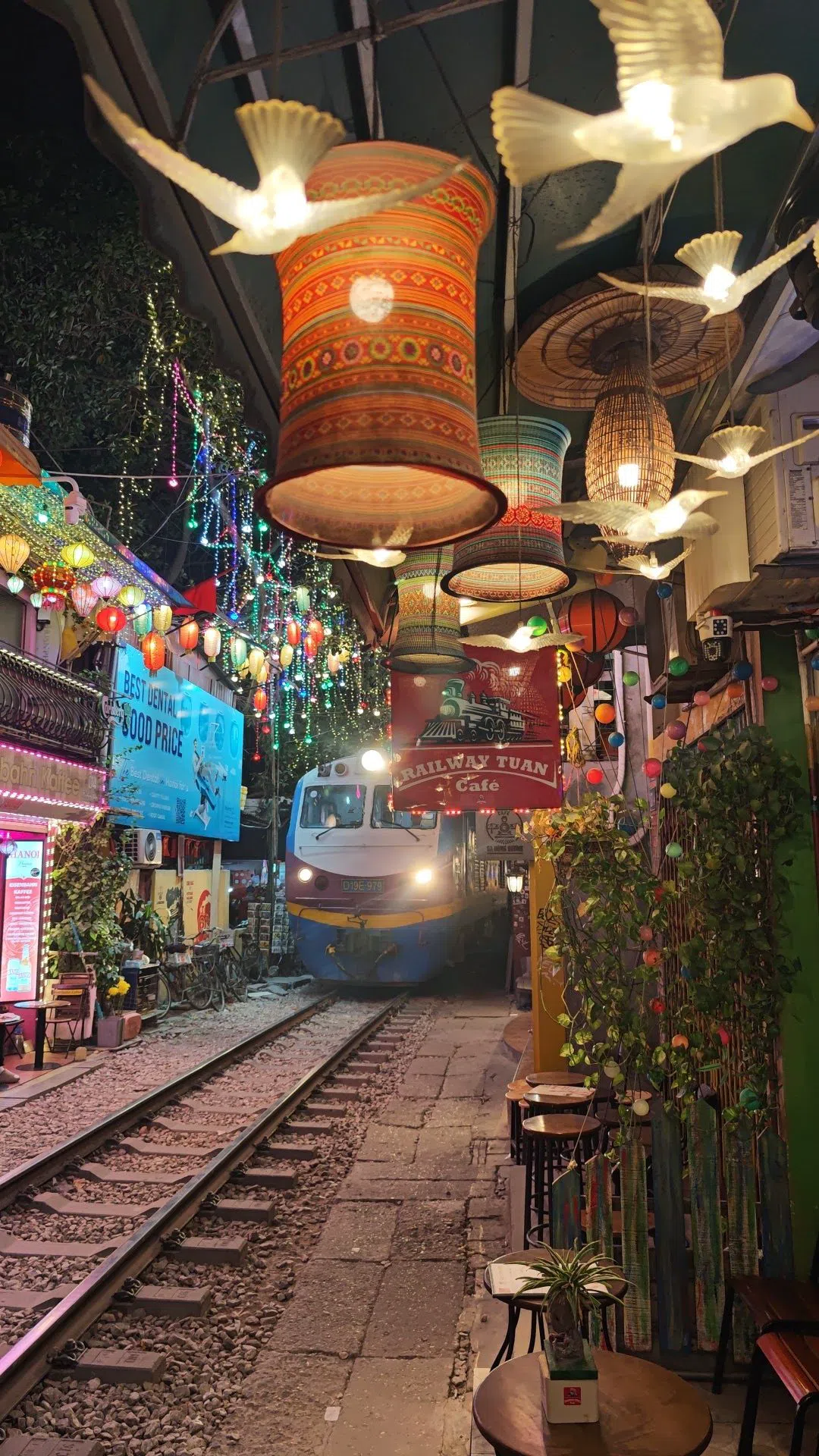
Next door, sharing the same historic crossing, Railway Tuan Cafe (also signed as The Railway Hanoi Cafe) is a distinct, separate business rather than an annex of its famous neighbour. It seats small groups streetside on a casual, walk-in basis, coffee priced the same 30,000–60,000 VND range, and it's the better vantage point if what you actually want to understand is the level-crossing barrier mechanism itself — the gate, the whistle sequence, the choreography that gets the street clear in time.
A few doors along, Coffee Waitrans 74 runs a tighter operation: small groups seated on low stools, with staff timing the seating to the posted train schedule rather than letting people linger indefinitely at the trackside edge. It carries the highest Google rating in the whole Phung Hung cluster, 4.5, and 2026 guides still confirm it running to that standard.
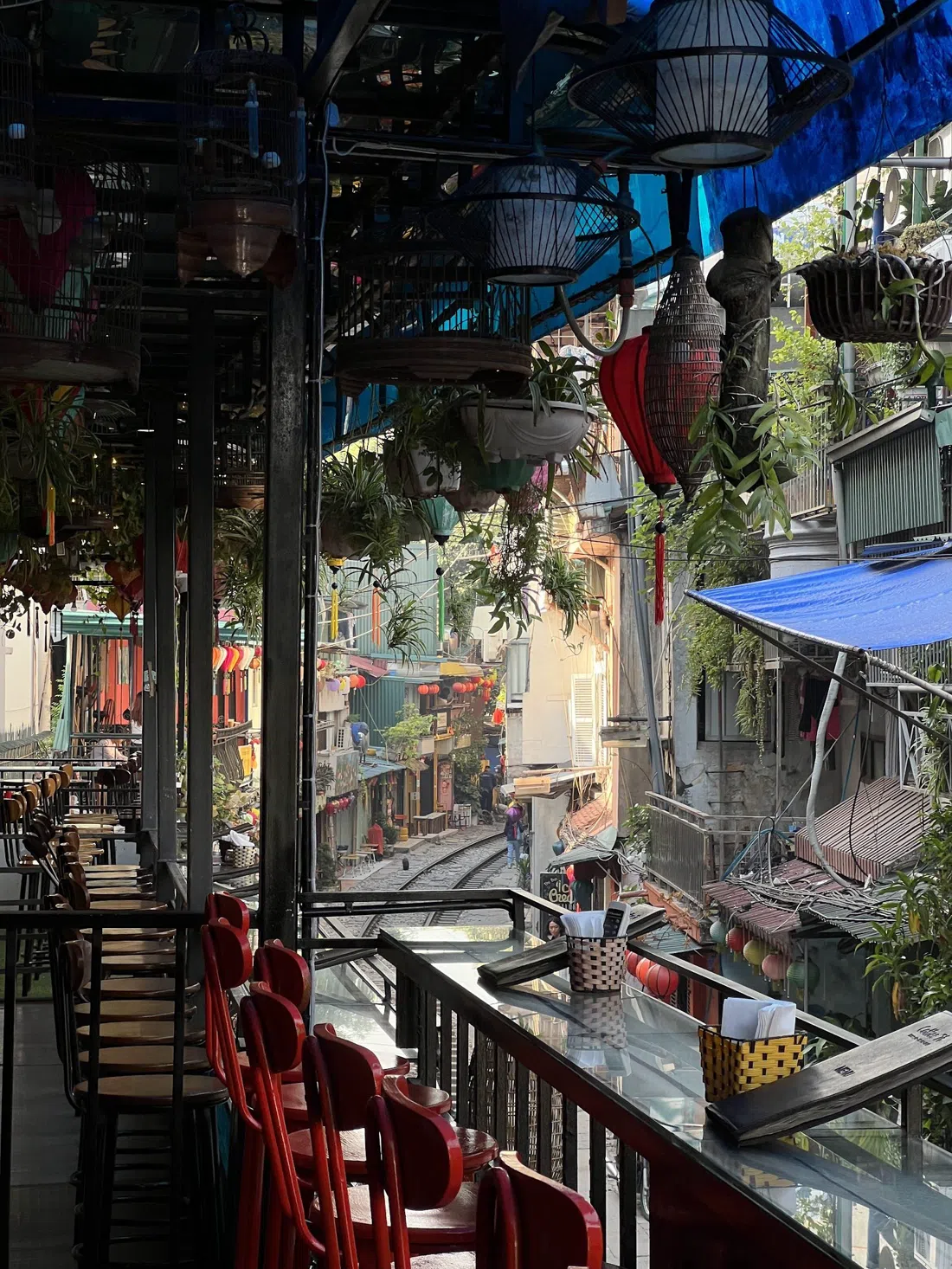
30 Train Coffee is the cluster's outlier for space — its seating is the most generous on Phung Hung, which matters more than it sounds once you've tried to fit four adults and their bags onto the stool arrangement most of these places offer. Coffee sits at 35,000–60,000 VND, and 2026 write-ups of the calmer end of the strip still name it as a reliable, well-regarded pick.
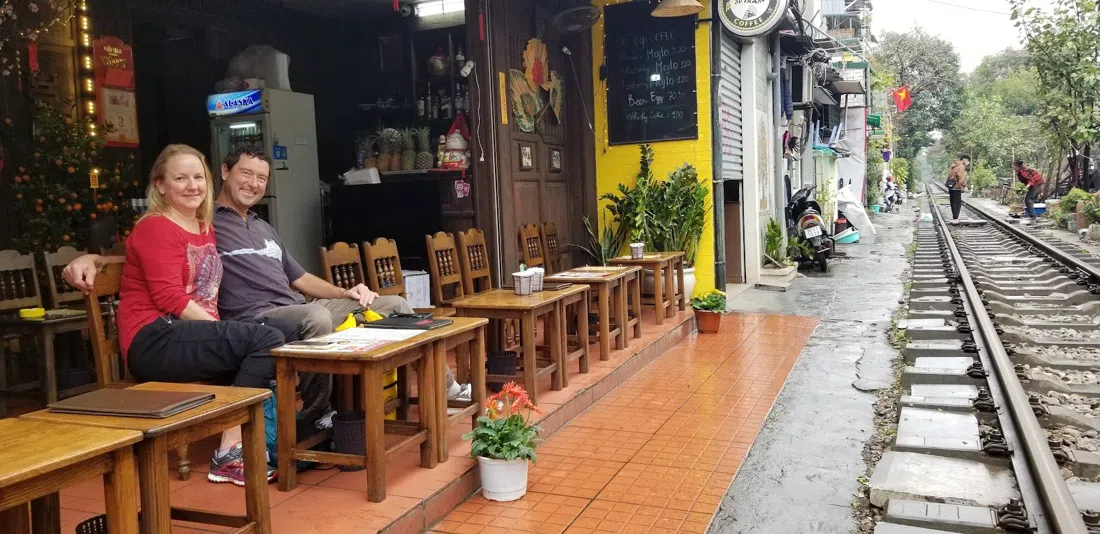
MER Café goes the other way: a genuinely compact room, best suited to two to four people rather than anything larger, and priced accordingly at 25,000–50,000 VND. It's one of the smaller number of cafés still licensed to seat visitors on this stretch, which is worth knowing given how the licensing question has shifted over the past few years.
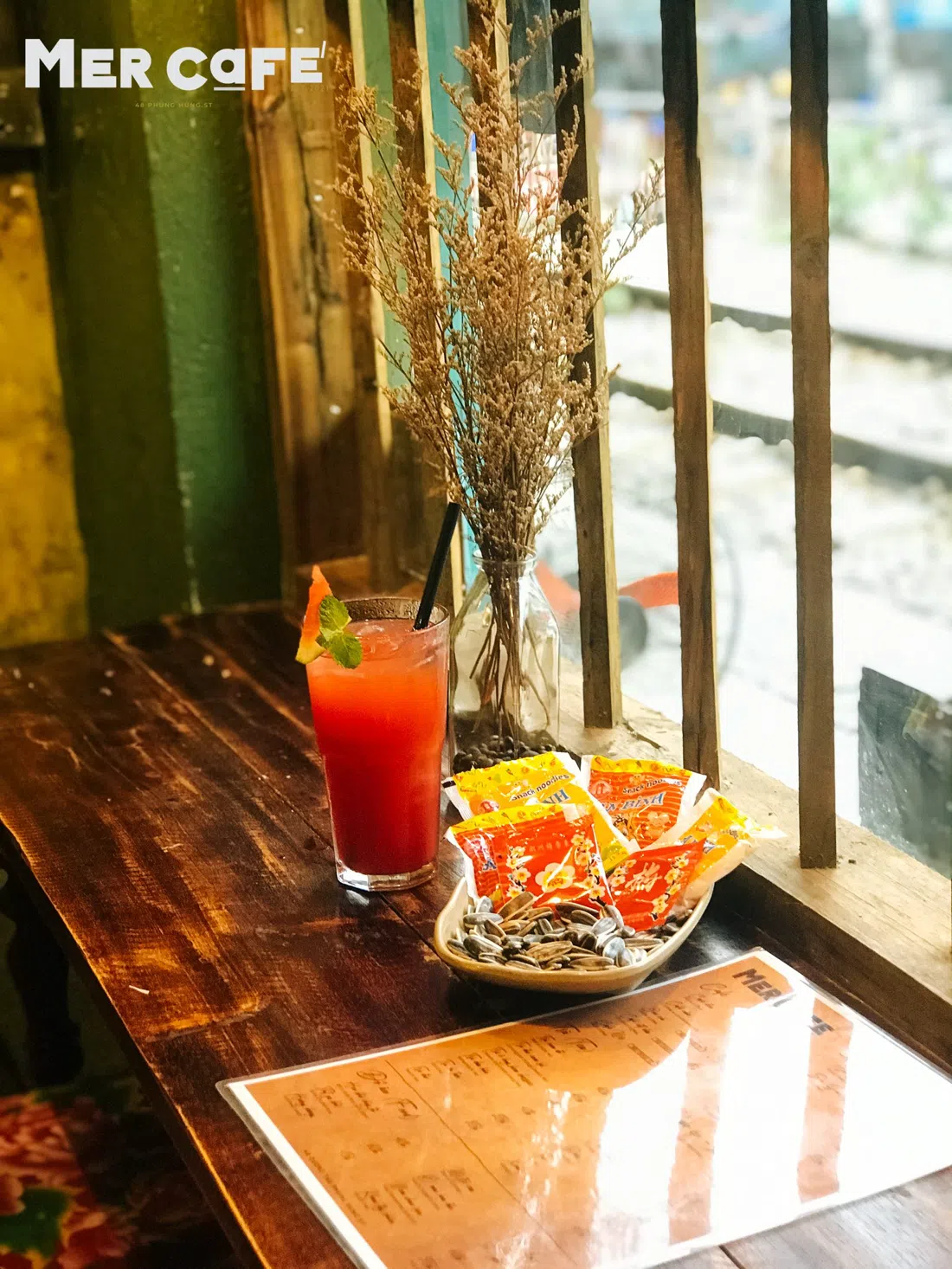
For contrast, Hảo Hảo Coffee is the cheapest seat on the whole strip, 15,000–30,000 VND, and the most informal — a small, unpolished footprint that hasn't been dressed up for the camera the way some of its neighbours have. It's a useful stop if the goal is to see Train Street as a lived-in residential lane rather than a staged backdrop, which, underneath the crowds, is still what it is.
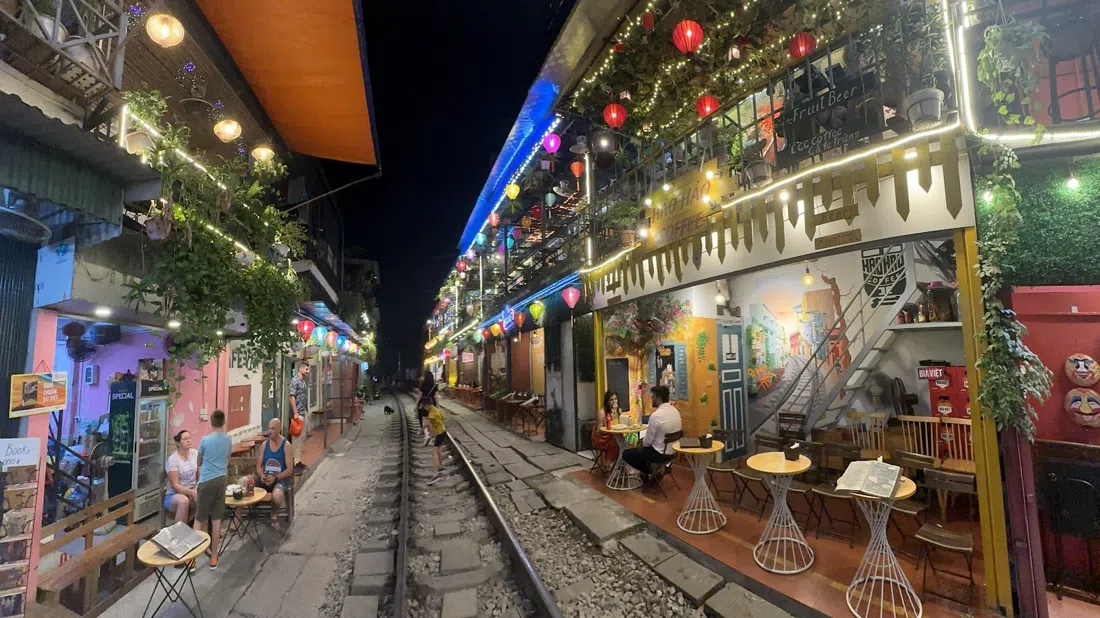
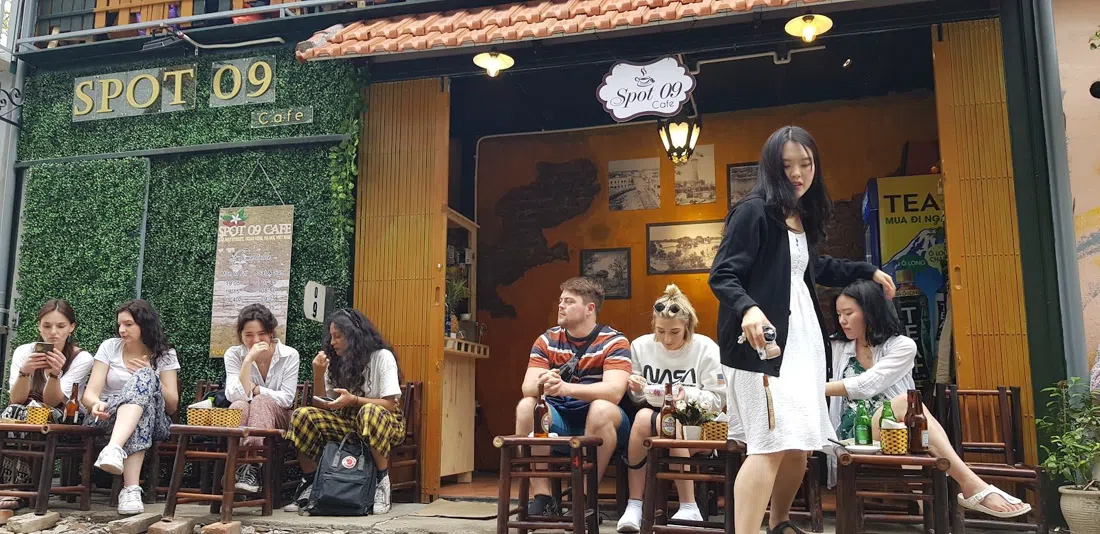
Spot 09 rounds out the cluster and is worth naming specifically for how it handles the one thing that actually matters here: staff visibly and actively manage distancing before each train, rather than leaving it to guests to judge for themselves how far back is far enough. It seats small groups comfortably and sits in the mid-range on price.
Who Actually Gets a Seat
None of the Phung Hung cafés are set up for big travelling parties, and it's worth being honest about that before you turn up with eight people expecting a table. Café Ga Đông Dương and the tightest rooms — MER Café especially — simply don't have the floor space, and pushing a large group onto a strip that's also managing a moving train is exactly the kind of crowding that has drawn police attention to this street before. Pairs and groups of three or four are the comfortable unit size almost everywhere on this stretch; Coffee Waitrans 74 and Spot 09 are the two that lean hardest into visibly organised safety, which makes them the sensible choice if you're travelling with anyone nervous about sitting a metre from a moving train, and 30 Train Coffee is the one to pick if legroom matters more to your group than the exact photo angle.
Beyond the Old Quarter: The Quieter Track on Lê Duẩn
The Phung Hung crossing is not the only place in the city where the railway runs through people's front rooms — it's simply the one that got photographed first. Further out, along the residential stretch near Lê Duẩn and Khâm Thiên, the same railway line runs through a section of the city that current guides increasingly steer travellers toward instead of the crowded Old Quarter corner, precisely because it still functions as an ordinary neighbourhood rather than a tourist set.
Nam Vy Coffee, branded locally as Hanoi Train Street 2, is the anchor café of this calmer stretch. It takes bookings by WhatsApp rather than walk-ins, and hosts small groups without the pressure tactics that can creep into the busier corner — nobody rushing you to order a second coffee before the next train. Prices sit slightly above the Old Quarter average, 40,000–70,000 VND, which buys a noticeably less harried afternoon.
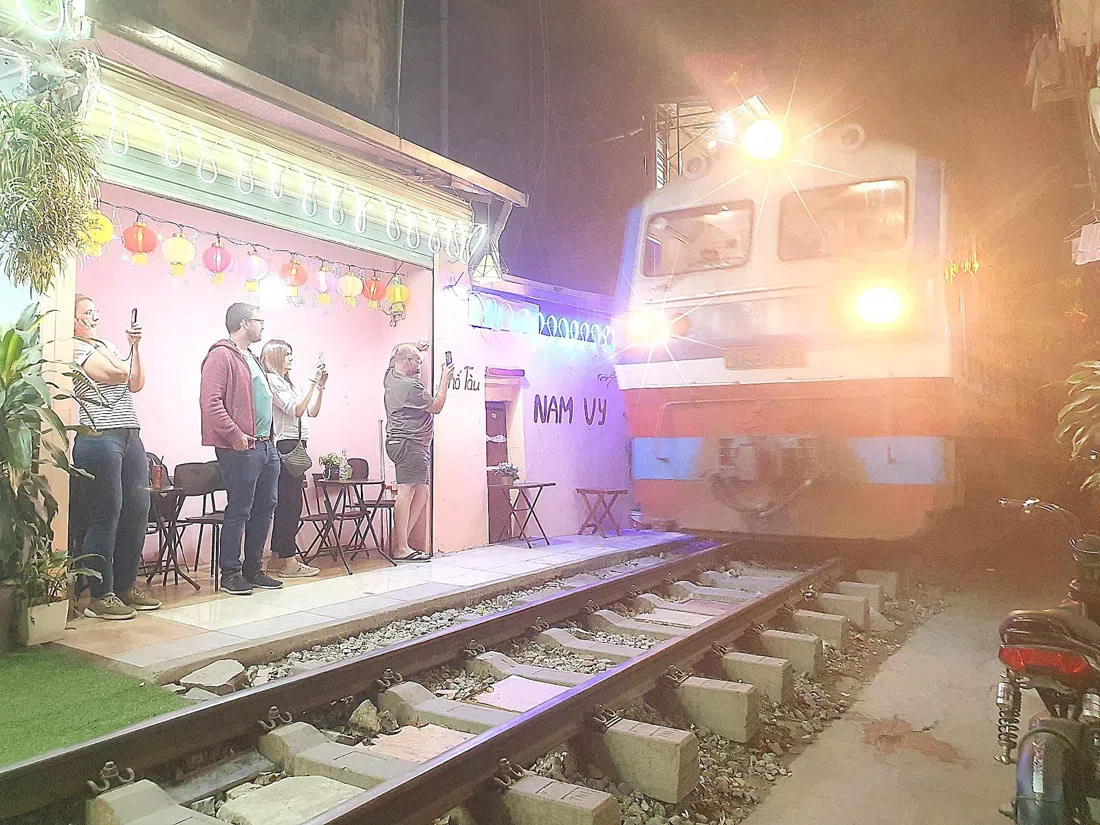
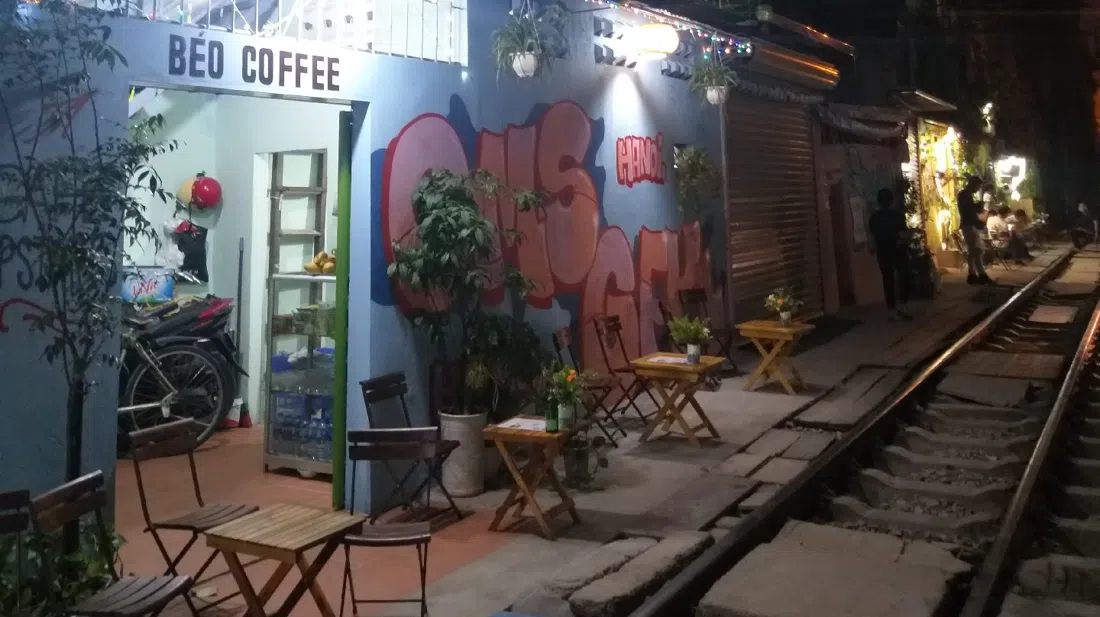
Its near neighbour, Beo Coffee, shares the same residential, far-less-touristed stretch of track and takes bookings the same way, via WhatsApp (+84 985 864 786). It's the budget option of this pairing and works well as a second stop if Nam Vy is full.
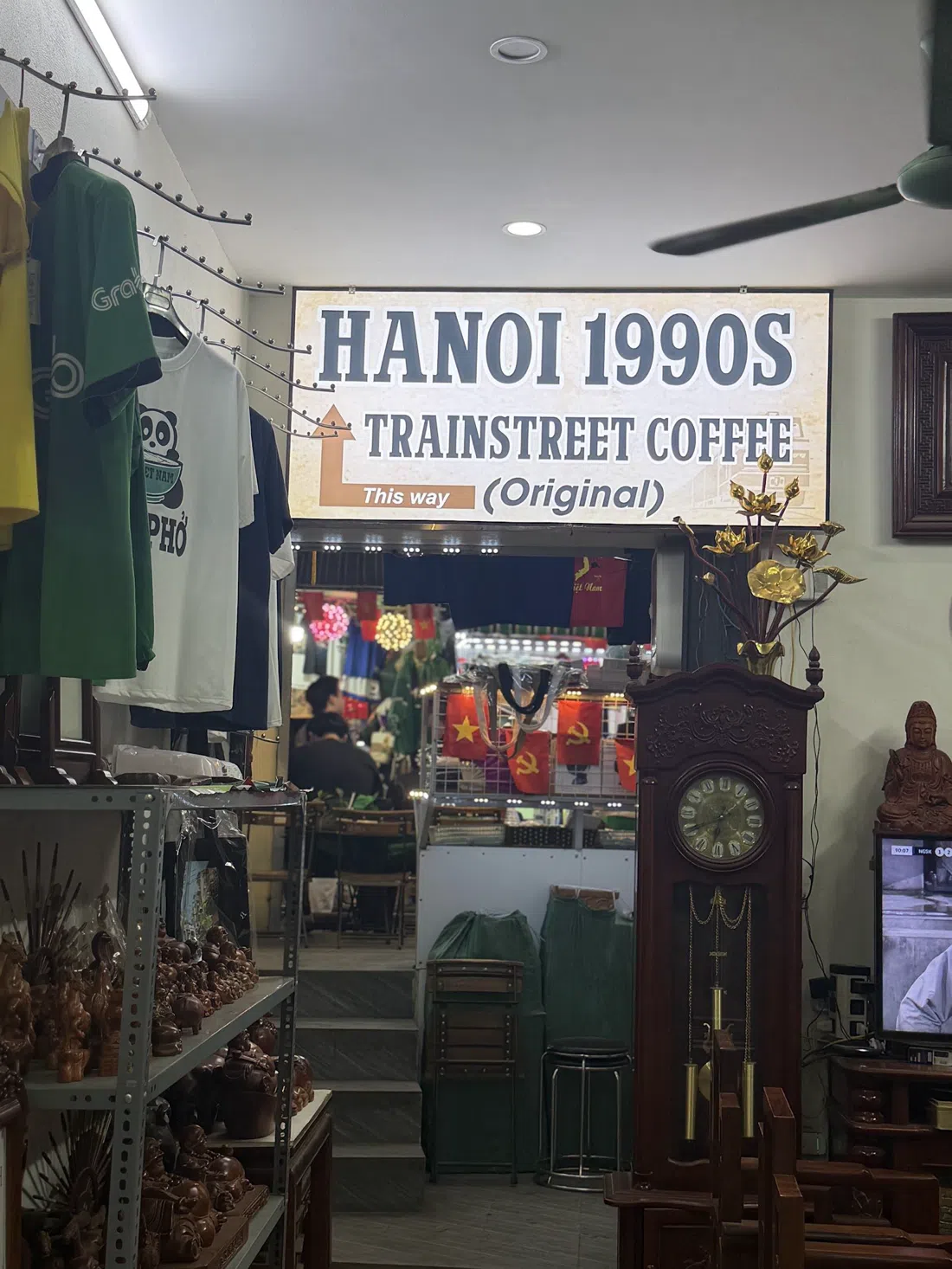
A short way along, Hanoi 1990s (also trading as TrainStreet Coffee) deserves particular mention for how it handles first-timers: English-speaking staff physically guide guests to a safe spot before each train comes through, rather than gesturing vaguely and hoping for the best. It's a good fit for small groups nervous about the whole premise, bookable through Instagram or WhatsApp, and priced budget to mid-range. If the goal of this trip is to actually understand how a family living beside an active railway manages the daily reality of it — not just to watch a train go past once — this stretch, more than the famous crossing, is where that story is visible.
Walking Further In: Guided Routes Since the March 2025 Ban
Organised group tours of Train Street itself were banned in March 2025, a response to exactly the crowding and safety concerns the cluster around Phung Hung had been generating for years. That doesn't mean the alleys beyond the tracks have become harder to reach with a guide — it means the good operators have moved their routes to the surrounding lanes instead of the rail corridor proper, which arguably makes for a better walk.
Hidden Hanoi: Secret Alleys, Local Life & Train Street, led by a guide named Thiên, is explicitly built for groups — capped at eight people — and runs on a pay-what-you-wish basis, cash only, with suggested tips in the €15–50 range depending on what you feel the walk was worth. It threads through the residential alleys around the railway rather than staging photos on the tracks, and at a 5.0 rating from 37 reviews, it's currently the clearest group-friendly route into the "beyond" side of this story.
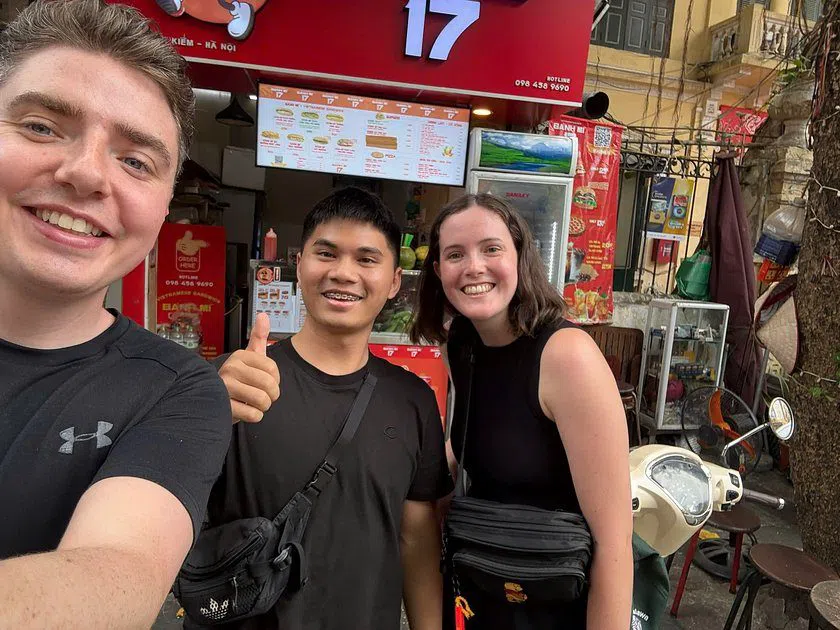
For a sharper, more specific angle, the On the Tracks Photography Tour, run by Vietnam Infocus, is sold as a private tour but priced with groups of three to five in mind — $101 per person at that group size, rising to $198 for a genuinely private booking, and non-photographers or children are welcome to tag along even if they're not shooting. It runs pre-dawn, 5:30 to 9:30am, through a quieter rail corridor the operator is careful to distinguish from the famous Train Street cluster — low light, empty platforms, a version of the same railway with none of the queue. That pre-dawn timing is deliberate rather than a scheduling quirk: the corridor the tour uses carries local freight and early commuter movements before the city itself is awake, which is a genuinely different rhythm from the tourist-hours passenger service that the Phung Hung crowd waits for.
Practical Notes
Transport. The Phung Hung cafés sit inside the Old Quarter and are walkable from most central hotels; a Hanoi hotel search turns up plenty within ten minutes on foot. Grab and metered taxis can drop you close to the Tran Phu junction, though the last stretch is often pedestrian-only once a train is due. The Lê Duẩn/Khâm Thiên stretch is further out and best reached by taxi or ride-hailing app rather than on foot.
Cash. VND cash is the default currency across every café on this list; carry small notes, since none of these are set up for card payments, and the WhatsApp-booking cafés on the quiet stretch will still expect cash on arrival rather than a deposit.
Timing. Train times shift, and no café will give you a guarantee down to the minute — ask staff when you sit down, and expect the street to be physically cleared and the barrier down a few minutes before the scheduled pass. Afternoons tend to be calmer than the early-evening slot, which draws the heaviest crowds to the Phung Hung crossing specifically. Weekends compound the problem further, so a weekday afternoon is the closest thing to a quiet window this street has, and it's also the easiest time to get a seat without waiting on one of the busier stools to clear.
Budget. A coffee at any of the Old Quarter cafés runs 15,000–70,000 VND (well under $3), making this one of the cheapest sit-down experiences in the city regardless of which spot you choose. The guided routes cost more — a token tip for the Hidden Hanoi walk, over $100 per person for the photography tour — but both price in a level of access and context a solo wander along the tracks won't give you. For the wider context on where to base yourself and what else the city offers around this corner of it, the Hanoi guide is the place to start.