The Hanoi issue
Hanoi for Three Generations Without Wearing Anyone Out
How to plan Hanoi for a group that runs from five years old to eighty: culture in short seated bursts, lunch in the air conditioning, and two day trips everyone can manage.

By Rui MarquesTwo unhurried days, not nine temples
Hanoi's Old Quarter was laid out as thirty-six trade streets, each named for the guild that worked it (paper, tin, silk, votive offerings), and it still behaves like a working market rather than a preserved centre. The pavements belong to parked scooters and cooking fires, the midday heat sits between the buildings with nowhere to go, and nothing about it rewards a long improvised walk with a pushchair and an eighty-year-old in the same party. None of that makes the city hard. It does mean taking it in short, seated, air-conditioned pieces, with a proper meal between each one.
How to shape a day when the group is mixed
The working rhythm is out early, indoors at midday, out again at dusk. Between roughly 07:30 and 11:00 the streets are cool enough to walk and the phở counters are at their best; from late morning until mid-afternoon, take a museum with air conditioning, a long lunch, or the hotel. From 16:00 the city reopens and stays comfortable until well after dark, which is when a five-year-old and a grandparent can both manage the lake.
Base the group within a ten to fifteen minute walk of Hoàn Kiếm Lake and almost everything in this guide becomes a short taxi at worst. The streets immediately east and south of the water are calmer than the Old Quarter core, with wider pavements and fewer late karaoke rooms above the bedrooms. Start a Hanoi hotel search there rather than on the busiest lanes, and ask specifically for a lift if anyone struggles with stairs, since plenty of otherwise good Hanoi hotels are tall, narrow tube-houses with a small one.
Plan your Hanoi trip
Live prices from our booking partners.
Free cancellation on many rooms. We may earn a commission when you book.
An hour of culture that asks nothing of anyone
Water puppetry began in the flooded rice fields of the Red River delta, performed waist-deep by villagers behind a bamboo screen, and it survives in Hanoi as a 45 to 50 minute stage show over a pool of water. Thang Long Water Puppet Theatre (Hoàn Kiếm, on the lake's north-east corner) runs five performances daily at 15:00, 16:10, 17:20, 18:30 and 20:00, in a large tiered auditorium that takes a group without any fuss. Seats are 100,000–200,000 VND (roughly £3–6 / $4–8) by category, and you block-book by category rather than negotiating a row.
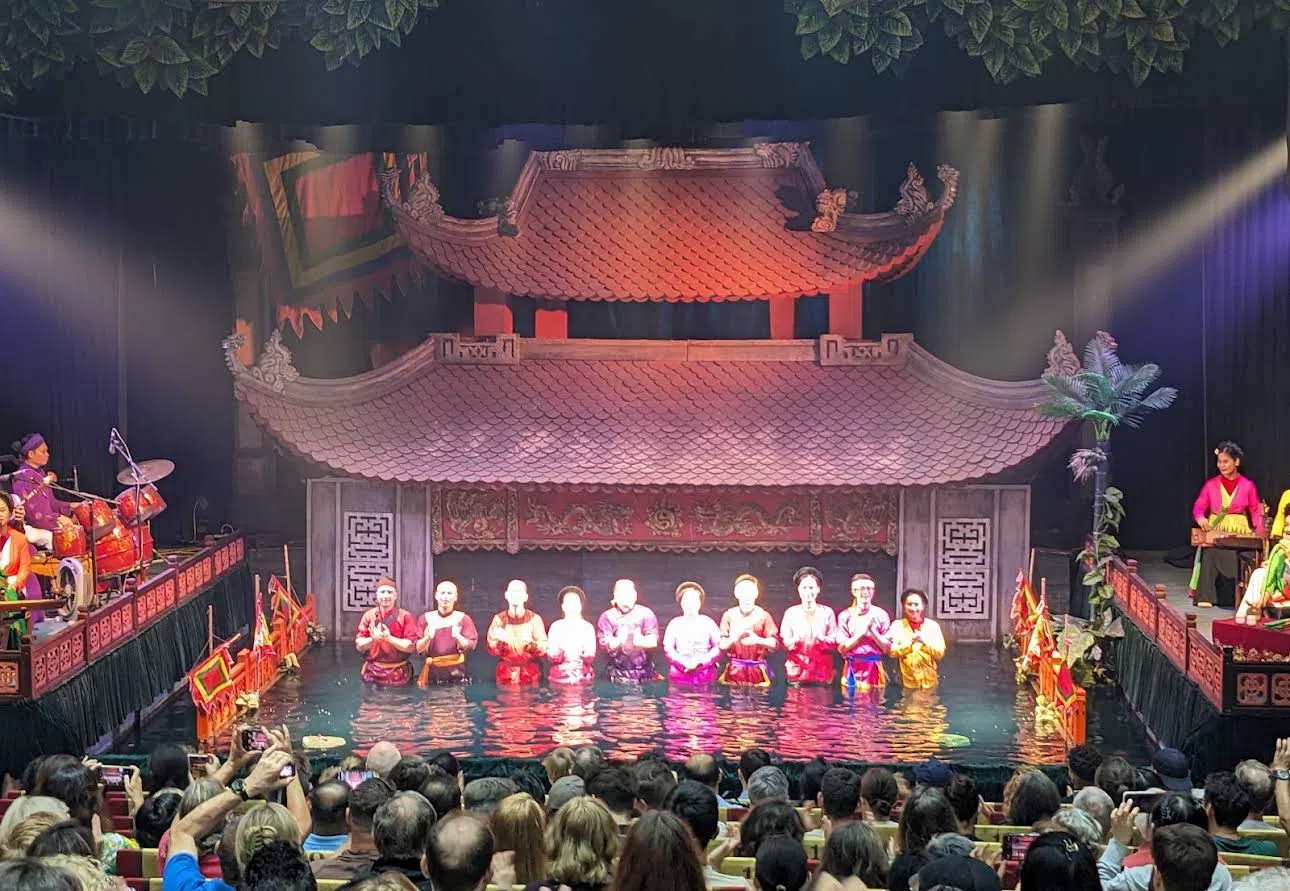
For a mixed-age party it is the most dependable culture hour in the city, and the reason is structural: there is no dialogue to follow. Nobody needs to read a subtitle, translate for a parent, or keep a child quiet through an explanation. Everyone is seated, the live musicians carry the narrative, and it ends before anyone's patience does. Saturday evening and Sunday afternoon sell out first, so book those a few days ahead; a weekday 17:20 show is usually available late and leaves you out in time for dinner.
Flat heritage you can walk end to end
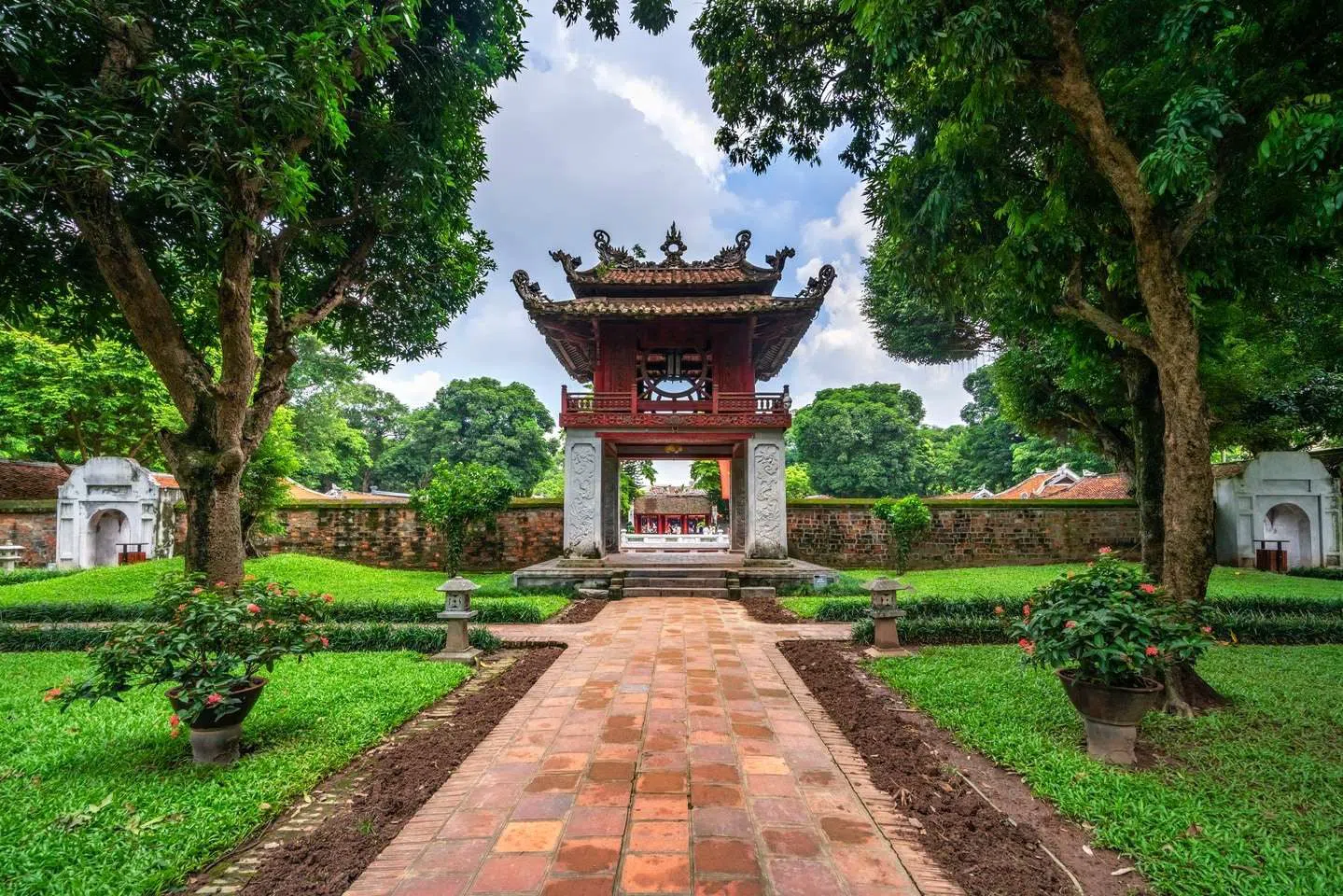
Temple of Literature — Văn Miếu – Quốc Tử Giám (Đống Đa, about 2km west of the lake) was founded in 1070 and became the country's first university six years later; the stone stelae on their tortoises carry the names of doctoral graduates going back to the fifteenth century. For this group its real virtue is physical. The site is flat, shaded by old trees, and walkable end to end in an hour, with courtyards to sit in between each gate. Day entry runs 30,000–70,000 VND. At weekends it opens into the evening until 21:00, and a separate ticketed night experience using 3D projection mapping starts at 18:30, from about $8. That one is worth it if the afternoon was written off by heat, though it asks for more attention than the daytime wander does.
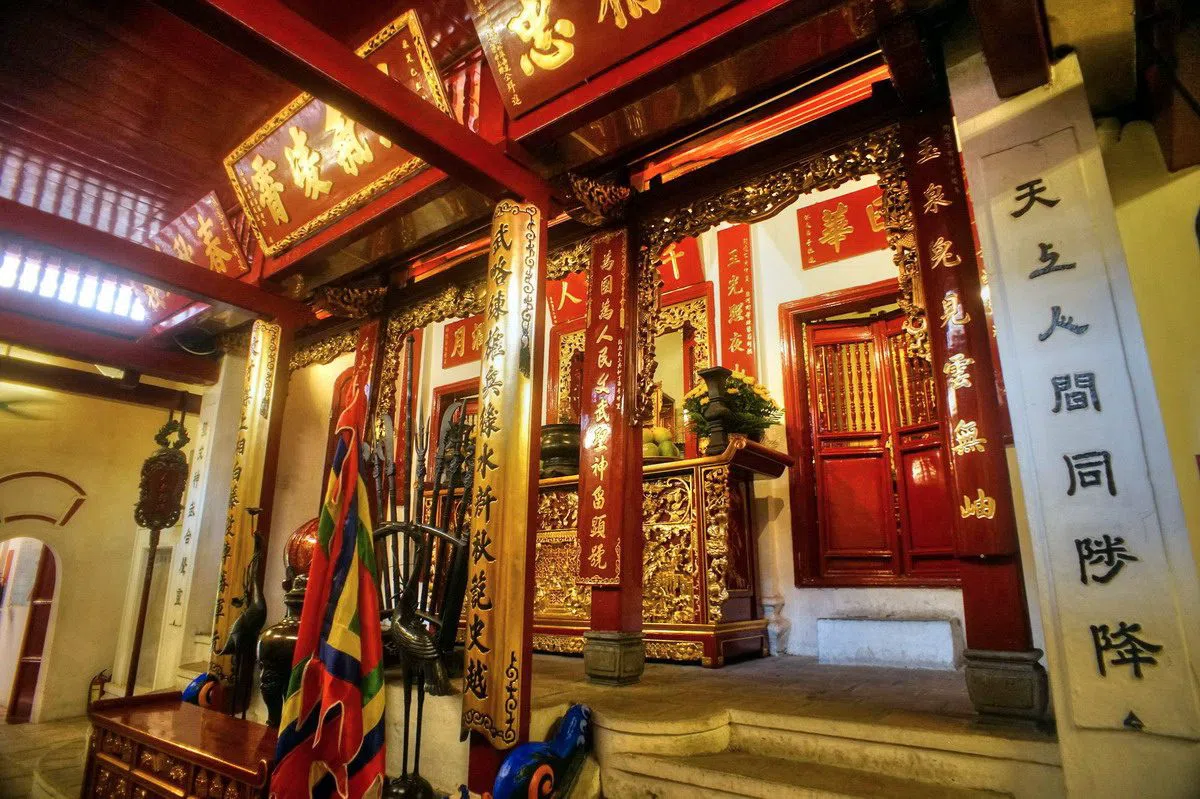
Ngọc Sơn Temple & Hoàn Kiếm Lake (Hoàn Kiếm, the centre of everything) deserves ten minutes rather than an afternoon, and treating it as an afternoon is the common mistake. You cross the red Thê Húc bridge, look at the temple to Trần Hưng Đạo, and come back out; entry is 30,000–50,000 VND and shoulders and knees need covering. The lake itself is the thing to plan around. From 19:00 on Friday until midnight on Sunday the ring road closes to traffic and becomes a pedestrian zone: flat tarmac, no scooters, buskers, children on hired electric cars, grandmothers playing badminton across the carriageway. It is the easiest free evening in Hanoi with a wide age range, and the one night you can genuinely let a child walk ahead of you.
Where to go when the heat has beaten everyone
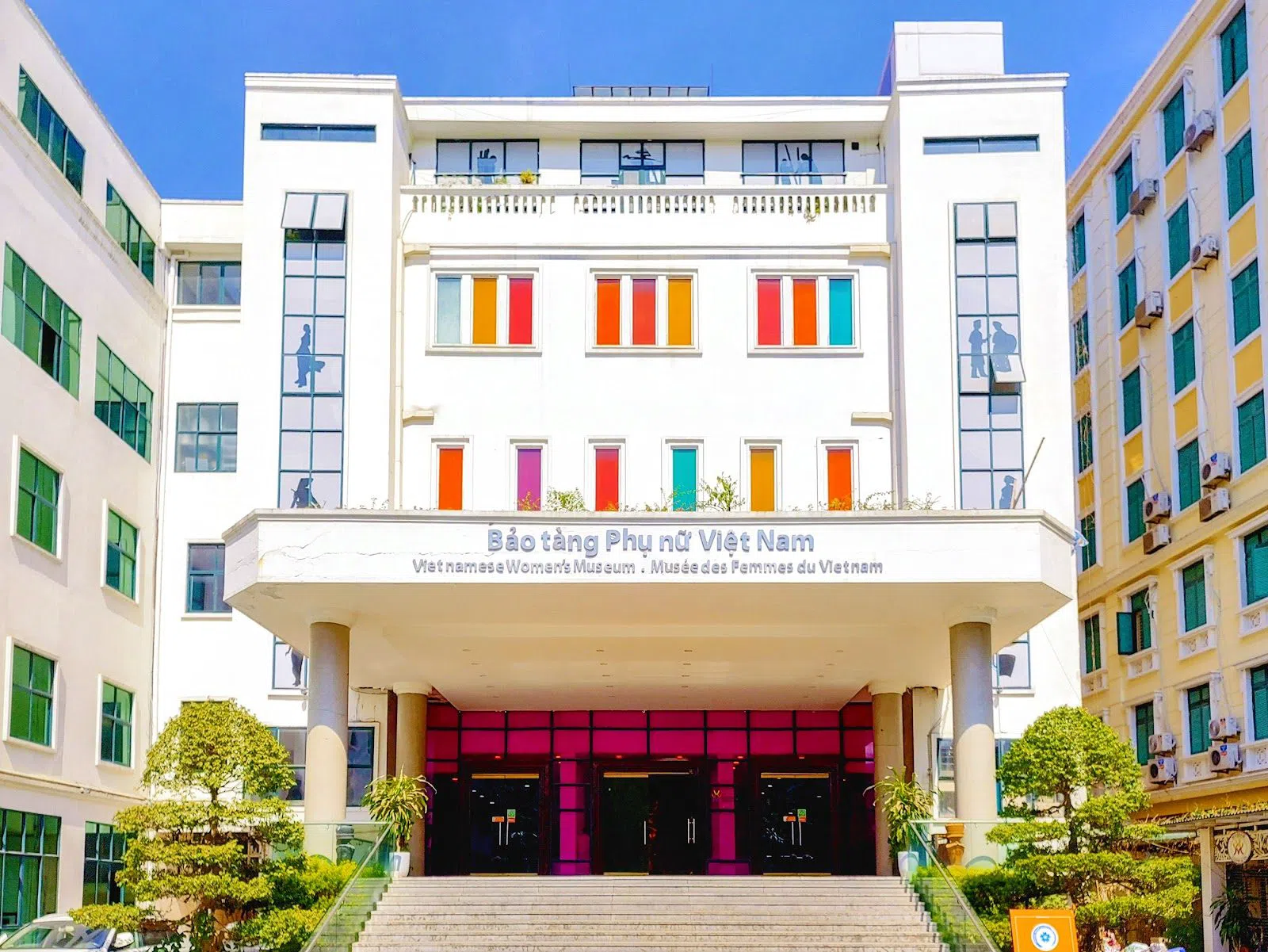
Vietnamese Women's Museum — Bảo tàng Phụ nữ Việt Nam (Hoàn Kiếm, a few minutes south of the lake) is the best hour of indoor culture in the centre. It is compact, air-conditioned, served by a lift, and labelled in English to a standard most larger museums in the region do not reach, with marriage and birth customs on one floor and street vendors and wartime history above. Entry is 40,000 VND for adults, 20,000 VND for students, free under six. One practical trap: the ticket desk takes cash in VND or a local QR payment only, and will not accept a foreign card. Small groups walk in; anything over about ten should call ahead.
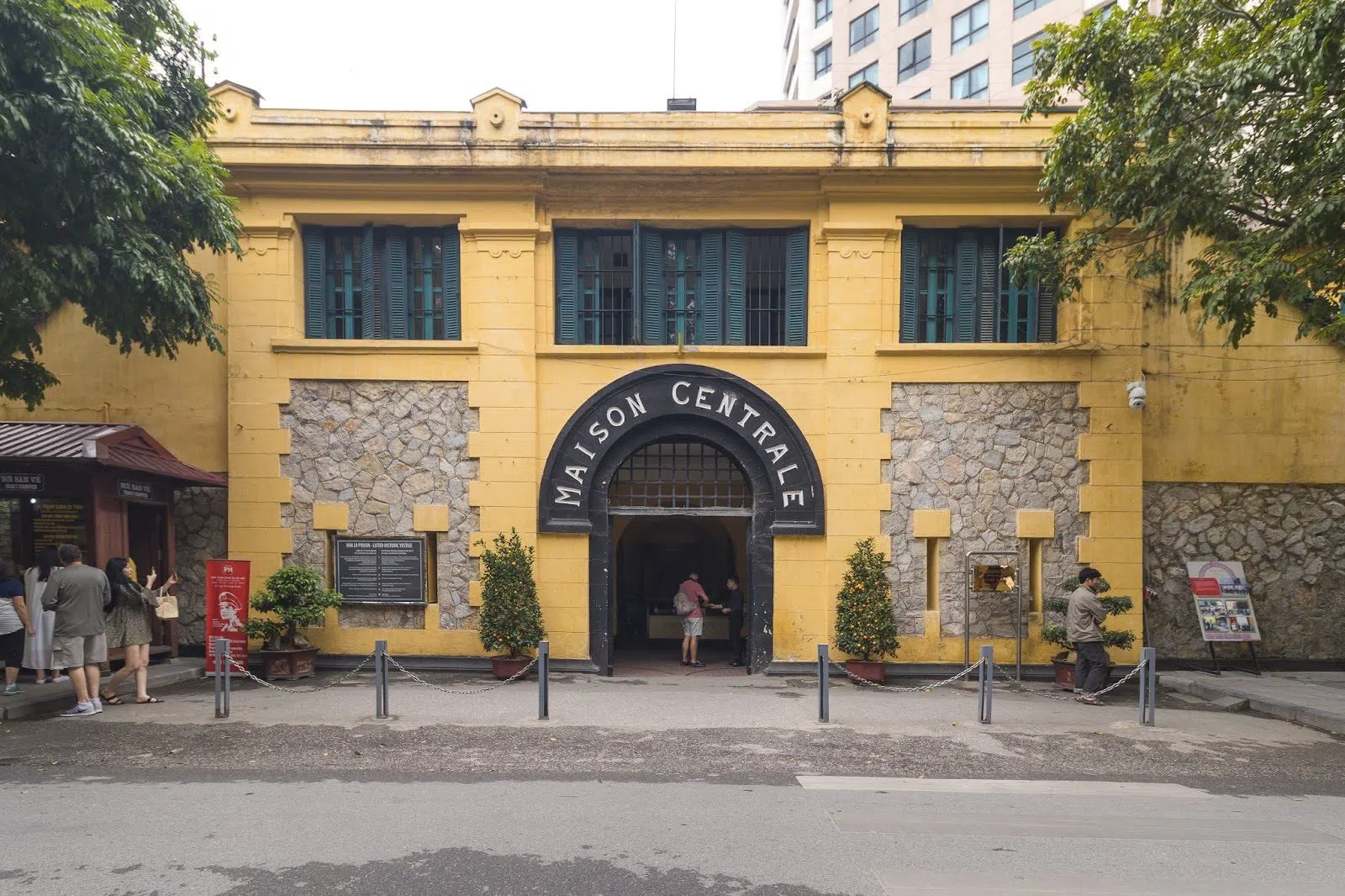
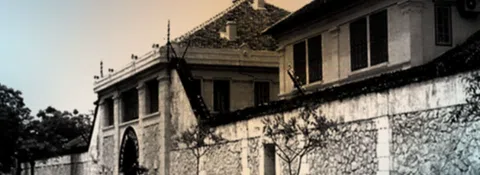
Hỏa Lò Prison Relic (Hoàn Kiếm, ten minutes' walk from the Women's Museum) is the opposite kind of visit. Built by the French in the 1890s and later used to hold captured American pilots, it is genuinely heavy going; the guillotine room and the shackled cells are not something to walk a seven-year-old through without thinking about it first. Physically it is gentle: a compact indoor route, air-conditioned halls, benches, day entry of a few dollars, open 08:00–17:00 daily including holidays. Older teenagers and adults get a great deal out of it. The 'Đêm Thiêng Liêng' (Sacred Night) tours on Friday and Saturday evenings, 19:00–21:00, are capacity-limited, cost 399,000–499,000 VND per person, and need booking weeks out. They are a serious, well-staged piece of theatre and a poor fit for young children.
The museum with room to run
Vietnam Museum of Ethnology — Bảo tàng Dân tộc học Việt Nam (Cầu Giấy, about 8km from the Old Quarter) is where the family splits up happily for two hours. Indoors it covers all fifty-four recognised ethnic groups. Outdoors, full-scale houses have been rebuilt in a garden: stilt houses to climb into, a long communal house, shade and benches for anyone who wants to sit while the children roam. Open Tuesday to Sunday, 08:30–17:30, closed Mondays and over Tết. Entry is 40,000 VND, 20,000 VND for students, free under six, and guided tours can be booked in English, Vietnamese or French.
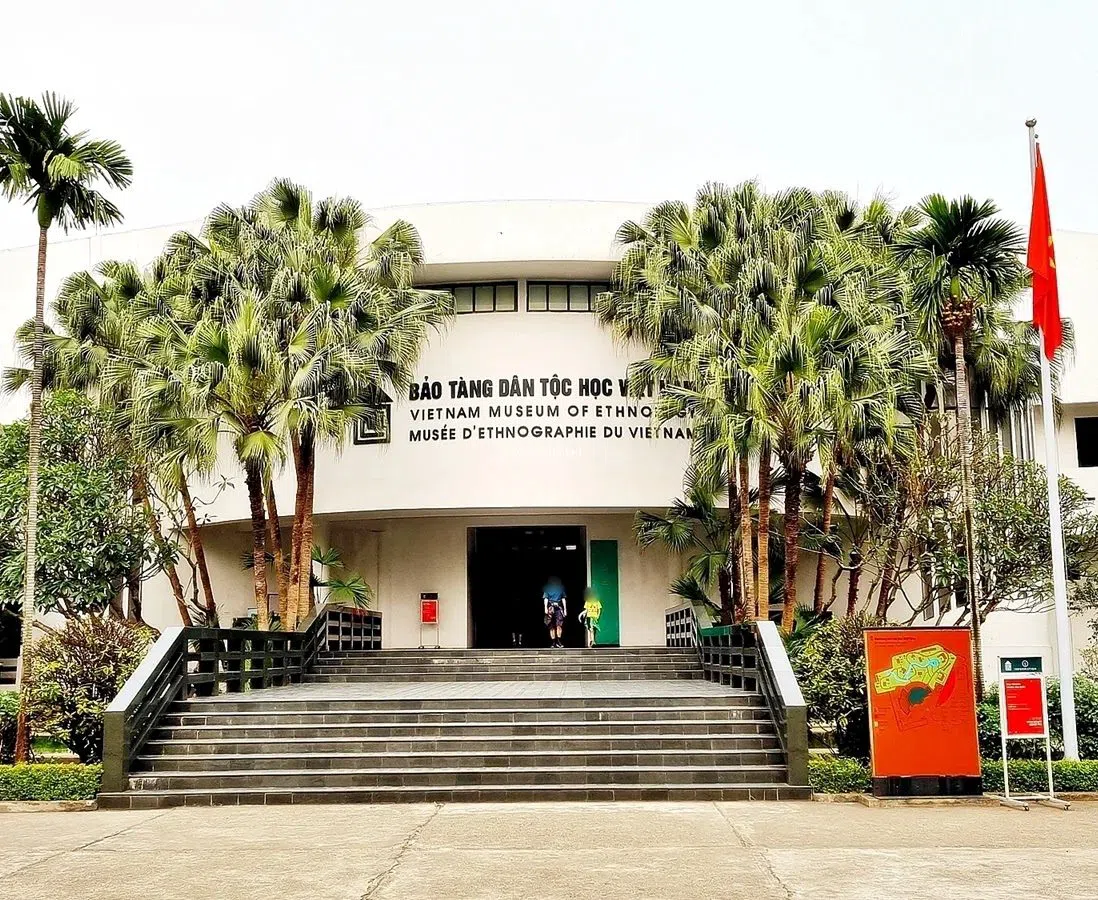
The distance matters. Take a taxi, give it the whole afternoon, and eat before or after rather than trying to wedge it between two central stops. The round trip alone eats an hour in traffic.
Meals that hold a whole table
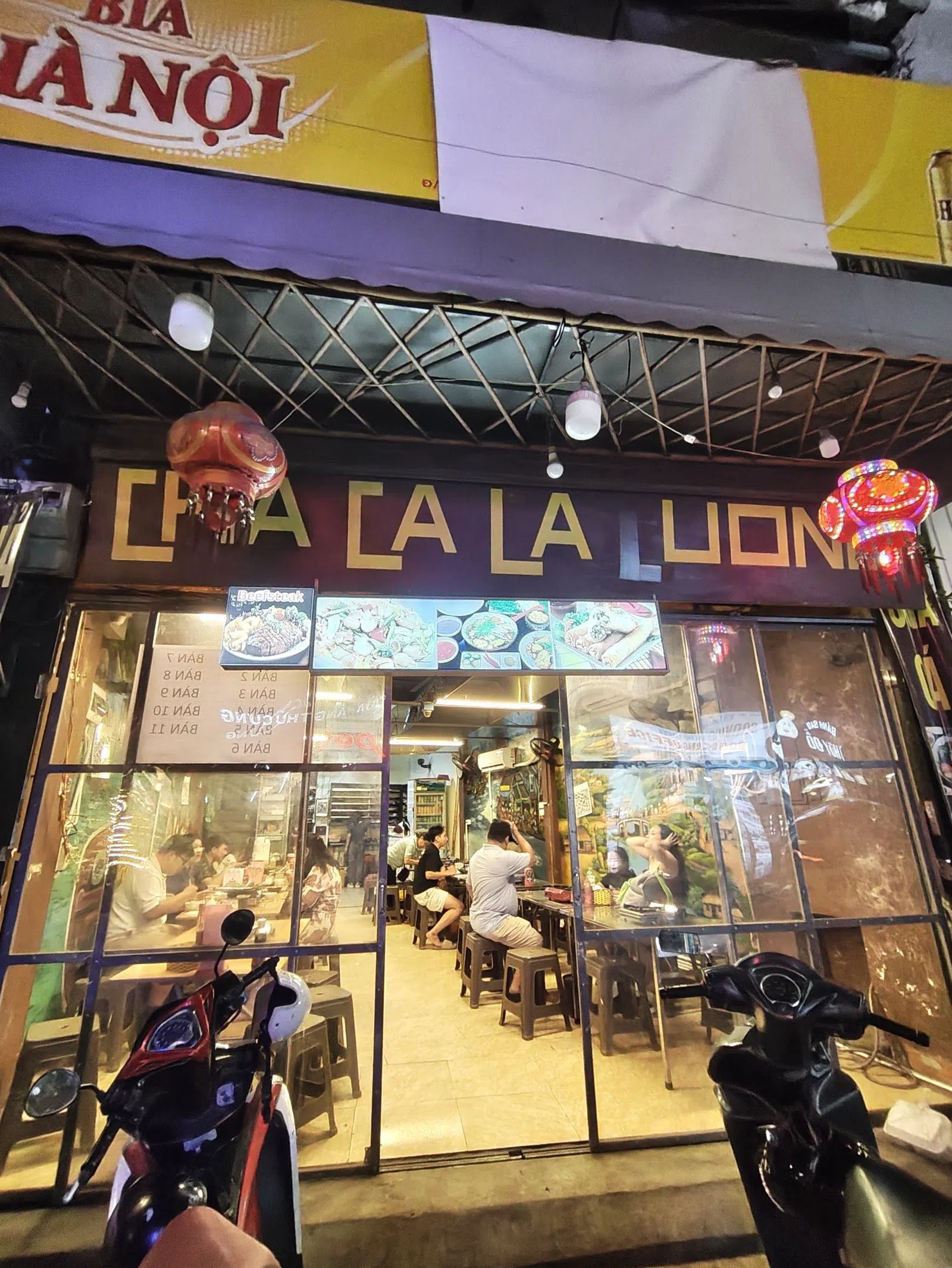
Chả Cá Thăng Long (Old Quarter, Duong Thanh street) is the most sociable meal in the city for a family, because it is one dish cooked at the table and shared from the middle: turmeric-marinated fish finished on a burner in front of you with dill, spring onion, peanuts and rice noodles. Two branches sit on the same street at 2D and 6B, with bamboo garden seating and private rooms, open roughly 10:00–22:00 with last orders at 21:30. Around 200,000–300,000 VND a head. The tableside cooking keeps children occupied for a good twenty minutes, which is the real value. Navigate by the street address, because the restaurant's own site warns that its Google Maps pin has been hijacked.
Luk Lak (French Quarter, a short taxi south-east of the lake) is the dinner to book when nobody can agree. Three floors, private rooms for parties of seven or eight, capacity for around 200 in total, English menus, air conditioning and an unhurried pace; daily 07:30–22:00, last orders 21:30, and reserve for anything over six. Madame Bình cooked twenty-five years at the Metropole and the cooking shows it: modern Vietnamese that is refined without being strange. Budget 400,000–700,000 VND a head.
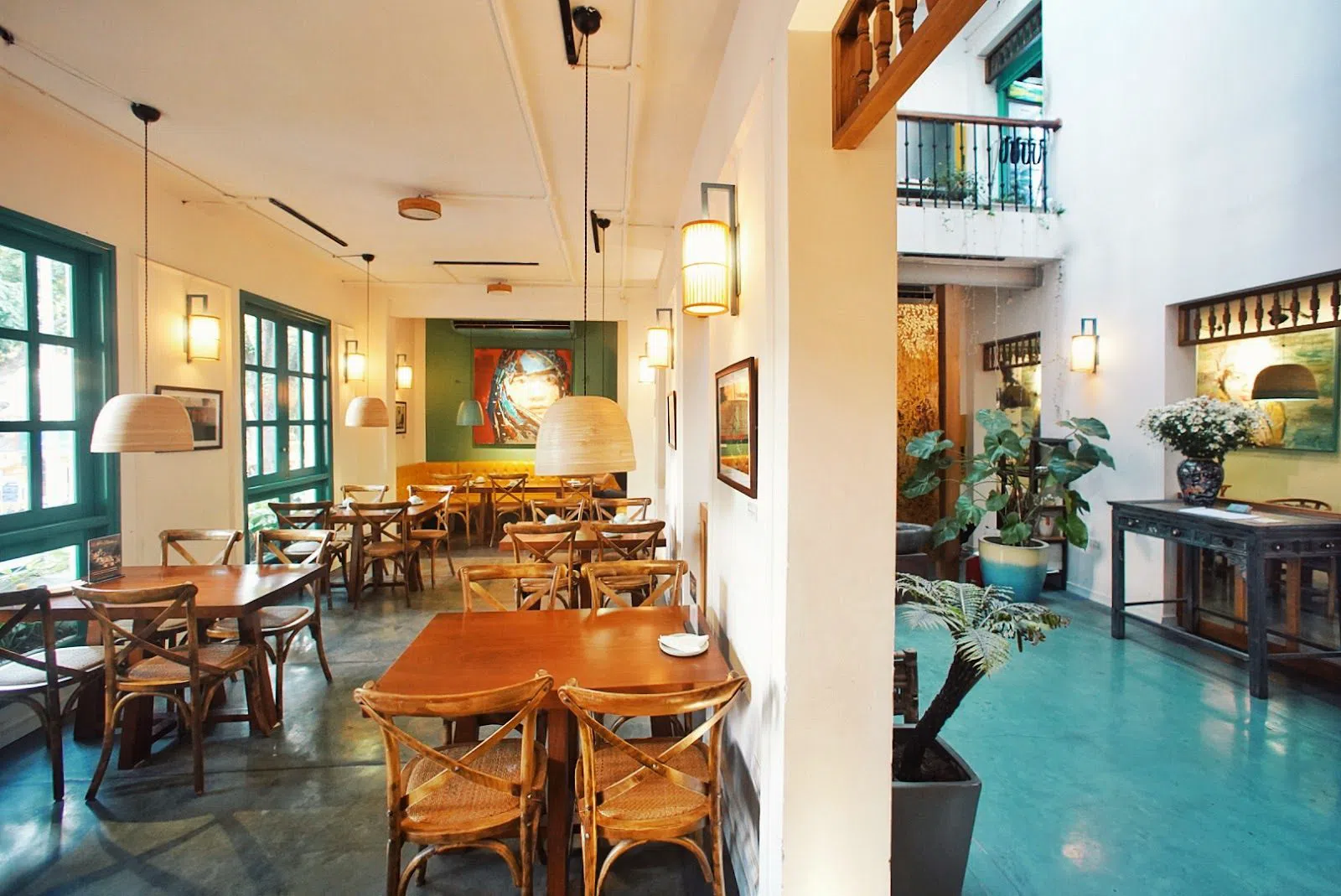
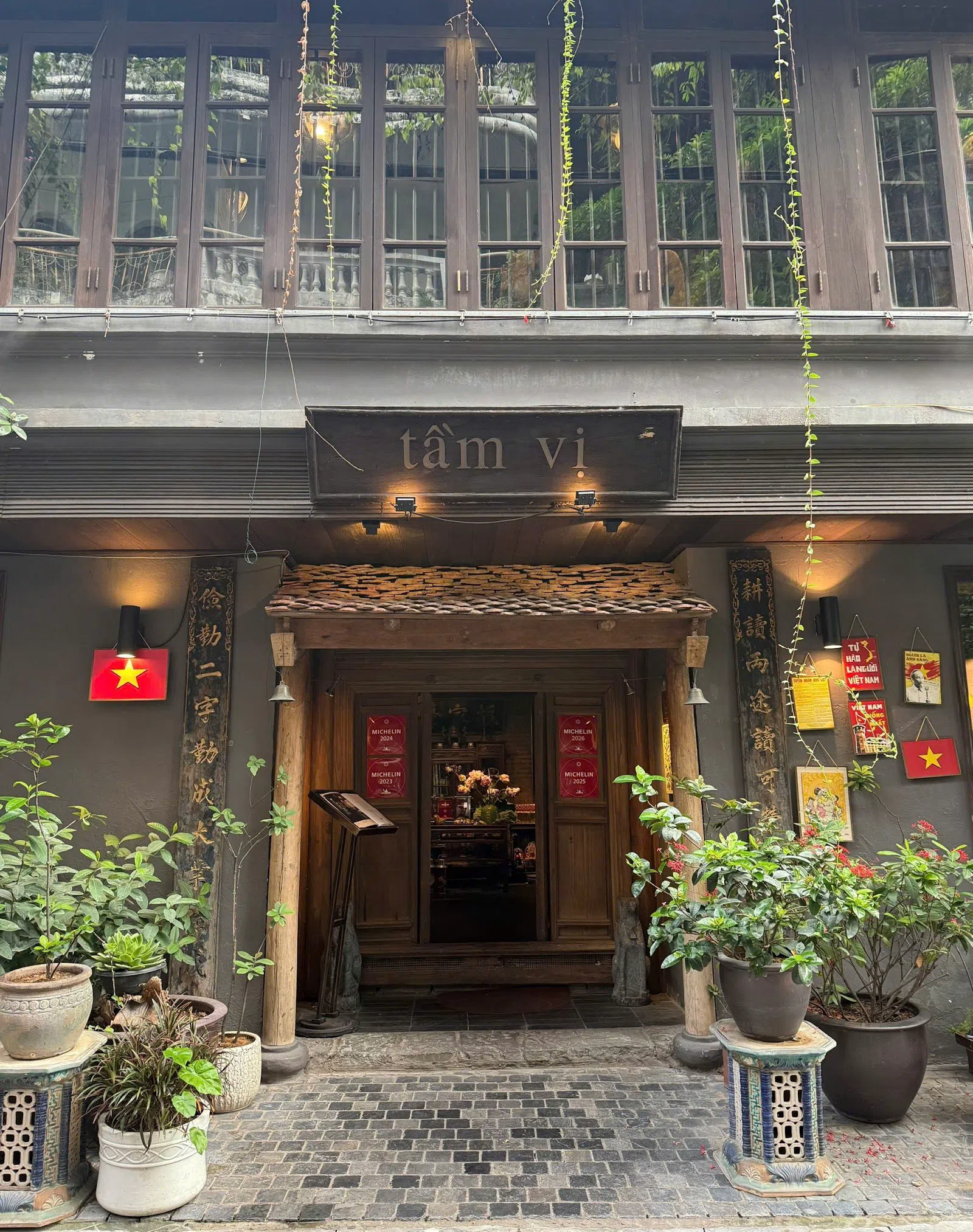
Tầm Vị (Đống Đa, a short walk from the Temple of Literature) holds one Michelin star for food served the way a Hanoi family actually eats: braised pork in a clay pot, crab and greens soup, everything landing on one tray in the middle. Set menus run roughly 600,000–900,000 VND a head, which is low for a starred kitchen and upper-mid for Hanoi. It is small, two floors and a courtyard, so six or more needs booking well ahead. Nothing is foamed or tweezered, which is precisely why it works with older relatives who would rather eat than be impressed.
Cheap lunches, and the coffee worth the stairs
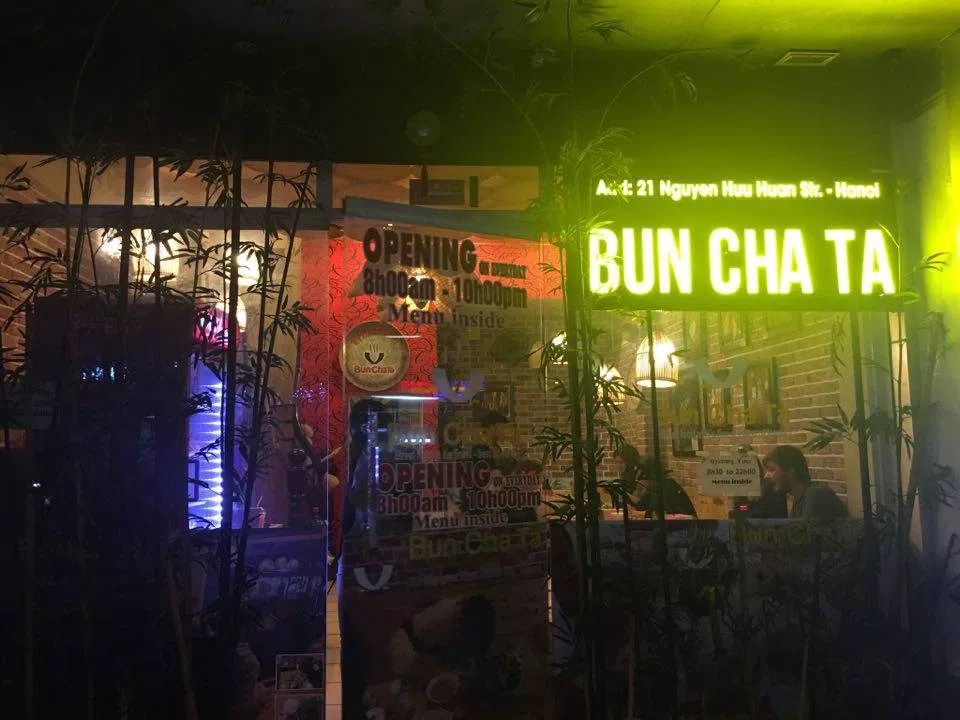
Bún Chả Tạ (Old Quarter) has been a Bib Gourmand three years running and offers the thing most bún chả counters lack: an air-conditioned room with proper chairs, alongside the street-side tables for anyone who wants to watch the road. That is the difference between grandparents enjoying lunch and enduring it. Around 70,000–150,000 VND a head; the crab and chicken spring rolls are worth ordering, and there is a tofu version for vegetarians. Call ahead for more than six.
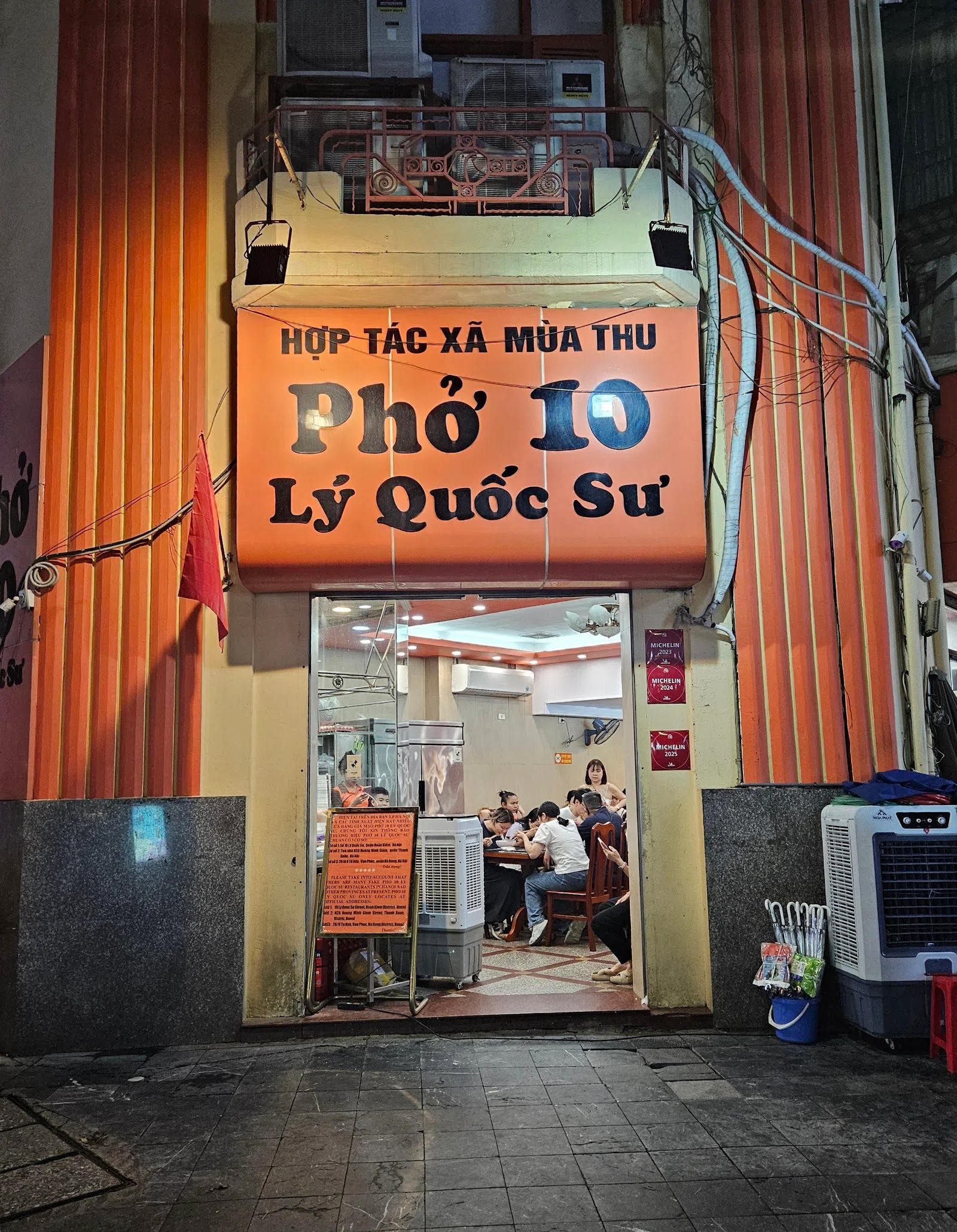
Phở 10 Lý Quốc Sư (Hoàn Kiếm, near St Joseph's Cathedral) serves ten cuts of beef on one menu, so everyone orders the bowl they want, rare, brisket or flank, and nobody is negotiated into something they will not eat. Open 06:00–22:00 daily, 60,000–100,000 VND a bowl, with upstairs seating for overflow. Unlike the famous queue-and-stand counters, it has tables and a long opening day, which matters with a family in tow. Big groups should expect to split across two or three tables rather than get one long one.
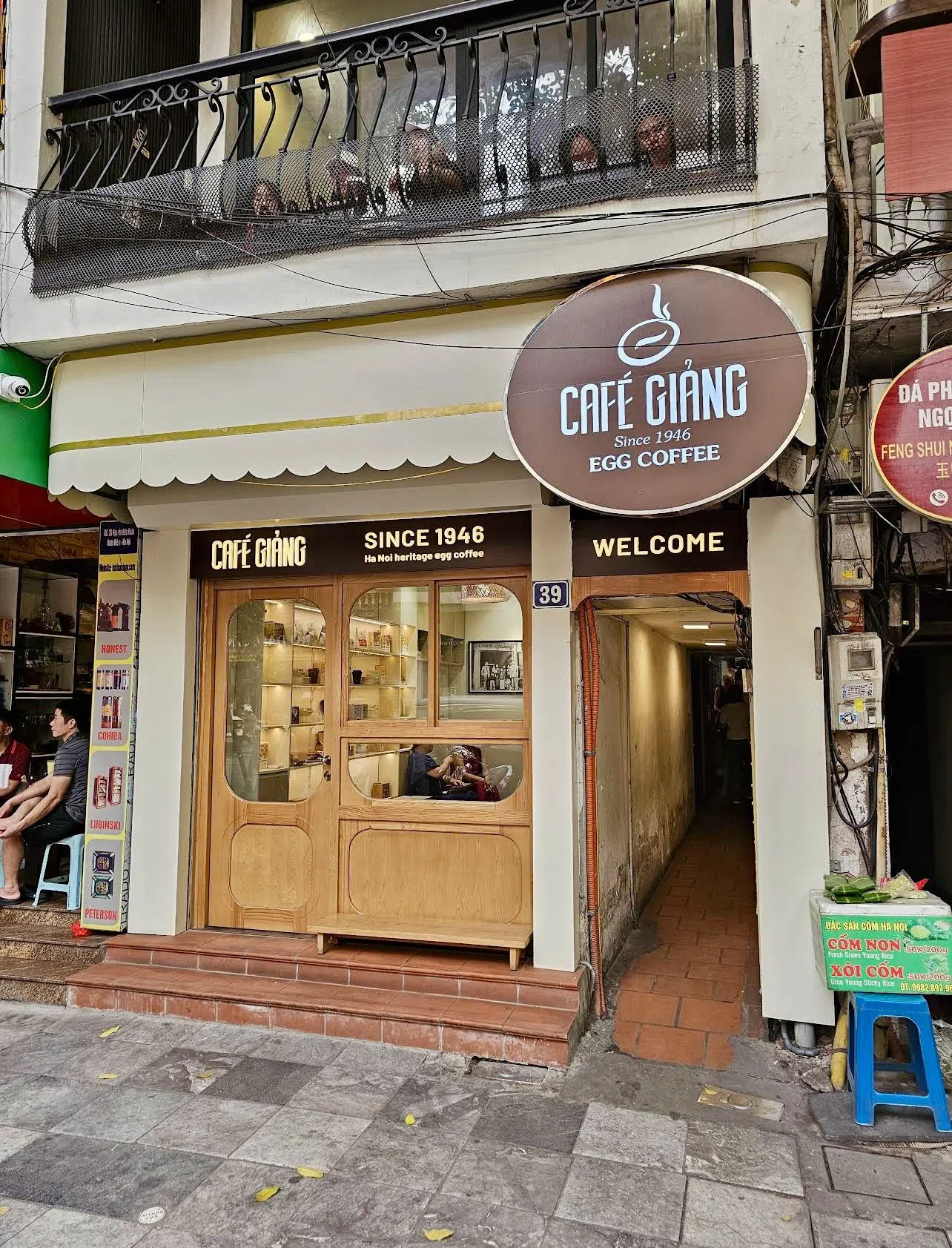
Cà Phê Giảng (Old Quarter, Nguyễn Hữu Huân) is where egg coffee was invented in 1946, and the family that invented it still runs it: whipped yolk and condensed milk over hot coffee, served in a glass sitting in a bowl of hot water. Glasses are 25,000–60,000 VND. The room is small and the staircase is steep and narrow, so warn anyone with bad knees, and send two people ahead to claim a table rather than arriving eight-strong. It suits a pair or a trio far better than a whole party.
Half a day across the Red River
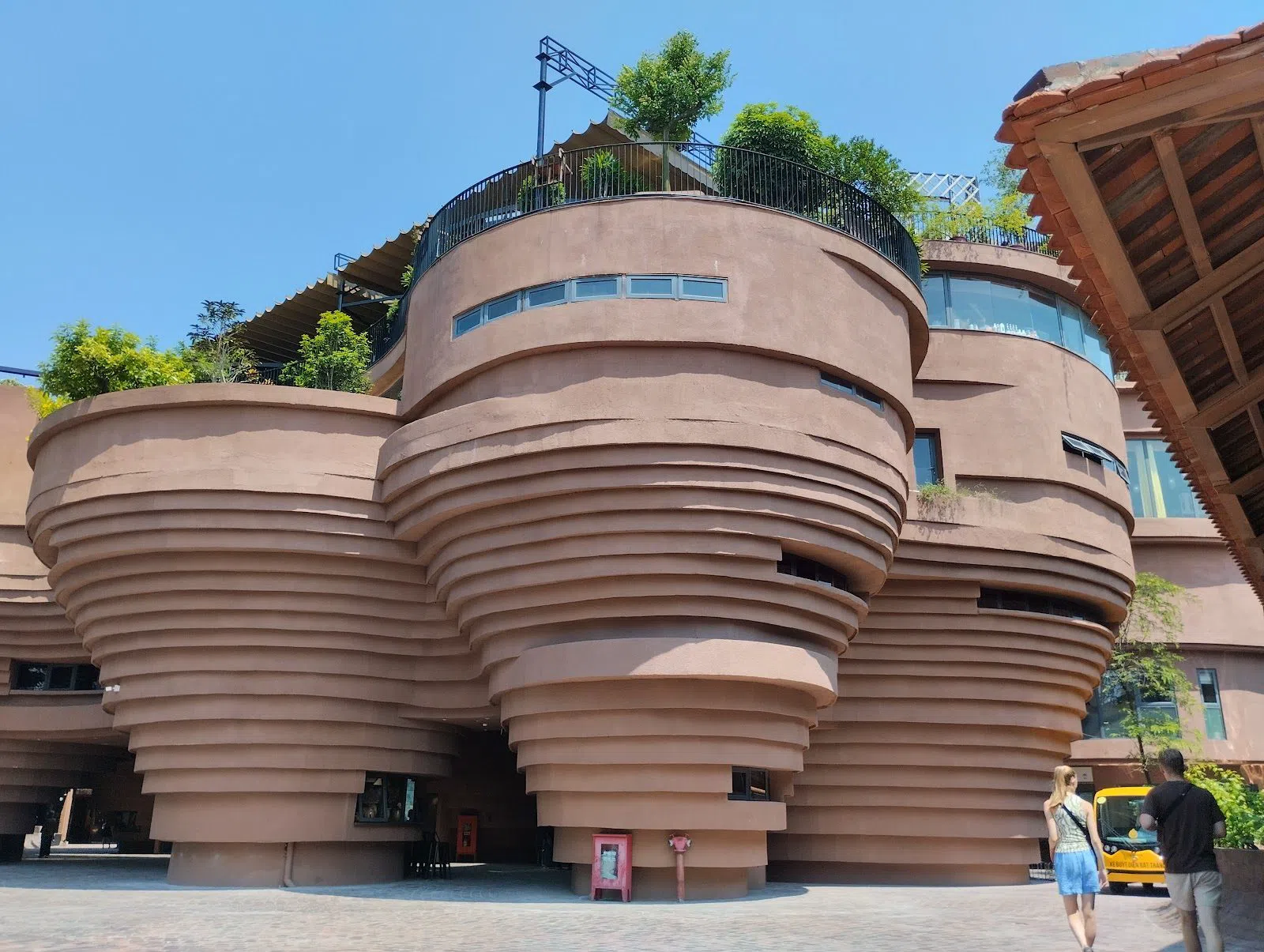
Bát Tràng Pottery Museum & ceramics village (Gia Lâm, 13km east across the river) is a genuine half-day and should not be stretched into a full one. The museum, a set of curved, kiln-shaped forms open roughly 08:00–17:00 on weekdays and later at weekends, gives the adults the architecture and six centuries of ceramic history; the village workshops give the children clay up to the elbows for 50,000–100,000 VND a session. Walk-in wheel sessions are usually fine, but call ahead at weekends for a group. Bring cash, and put everyone in flat shoes: the lanes are cobbled, narrow and shared with delivery trolleys.
Two long days out, and how to choose

Tràng An Landscape Complex, Ninh Bình is the day trip that works best for a wide age range, for the simple reason that everyone is seated for the whole of it. It sits about 90km south, under two hours each way, and the ticket office runs 07:00–16:00 with no fixed departure slots: you buy, you are assigned a boat, four to five per sampan, so a party of twelve simply splits across three boats and meets at the end. The boat ticket is 250,000 VND; organised day trips from Hanoi run roughly $47–57 per person including transport. Three routes are offered, from two to three and a half hours, threading limestone karsts, flooded caves and temple landings. Take the shortest route if older relatives are aboard, and go on a weekday, because weekend queues at the jetty are the one thing that can ruin it.
The Ambassador Day Cruise, Hạ Long Bay is the alternative, and the case for it is that it is a day rather than an overnight. A full-size ship with two restaurants, Old Quarter hotel pickup by shuttle or limousine, a transfer of around two hours each way, Sung Sot and Luồn caves, lunch aboard, back the same evening. Packages typically run $80–150 per person including transfers and lunch. It takes a large party comfortably, and the kayak and sampan excursions are optional, so anyone who would rather not climb stays on board; check that the sundeck option is included for them, because the cave climb has a lot of steps. It is a long day from an early pickup, so write off the following morning before you book it.

If you only have room for one, take Tràng An with grandparents and Hạ Long with teenagers.
Transport, cash and what a day costs
Use a ride-hailing app for cars rather than flagging taxis; it removes the fare argument and gives the driver a pin, which matters when the destination is a shophouse on a lane. A central crossing is usually 50,000–100,000 VND, and the Ethnology Museum or Bát Tràng run maybe 150,000–250,000 VND each way. Skip the scooter-taxi option with children. Crossing the road is done at a steady, unbroken walking pace, since stopping suddenly makes the scooters lose their read on you, so hold hands and walk as one block.
Carry cash in dong. Several of the places here, including the Women's Museum ticket desk and most of Bát Tràng, take cash or a local QR payment only, and small restaurants prefer notes even when a card reader exists. Keep a supply of 10,000 and 20,000 notes for coffee, entry tickets and the puppet theatre cloakroom.
On budget, a family of four eating well can run a day on well under 1,500,000 VND before taxis: a 300,000 VND lunch at a Bib Gourmand table, an 800,000 VND dinner at Chả Cá Thăng Long, museum entries at 40,000 VND a head. A starred dinner or a day trip doubles that. Book the Sacred Night tour weeks out, Tầm Vị and the weekend puppet shows days out, and leave the rest to the morning's weather. For more on districts, seasons and what else fills a week here, see the Hanoi guide.
Before you go
How many days should a family with young children and older relatives spend in Hanoi?
Four full days is the comfortable minimum: two in the centre at a half-pace (one flat heritage site plus one air-conditioned museum per day), one half-day out at Bát Tràng or the Vietnam Museum of Ethnology, and one long day trip to Tràng An or Hạ Long Bay. Add a fifth if you want a recovery morning after the day trip, which you will.
Do we need to book the water puppet show in advance?
For a weekday show, usually not. Thang Long Water Puppet Theatre runs five performances a day, at 15:00, 16:10, 17:20, 18:30 and 20:00, in a large auditorium. Saturday evening and Sunday afternoon sell out first, so book those a few days ahead and block-book by seat category rather than trying to secure a specific row. Seats are 100,000 to 200,000 VND.
Which day trip is easier with grandparents, Tràng An or Hạ Long Bay?
Tràng An. It is under two hours each way, everyone is seated in the sampan for the whole excursion, and you can pick the shortest of the three routes. The Ambassador Day Cruise to Hạ Long Bay is a longer day from an earlier pickup, and the Sung Sot cave visit involves a lot of steps, so anyone skipping it needs the sundeck option confirmed at booking.
Can we pay by card at Hanoi museums and restaurants?
Not reliably. The Vietnamese Women's Museum ticket desk takes only cash in VND or a local QR payment, not foreign cards, and most of Bát Tràng is cash. Larger restaurants such as Luk Lak take cards, but carry dong, plenty of it in small notes, for entry tickets, coffee and street-level lunches.
Is Hỏa Lò Prison suitable for children?
Not for younger ones. The subject matter is genuinely heavy (French colonial punishment cells, a guillotine room), and the Sacred Night tours on Friday and Saturday evenings are more intense again. Physically it is one of the gentler visits, with a compact indoor route and air-conditioned halls, so it suits older teenagers and adults well. Younger children are better served at the Vietnam Museum of Ethnology.