
The delta south of Hanoi stays flat for well over an hour, and then it stops being flat all at once. Limestone towers come up out of the rice in grey vertical slabs, forested along the top, with slow brown rivers threading between their feet and a wooden rowing boat on most of them. This is Ninh Bình, and the usual mistake is to treat it as five sites in eight hours when it repays doing two of them at the right hour.
What is down there
Ninh Bình lies roughly 100km south of Hanoi, close enough that the region works as the capital's standard day trip and far enough that an early start is not really optional. Geologically it is a tower-karst plain: the same drowned limestone that makes the coastline famous, except that here the water between the towers is river and flooded paddy. That changes the experience more than it sounds like it should. You sit a foot or two above the surface in a flat-bottomed boat, and the rock rises straight from the waterline with no beach or foreshore to soften it.
The history runs back to the city you left that morning. In 968 Đinh Tiên Hoàng proclaimed the kingdom of Đại Cồ Việt and set his capital at Hoa Lư, using the karst ridges as ready-made walls. The Đinh and then the Lê court held it until 1010, when Lý Thái Tổ moved the seat of government north to Thăng Long, the city now called Hanoi. Forty-two years as a national capital, then a thousand years of rice farming. Carry that thread through the day and the valley reads as defensible back country rather than as scenery.
Three boat routes and how to pick one
Almost every itinerary here is built around a rowing boat, and the three routes are different trips rather than three versions of the same hour.
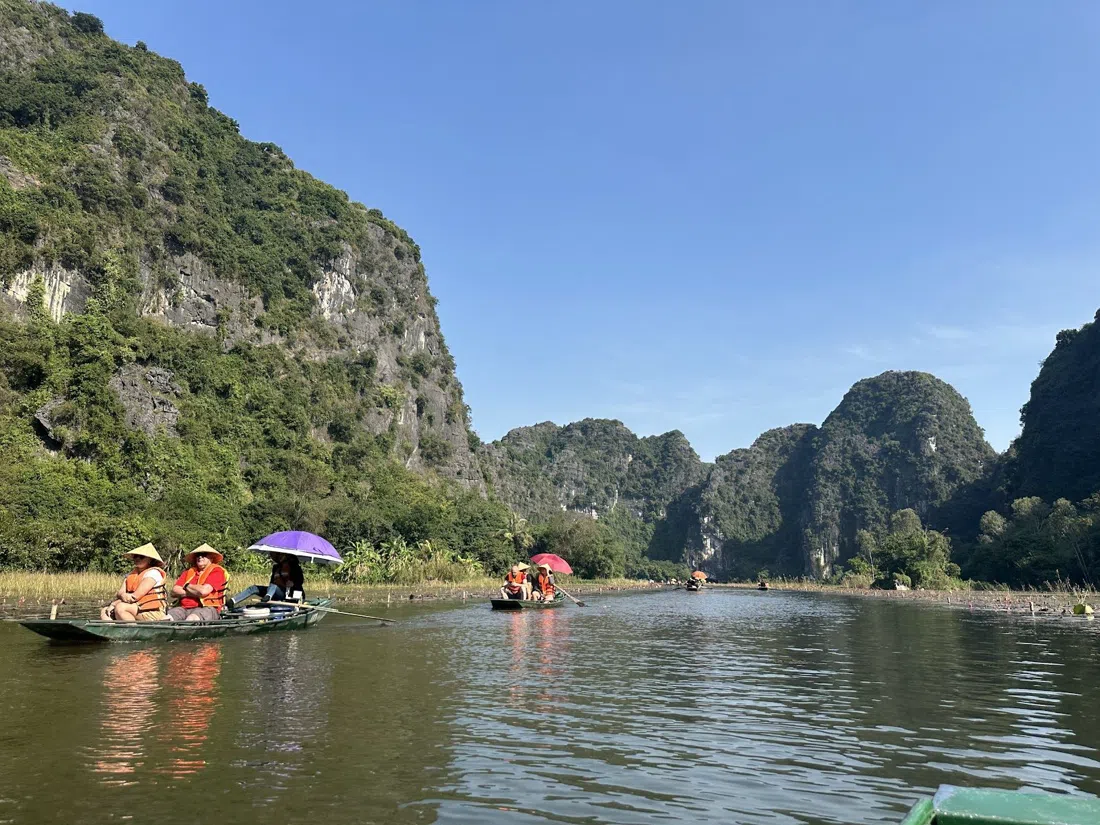
Trang An Landscape Complex (Trường Yên, north of the town) is the headline route and the only one of the three that is UNESCO-listed for both its nature and its culture. Boats seat four or five, and a larger party is split across several boats at the same pier and sets off together, so nobody ends up stranded on a different river. There is no booking: the ticket office handles any size of group on the day. Entry is 300,000 VND for an adult (about US$11.50), all-in, raised from 250,000 VND on 1 January 2026; children under 1m2 go free. Routes run between two and a half and three and a half hours, which means Trang An is not a stop on a day plan, it is the morning. Route 3 passes the standing village set built for Kong: Skull Island, which is either a curiosity or a distraction depending on your tolerance for film sets in a heritage landscape.

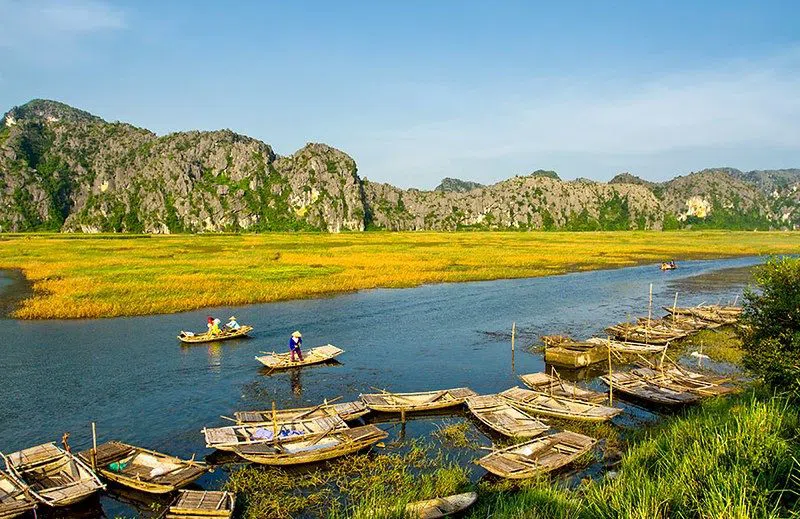
Tam Coc (Ninh Hải, on the Ngo Dong River) is the shorter, older route, and the rowing is done with the feet, a local technique rather than a show put on for visitors. It runs about ninety minutes through three river caves. Boats take two passengers, so a group is broken into pairs; the ticket booth is open to walk-ups with no reservations. It costs 120,000 VND entry plus 150,000 VND per boat, roughly US$11 for two, or 500,000 VND if you want a boat to yourself. In late May and early June, when the rice on either bank turns gold, it is prettier than Trang An. The caveat is the selling: drinks and embroidery are pushed at you on the water, persistently, and there is nowhere to go.
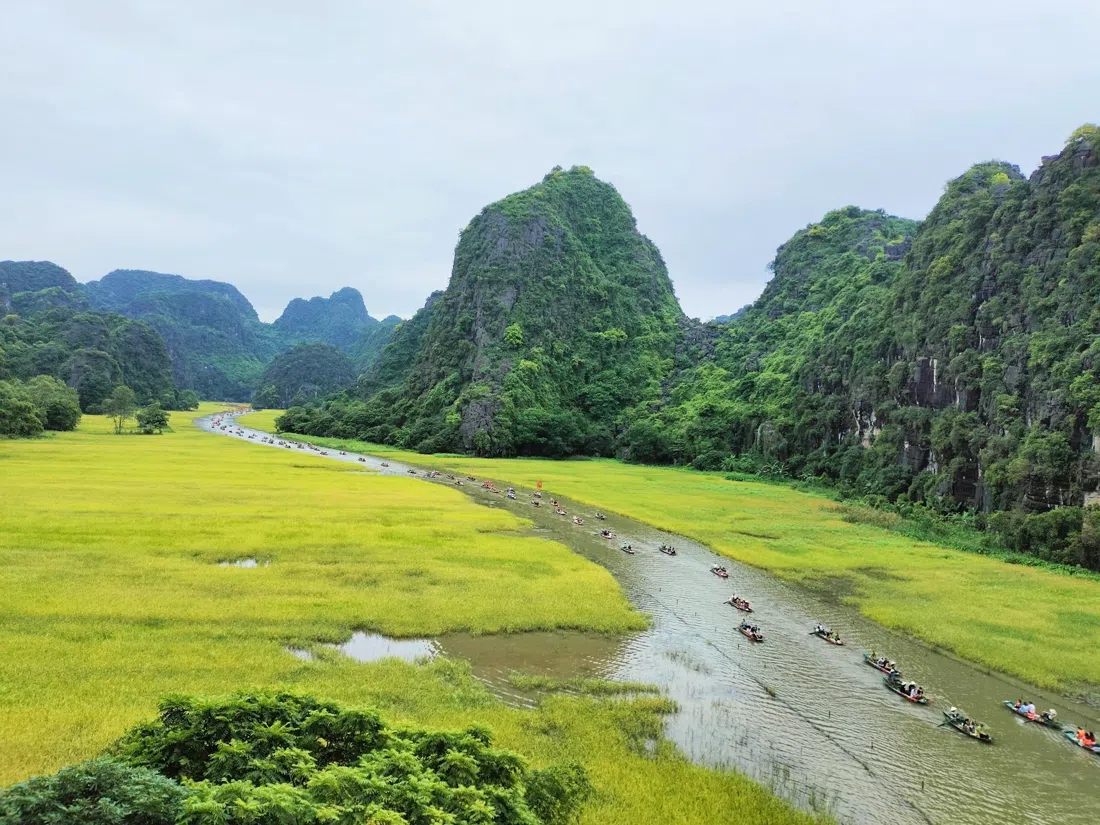
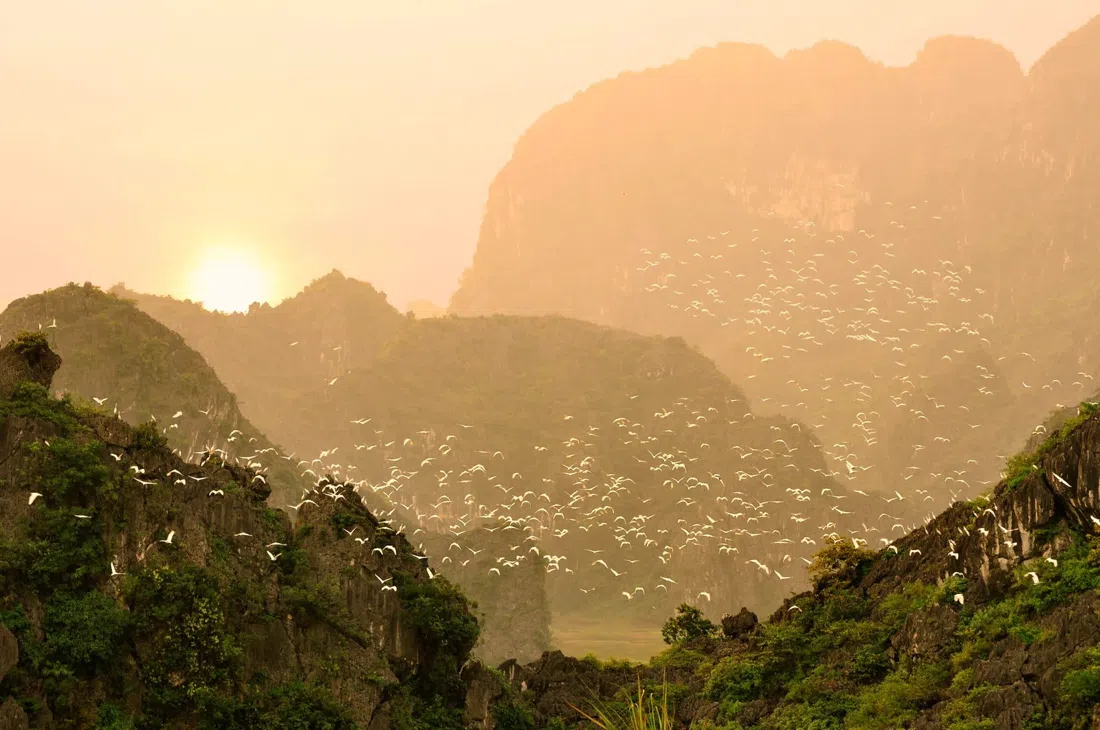
Vân Long Wetland Nature Reserve (Gia Vân) is the one most day plans leave out. It is northern Vietnam's largest wetland reserve and holds well over half the world's remaining Delacour's langurs, which makes it the only boat trip in the region where you might see a wild animal rather than a cave. Entry is 20,000 VND plus about 60,000-80,000 VND per boat, two per boat, so US$4-5 for a pair. Go between 15:30 and 16:30 for the langurs on the cliffs and the storks coming back in. Nobody sells you anything, there is no queue, and the lagoon is large enough that even a big party spreads out and disappears.
If you have one day and want one boat, take Trang An in the morning. If you want two, pair it with Vân Long in the late afternoon rather than with Tam Coc. Trang An and Tam Coc are the same pleasure twice, and the second one feels like it.
The staircase at Hang Mua
Hang Mua (Ninh Xuân, a few minutes by road from the Tam Coc pier) is a stone staircase up a ridge to a small tower and a dragon, and the view back down over the river bends is the reason the whole valley reads as dramatic rather than merely pretty. Entry is 100,000 VND, about US$4, and the site is open 06:00-19:00.
There is no group restriction, but the steps are single-file and narrow near the top, so a large party should split and go early rather than climb as a block. Aim for before 09:00 or after 16:00: the light is better and the staircase is not a place to be stationary in the middle of the day. Skip it if steep, uneven steps in heat are a problem, because there is no alternative path, no lift and no shade at the summit.
Hoa Lư and the quiet valley behind it
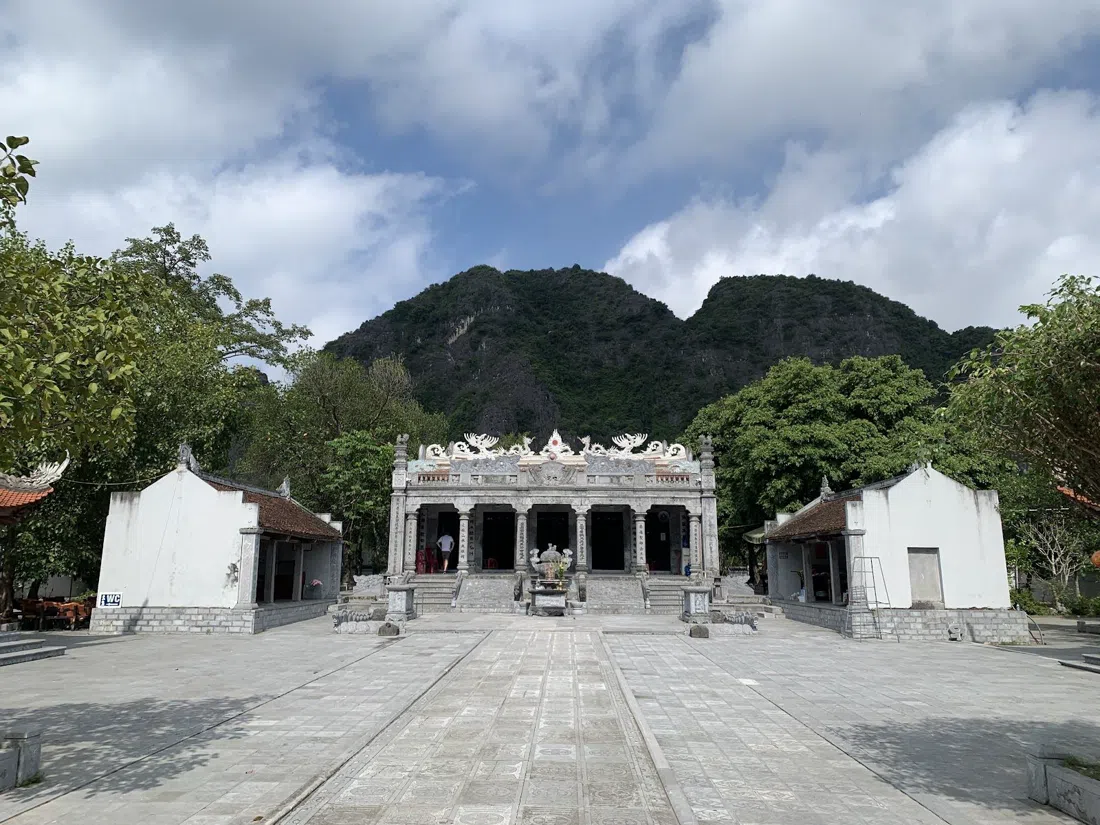
Hoa Lư Ancient Capital (Trường Yên) is the historical anchor of the day, and it costs 20,000 VND, about US$0.80, cash Vietnamese dong only at the counter. The two temples honour Đinh Tiên Hoàng and Lê Đại Hành on the site of the 10th-century citadel; what stands today is largely a later rebuild, which is worth knowing before you arrive expecting ruins. Forty-five minutes to an hour is enough. Shoulders and knees must be covered to enter the main halls. It is open 07:00-17:00 and takes coach groups all day, so treat it as a place you pass through rather than linger in. Licensed English-speaking guides hire at the gate per group rather than per head, a sensible spend for two or more, because on-site interpretation is thin.
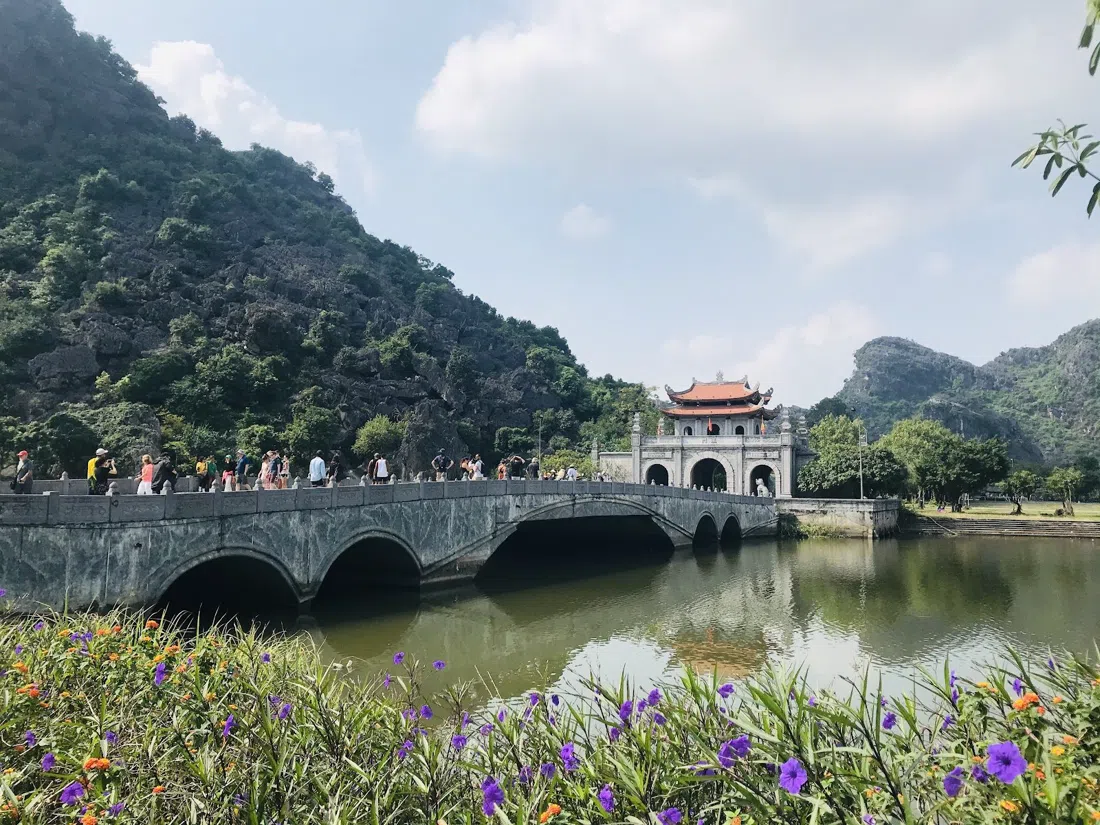
Five minutes away, Am Tiên Cave (Tuyệt Tình Cốc, Trường Yên) is the quiet counterpart: a 10th-century execution ground turned into a hidden green bowl around a lake, reached through a narrow tunnel in the rock. Tickets run 20,000-50,000 VND depending on type, it opens 08:00-18:00, and there are over 200 steps up to the shrine above. The site is small and the entrance is a squeeze, so it works for a minibus and badly for a coach, which is why it stays quiet.

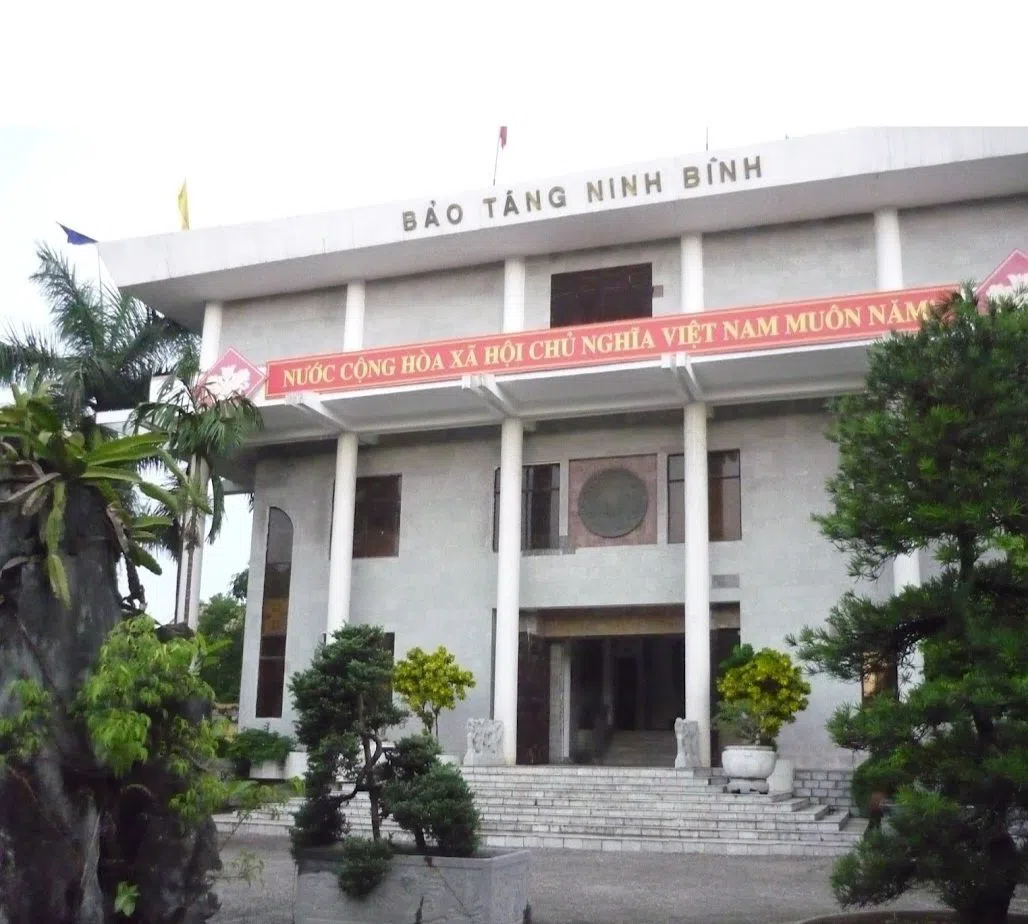
The Ninh Bình Provincial Museum (town centre) was reconstituted on 1 July 2025 under the merged province and now holds the Hoa Lư excavation material, which is what makes the temples downriver legible. Entry is nominal or free. The catch is the hours: weekdays only for individuals, roughly 07:00-11:00 and 13:30-17:30, with Saturday and Sunday opening by prior arrangement for groups, so phone ahead. Build it into the plan or accept you will miss it.
Right beside the Tam Coc pier, Cố Viên Lầu Ancient Village (Ninh Hải) gathers twenty 19th- and 20th-century timber houses, dismantled and rebuilt from around the province and from further south. It costs 50,000 VND, takes about forty minutes, and coaches rarely stop, which makes it the obvious thing to do while you are waiting for a boat.
Pagodas, a cave climb and a cathedral that resembles neither
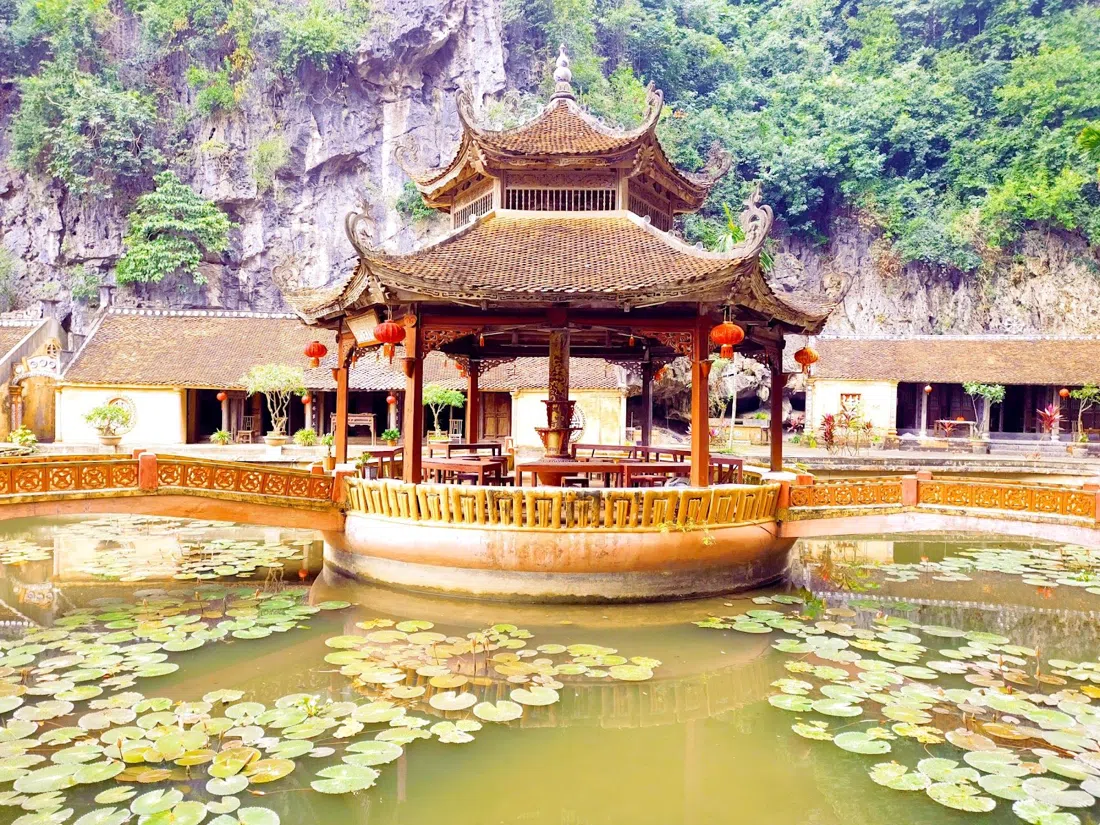
Bích Động Pagoda (Ninh Hải) is a ten-minute walk or cycle beyond the Tam Coc pier, free to enter, with parking around 20,000 VND per vehicle. Three pagoda levels are stacked up the hillside and the route to the upper one, Thượng, goes through the mountain itself. The internal passage is a squeeze, so people funnel through in ones and twos, but the site is free-flow and groups are fine. It is restored rather than closed, and it is the best thing in the valley that costs nothing. Ignore anyone selling 'tickets' outside; there aren't any.
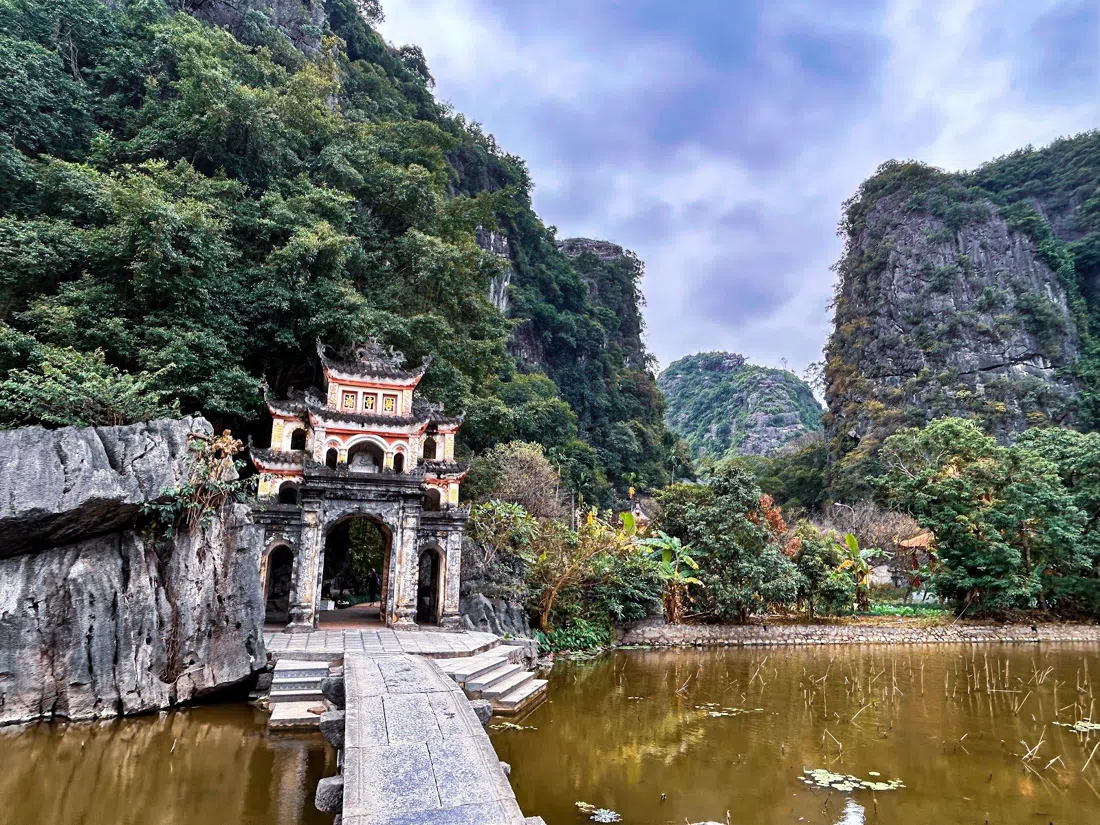
Thái Vi Temple (Ninh Hải) is a flat fifteen-to-twenty-minute cycle from the Tam Coc pier, past buffalo and standing rice, and it is the easiest way to get out of the tour flow without leaving the valley. It is free and mostly unstaffed; keep groups small in the courtyard and dress modestly. Bikes hire in Tam Coc for 50,000-100,000 VND a day.
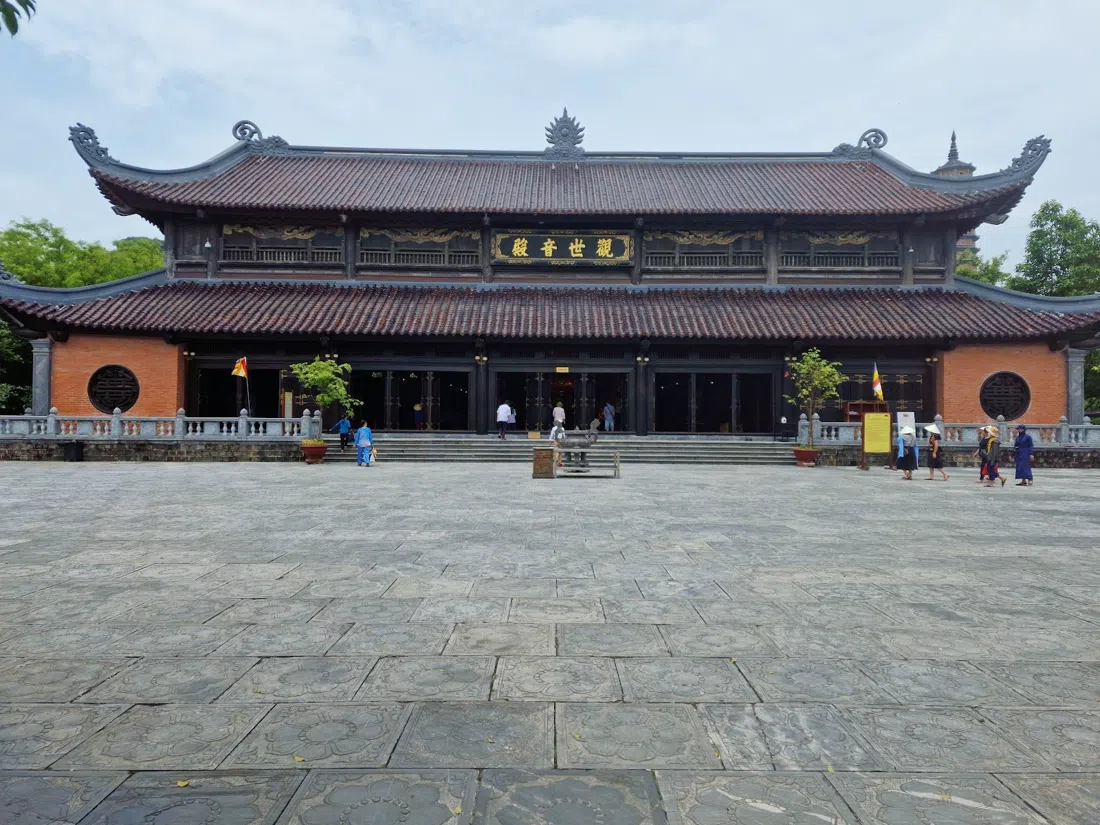
Bái Đính Pagoda (Gia Sinh) is the opposite proposition: Southeast Asia's largest Buddhist complex, mostly built since 2003, and it divides people cleanly. Go for the sheer scale of the thing, not for antiquity. The grounds are free; the return electric buggy is 100,000 VND and combined tower-and-buggy passes run 150,000-300,000 VND. It was built for volume, so coach parties are the norm and the buggies run continuously, and the distances between halls are long enough that skipping the buggy means several kilometres on foot.
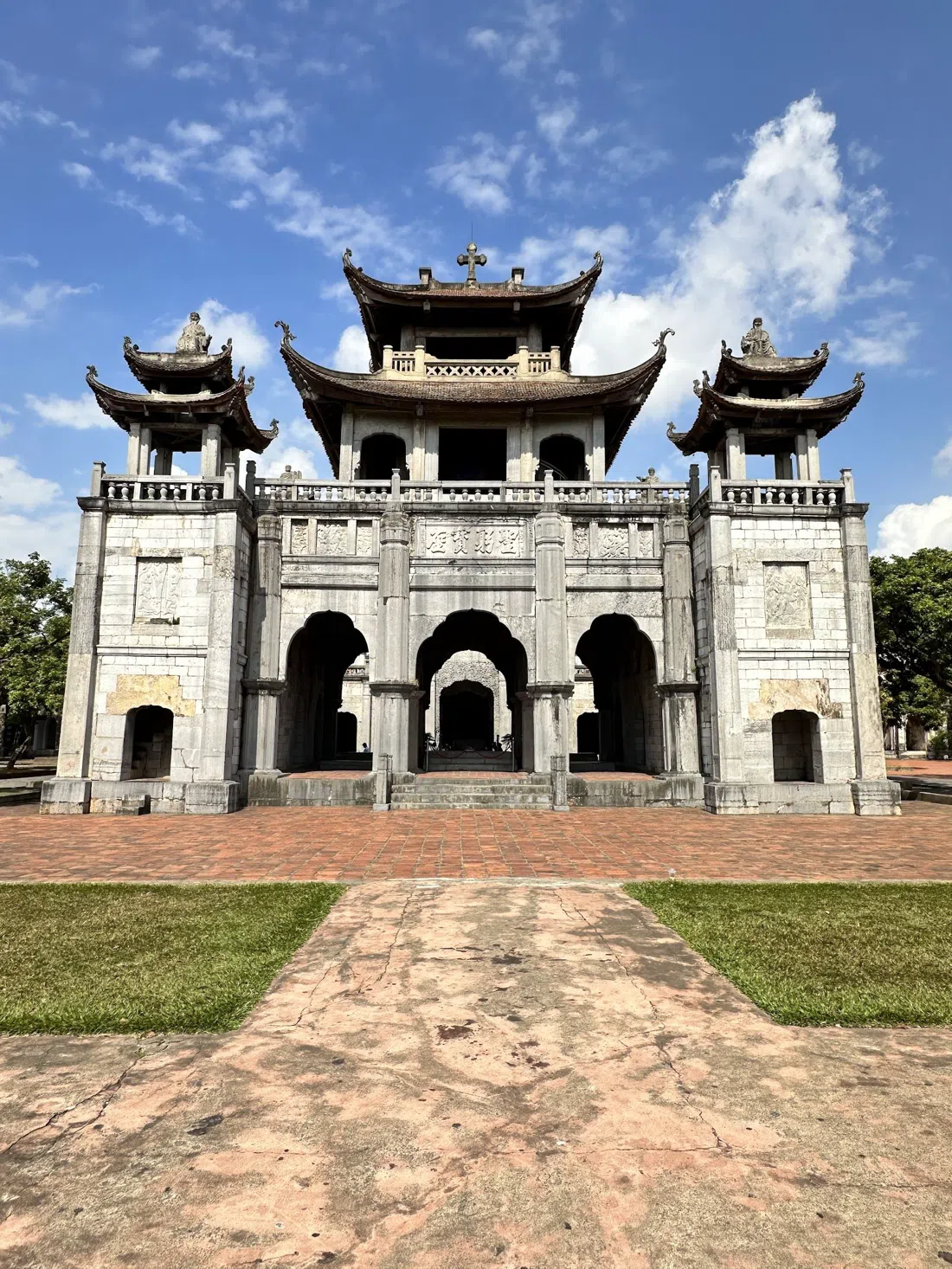
Phát Diệm Stone Cathedral (Kim Sơn) is a 19th-century cathedral built in pure Vietnamese temple idiom, with curved tile roofs and stone pillars where you expect a nave and a spire, and there is nothing else like it in the country. It is free, it is a working parish, and groups are welcome outside services with modest dress. It sits 30-35km south of Hoa Lư, so it only works as a dedicated half-day; folding it into a boat-and-viewpoint itinerary wrecks both.
Where the wildlife is
The region is sold as nature, but most of what you see from a boat is geology and farmland. If you want animals, there are three places, and one of them needs its own day.
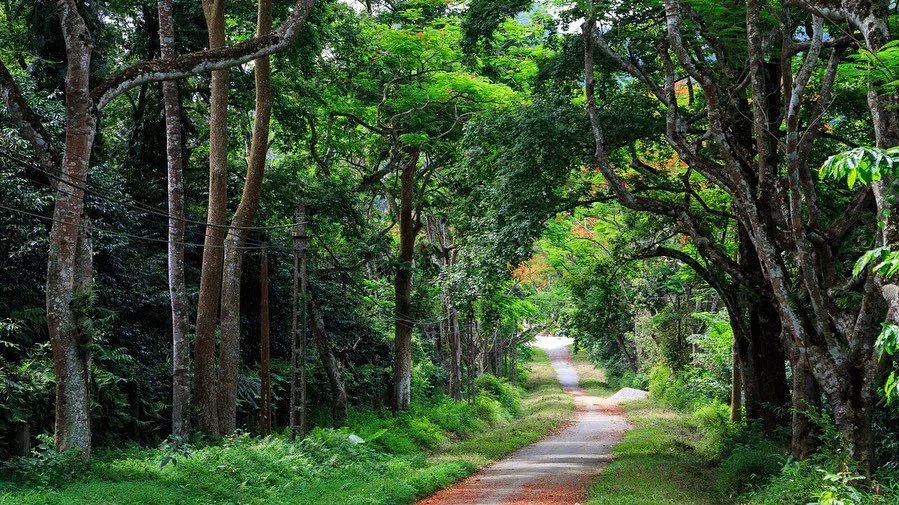
Cúc Phương National Park (Nho Quan) was Vietnam's first national park and is the only entry on this list that is about wildlife rather than views. Entry is 60,000 VND for adults (about US$2.40) and 20,000 VND for students, with the conservation centres charging roughly 30,000-60,000 VND on top. It is 45km from Tam Coc and deserves a full day rather than a bolt-on. April's butterfly emergence is the standout event of its year. English-speaking trekking guides and overnight stays should be arranged about two weeks ahead in spring.
Inside the park, the Endangered Primate Rescue Centre (Cúc Phương) holds around 160-180 rescued primates across fifteen species, several of which barely exist anywhere else. Visits are by staff-led tour only, roughly an hour, in Vietnamese or English: you cannot wander, and groups must go with a guide. It costs about 60,000 VND on top of the park fee, opens daily 08:00-17:00, and tours cluster in the morning. It is the most substantive wildlife stop in the region by a distance.
Closer in, Thung Nham Bird Park (Ninh Hải) is a resort-run sanctuary geared to groups, with included boat trips running in rotation so large parties are staggered. Adult tickets are roughly 150,000-250,000 VND (prices rose during 2026, so confirm at the gate) and children pay 100,000 VND. The ticket covers both the sanctuary boat and the But Cave boat. The payoff is the 16:30-18:00 roost return; arriving at midday wastes the trip. Open 07:00-18:00 in summer, 07:30-17:30 in winter.
Groups, couples and what restricts you
Nothing here turns groups away, but the plumbing differs. Trang An splits a party across boats at one pier and sends them off together, which is the smoothest arrangement in the valley. Tam Coc puts two people in a boat, so a group of eight becomes four separate conversations on the water; couples get the better end of that deal, and anyone wanting privacy can pay 500,000 VND for a boat alone. Vân Long is also two to a boat but the lagoon absorbs numbers. Hang Mua's staircase and Am Tiên's tunnel are the two real bottlenecks, fine for a minibus and poor for a coach arriving as a block. Hoa Lư and Bái Đính are built for volume and behave accordingly.
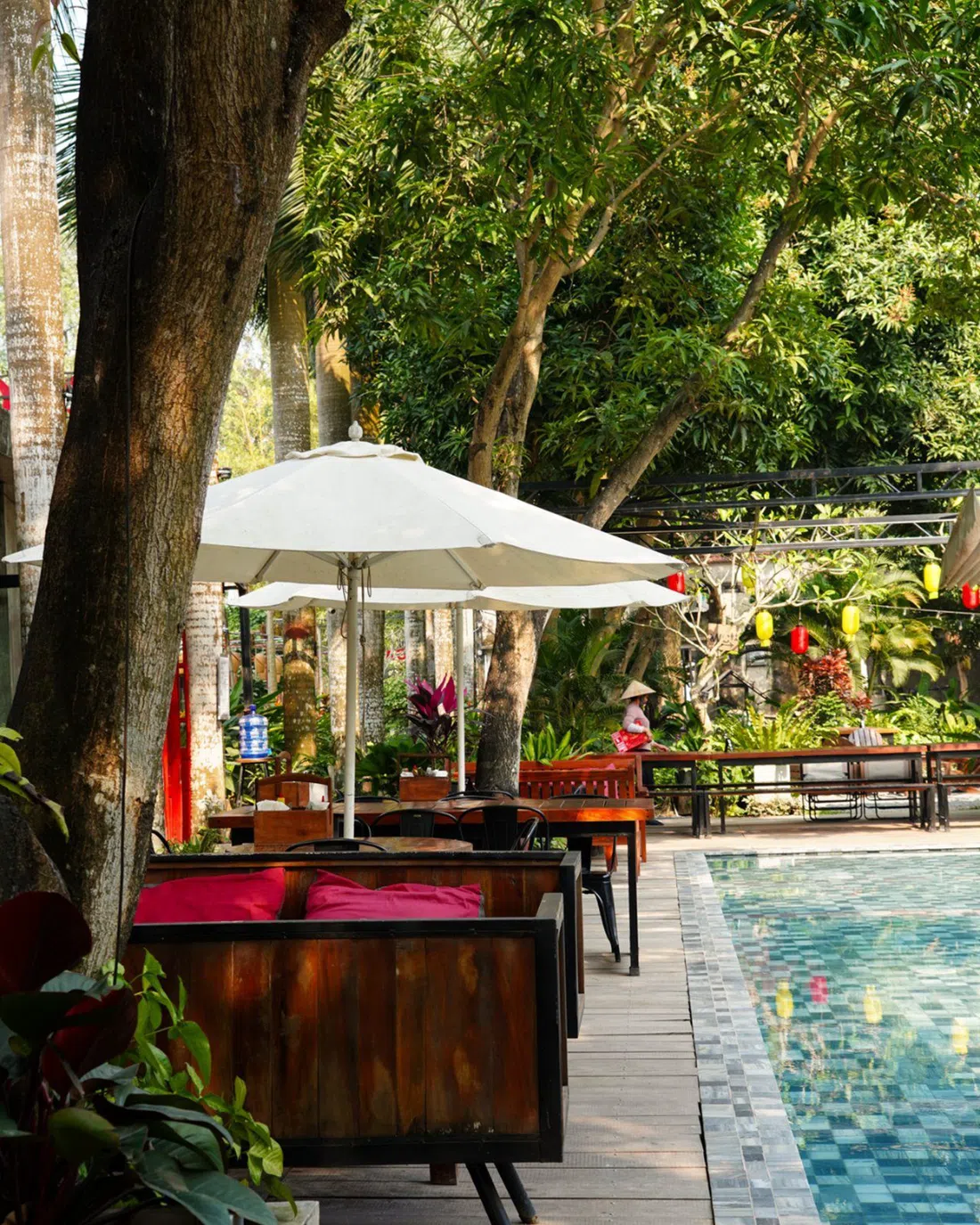
When the boats and the climb are done, Chookie's Beer Garden (Tam Coc village) is the reliable landing spot: Aussie-style burgers, wood-fired pizza and craft beer for roughly 100,000-250,000 VND a head, open 10:00-22:00 daily, taking bookings and set up for groups with long tables while staying walk-in friendly. The same owners run a bakery café, The Coop, over in Khê Hạ for breakfast before an early start.
On tickets: every site on this list sells at the door, and the boat piers handle walk-ups without reservations, so booking ahead is a transport-and-logistics decision rather than a scarcity one. A guided day out of the capital exists and is popular; there are 23,598 traveller reviews across the bookable tours here, and they run seven days a week. What you are buying is the door-to-door driving and someone else's timing, not access.
Best time to go
The northern climate does most of the deciding. Summer is hot and humid with heavy afternoon rain; winter is cool, grey and sometimes drizzly for days, which flattens the limestone into silhouettes. The shoulders either side are the comfortable windows for a day that involves both a boat and a staircase.
Within the year, three dates are worth planning around. Late May into early June is when the rice along the Ngo Dong turns gold, and it is the one period when Tam Coc clearly beats Trang An on looks. April brings the butterfly emergence at Cúc Phương. Spring is also when trekking guides and park accommodation need arranging roughly two weeks in advance.
Within the day, the order matters more than the season. Boats and the Hang Mua staircase belong to the early morning, before 09:00 on the steps. Temples and the museum fill the flat middle hours. The late afternoon belongs to wildlife: 15:30-16:30 at Vân Long for langurs and returning storks, 16:30-18:00 at Thung Nham for the roost. Plan the day backwards from whichever of those two you choose and the rest falls into place.
Is it worth the day
Yes, with a caveat about ambition. Two sites done properly (one boat in the morning, one viewpoint or one wetland in the afternoon) leave you with a clear sense of the place. Five sites in the same day leave you with a series of car parks. The landscape is the reason to come and the 10th-century capital is the reason it makes sense; the modern pagoda and the bird park are additions rather than foundations.
It suits walkers, photographers, anyone who likes a landscape with a documented past, and families, since children under 1m2 ride the Trang An boats free. It suits people with limited mobility less well: the staircases at Hang Mua and Am Tiên have no alternative route, though Trang An, Vân Long, Hoa Lư and Cố Viên Lầu are all manageable at ground level. If your interest is wildlife rather than rock and rice, give Cúc Phương its own day instead, and decide that at the planning stage. Back in the capital, the Hanoi guide covers what to do with the evening you return to.
Practical notes
Getting there. Road takes roughly two hours each way from the capital, which is why departures cluster between 07:00 and 08:00. Trains run south to Ninh Bình station and are comfortable if slower door-to-door; shared vans and private cars are the common choice and drop at the pier rather than the station. Once you are in the valley, distances are short and flat, and a hired bicycle at 50,000-100,000 VND a day covers Tam Coc, Bích Động and Thái Vi comfortably.
Cash. Bring Vietnamese dong in small notes. Hoa Lư takes cash dong only at the counter, parking attendants want coins-level amounts, and boat fares are paid per boat rather than per head, so carry enough to settle for the whole party at once.
Timing. A realistic single day is: leave the capital by 07:30, Hang Mua before 09:00, Trang An from 09:30 for three hours, lunch in Tam Coc village, Hoa Lư or the museum in the afternoon, and Vân Long or Thung Nham from 15:30. Anything more than that is driving.
Budget. Independently, a full day at the door comes to roughly 600,000-700,000 VND a head (about US$23-27) including Trang An, Hang Mua, Hoa Lư, a bike and lunch, plus your transport. Guided day trips from the capital start from 83 USD per person, which is what the convenience and the driving cost.
Staying. Most visitors sleep in the capital and come down for the day (start with the Hanoi hotel search), though an overnight in Tam Coc village buys you the empty staircase at dawn and the roost at dusk in the same twenty-four hours, which a day trip cannot.