The Hanoi issue
Sticky, Sweet and Streetside: Inside Hanoi's Obsessive Coffee Ritual
From the family stall that invented egg coffee to the pour-over purists roasting their own Robusta, here's exactly where to drink Hanoi's coffee — and by what hour to get there.
By Đỗ Thu TrangHanoi from the plastic stool up
Hanoi drinks its coffee dark, slow and improbably sweet, brewed one aluminium phin at a time and drunk on a plastic stool low enough to make your knees complain. The city didn't invent coffee, but it did invent cà phê trứng — a raft of whipped egg yolk and condensed milk floating on hot Robusta — and it treats the daily cup less as a caffeine transaction than as a reason to sit and watch the street. What follows is where to drink it, what to order, and when to show up before the good seats and the good pours are gone.
A word on the bean before you sip: Hanoi runs on Robusta, not the Arabica most of the world calls coffee. It is bitter, heavy, nearly double the caffeine, and built to stand up to condensed milk. That is why the classic orders — cà phê sữa đá (iced, with milk), cà phê nâu (the same, hot, literally 'brown'), cà phê đen (black, sweeten it yourself) — taste the way they do. The newer specialty places pull Arabica and washed-process lots that taste like a different drink entirely. Both are Hanoi. Drink both.
The egg-coffee canon: start where it started
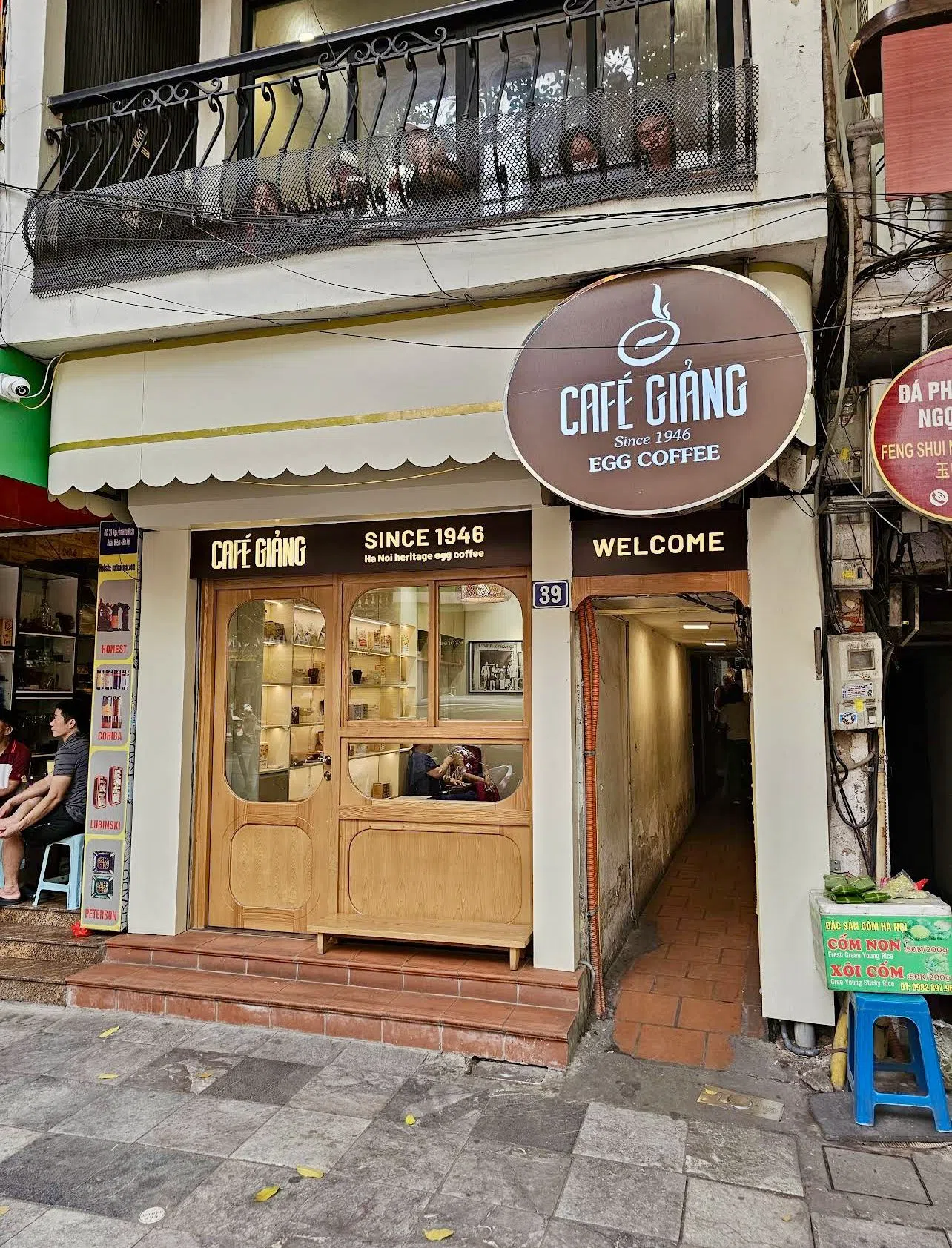
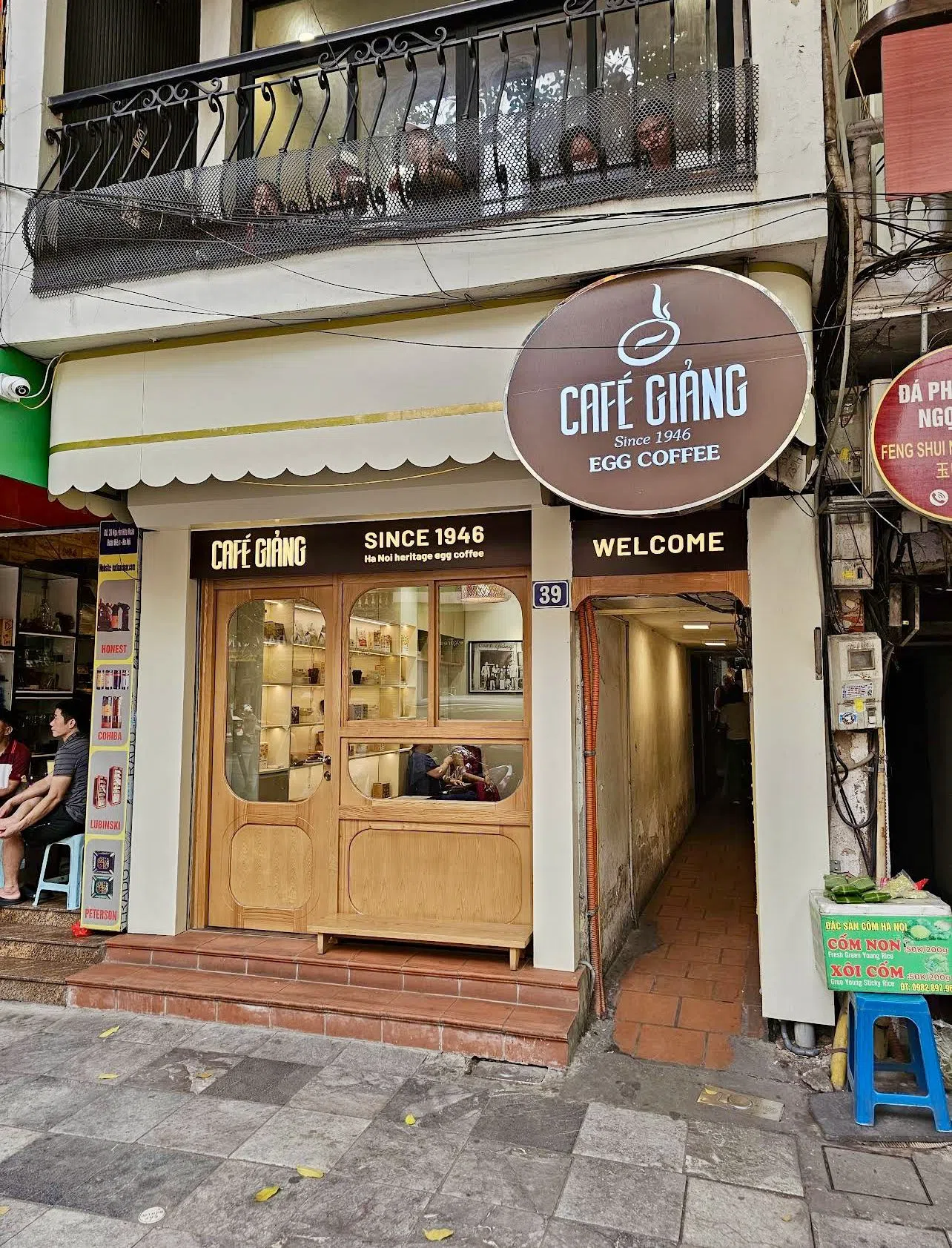
There is no honest way to write about Hanoi coffee without beginning at Cafe Giang (Old Quarter, off Hàng Gai on Nguyễn Hữu Huân). This is the birthplace of cà phê trứng — invented here by founder Nguyễn Văn Giang, who reportedly reached for whipped egg when milk ran short — and it is still run by the same family. Order the hot egg coffee; the yolk foam is warm, dense and closer to tiramisù than to anything you'd call a drink, and the hot version holds its texture far better than the iced. A cup is about 30,000 VND (roughly $1.20), which for a piece of living history is close to a gift. The catch is space: the front is tiny and the seating spills up a steep back staircase, so pairs and groups of two to four will manage but a large party will not sit together. Go, expect to share, don't linger past your cup.
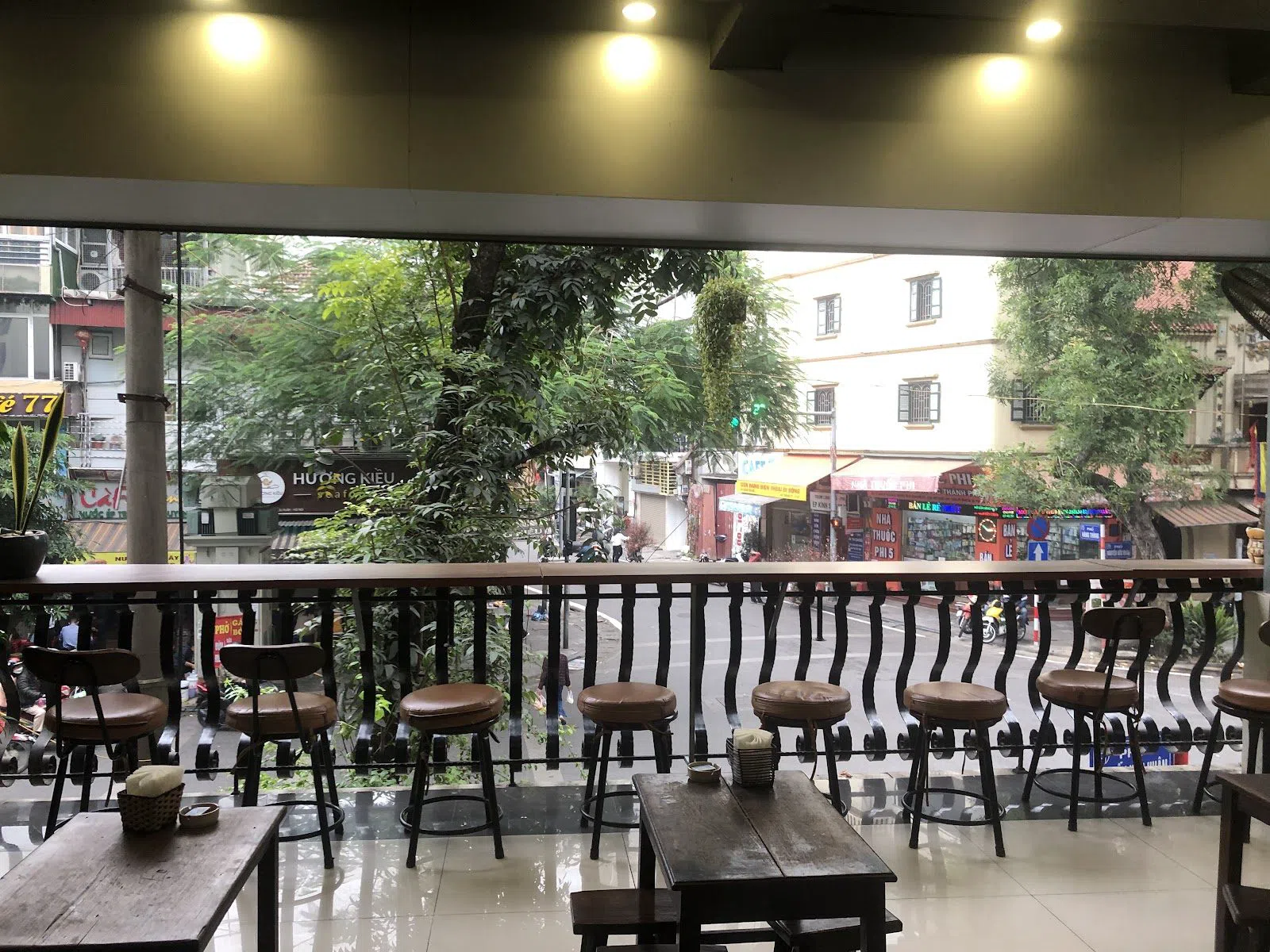
For the same drink with a view, climb to Cafe Pho Co (Old Quarter, entered through a silk shop on Hàng Gai). The entrance is deliberately hard to find — you walk through the shop, across a courtyard, and up several flights to a small terrace that looks over Hoàn Kiếm. Order the egg coffee here too, around 50,000 VND, and understand that the entire point is the balcony, which holds only a handful of tables. Come early — mid-morning, not mid-afternoon — because once the top balcony fills you'll be seated a floor down with no lake in sight. This is a place for two, or three at a push; a big group on that top terrace is a fantasy.
Plan your Hanoi trip
Live prices from our booking partners.
Free cancellation on many rooms. We may earn a commission when you book.
Heritage rooms: art on the walls, cinnamon in the cup
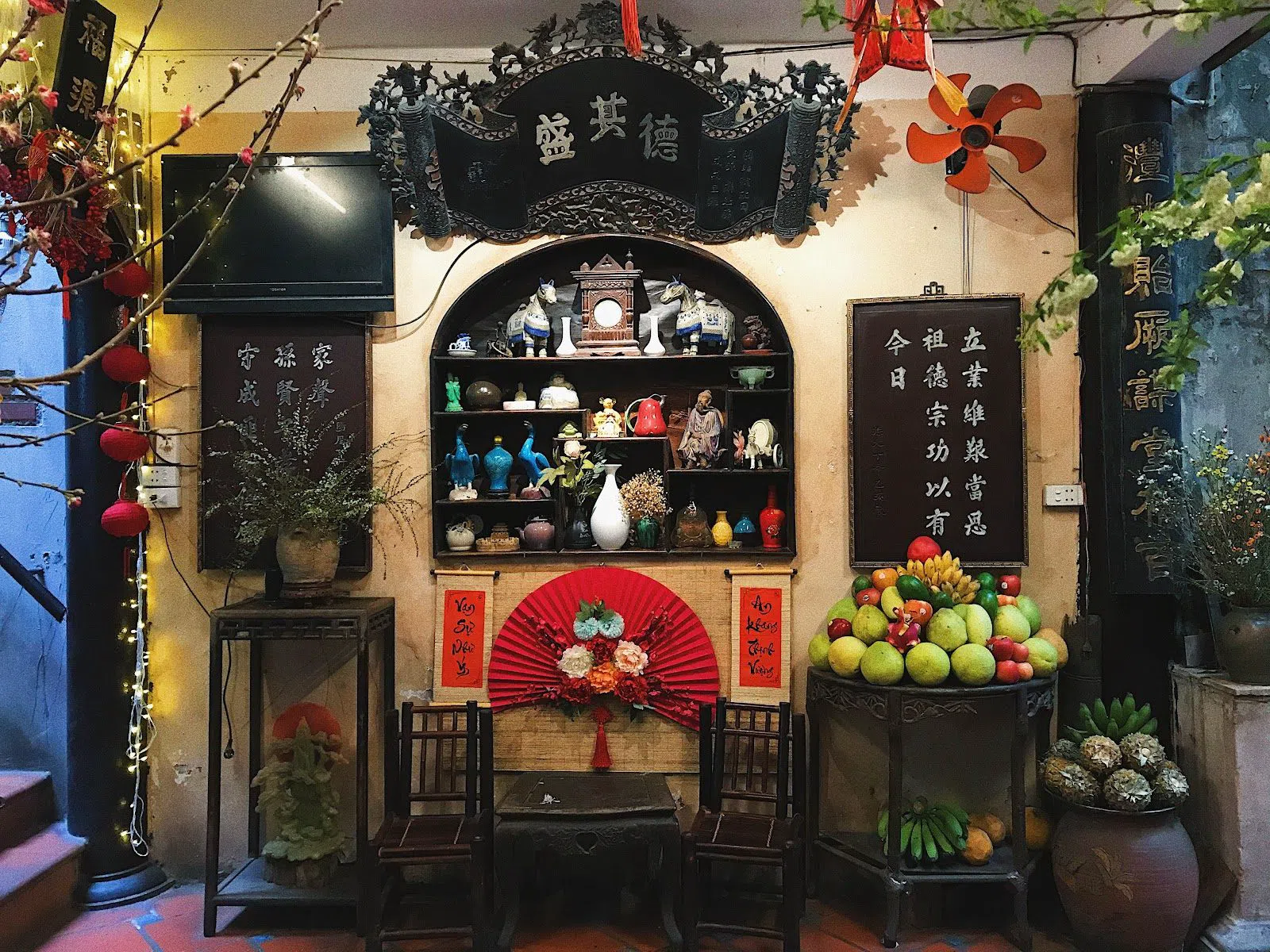
Cafe Lam (Old Quarter, Nguyễn Hữu Huân) has been pouring since around 1950, and the walls tell you so — they are hung with works by Vietnamese masters, Bùi Xuân Phái among them, who paid their coffee tabs in paintings. The room is cramped and unmistakably local; this is a stop for the sense of continuity as much as the cup, which is strong, cheap and unfussy. Suits a couple or a small group who want to sit among the history, not a party that needs elbow room.
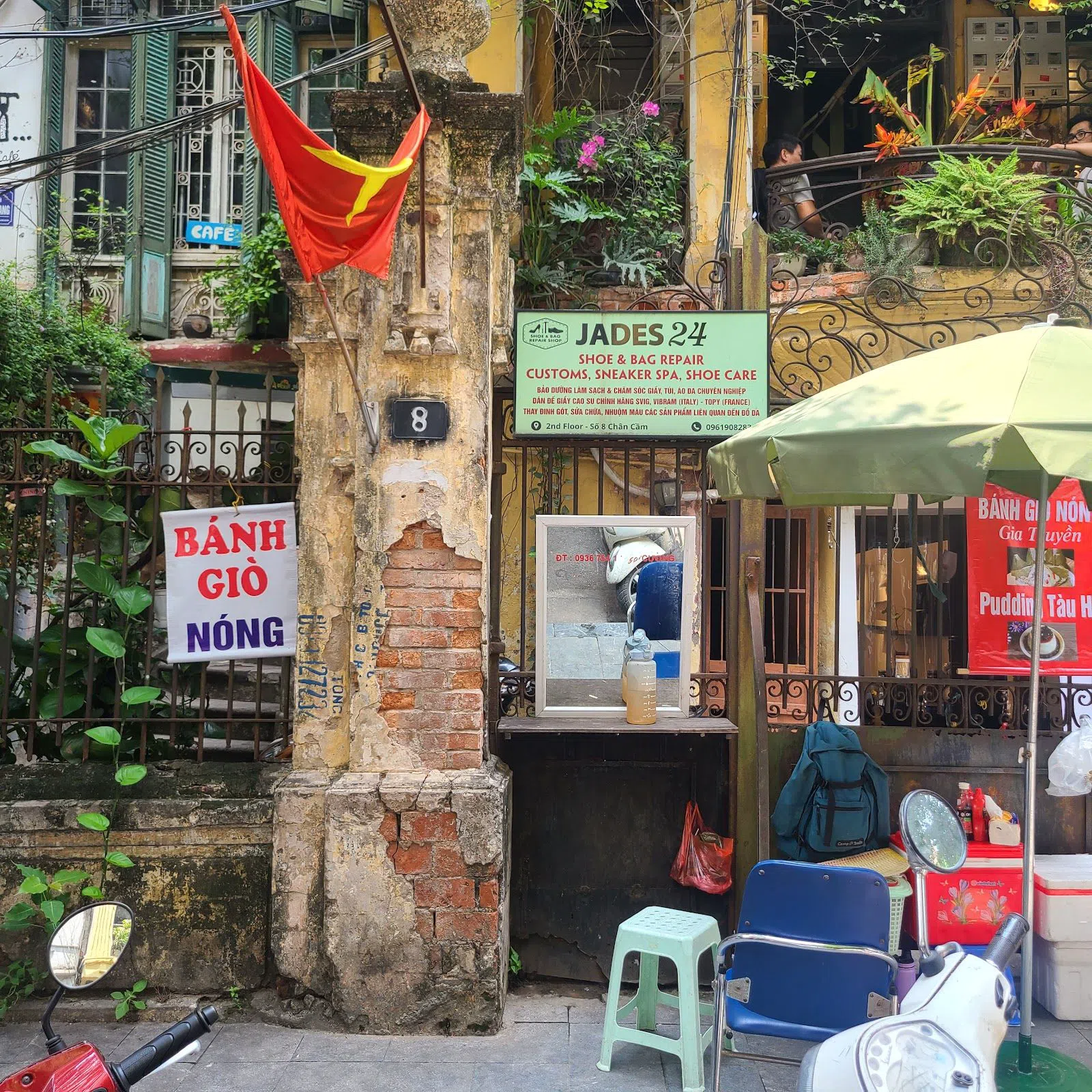
For the prettiest heritage setting, walk to Loading T Cafe (Old Quarter, Chân Cầm), tucked into a faded French colonial villa with peeling shutters and high ceilings. Its signature is egg coffee spiked with a hint of cinnamon — a genuine variation, not a gimmick — and the building does the rest of the work. It's modest in size, so it rewards a quiet pair or a small group looking to escape the pavement crush rather than a loud crowd. Book nothing; just arrive off-peak and take the calm while it lasts.
The photogenic middle and the coconut crowd
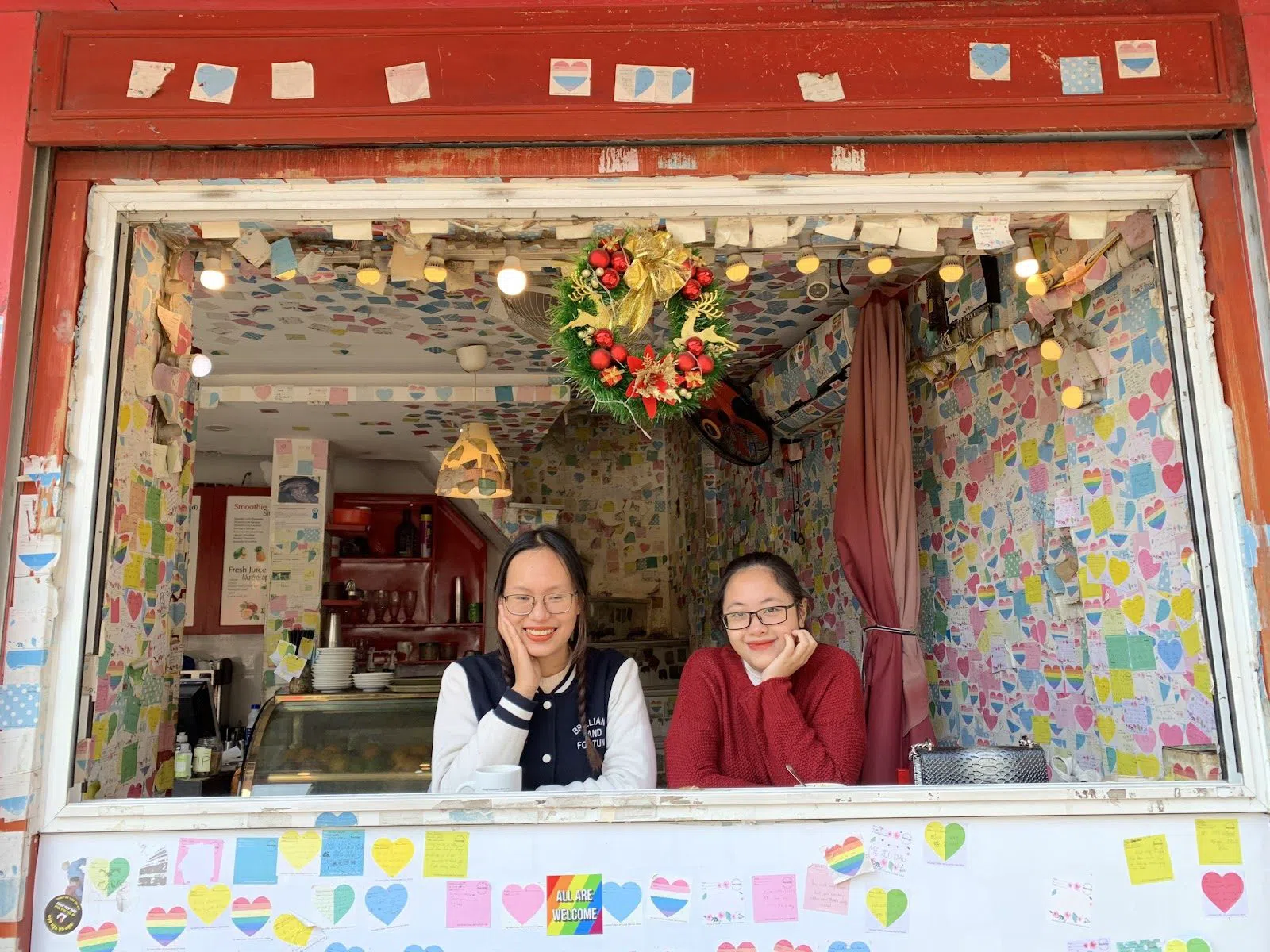
Some places you go for the coffee; some you go for the room and get a decent coffee anyway. The Note Coffee (near Hoàn Kiếm, by St. Joseph's Cathedral) is firmly the second kind, and honest about it. Every surface is papered in thousands of handwritten sticky notes, which is either charming or a lot depending on your mood, but the coconut and egg coffees are solid and the multi-floor layout means it genuinely takes groups — walk up past the crowded ground floor to find a table on a quieter level. Pricing is tourist-facing, so expect to pay for the spectacle. For a mixed international group that can't agree on anything, it works.
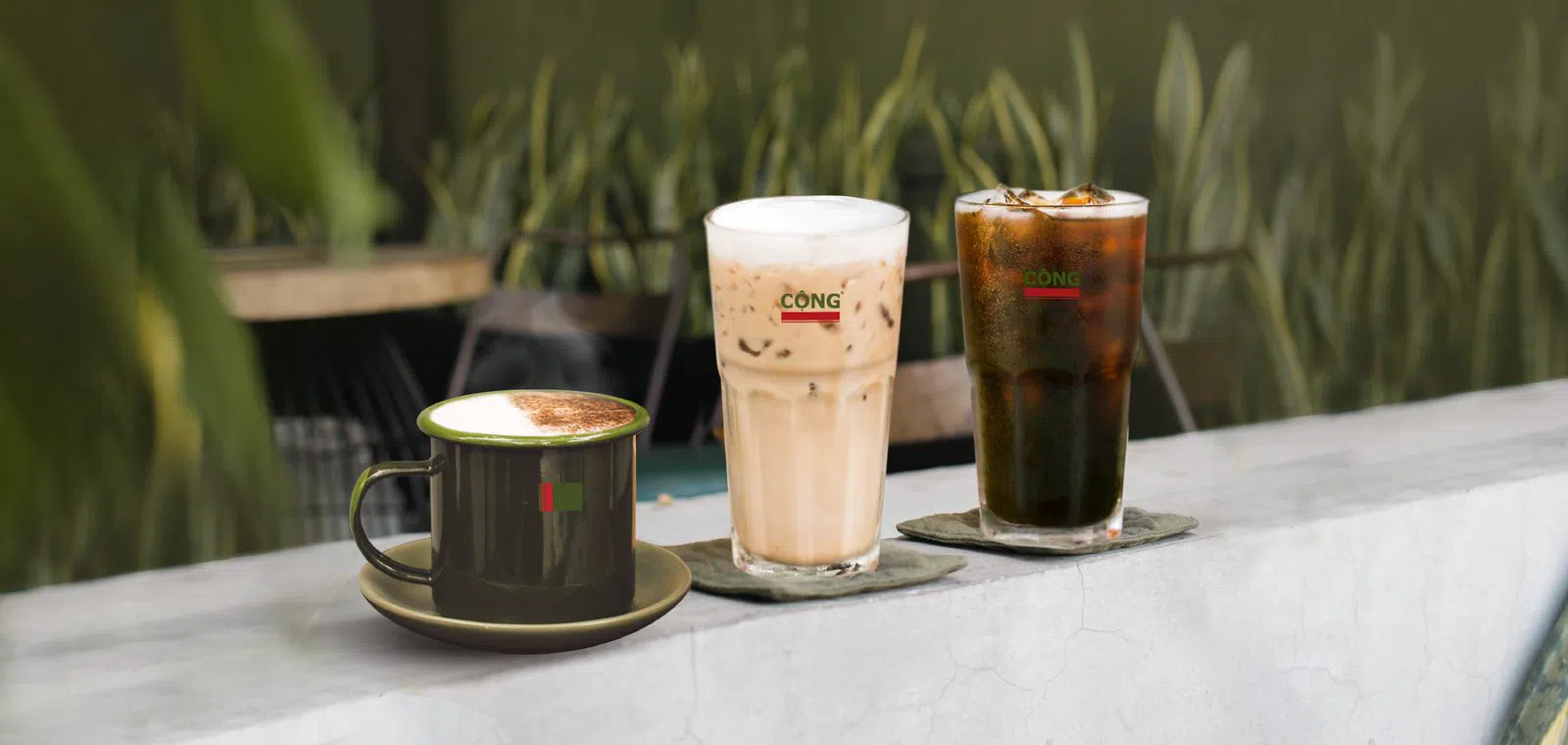
The reliable crowd-pleaser is Cong Caphe (multiple branches across the city), the Hanoi original of what is now a nationwide chain. The war-era, military-surplus styling is a set piece, but the reason to come is the cà phê cốt dừa — blended coconut-milk coffee, served like a frozen dessert, sweet and cold and exactly what you want in Hanoi humidity. The branches are large and multi-floor, which makes this the most group-friendly option in this guide: walk in with six people and you'll be seated. It is a chain and tastes like one, in the best sense — consistent, and never the wrong call.
Third wave: for people who care about the bean
Hanoi's specialty scene is small, serious and worth a detour if the phin-and-condensed-milk formula isn't your thing. Kafeville (specialty roaster-cafe) is credited as the first cafe in the city to specialise in pour-overs with in-house roasting — a purist's stop, low-key and small, better suited to a solo drinker or a pair than a group. Order a single-origin pour-over and skip the milk; the point here is the bean, not the backdrop.
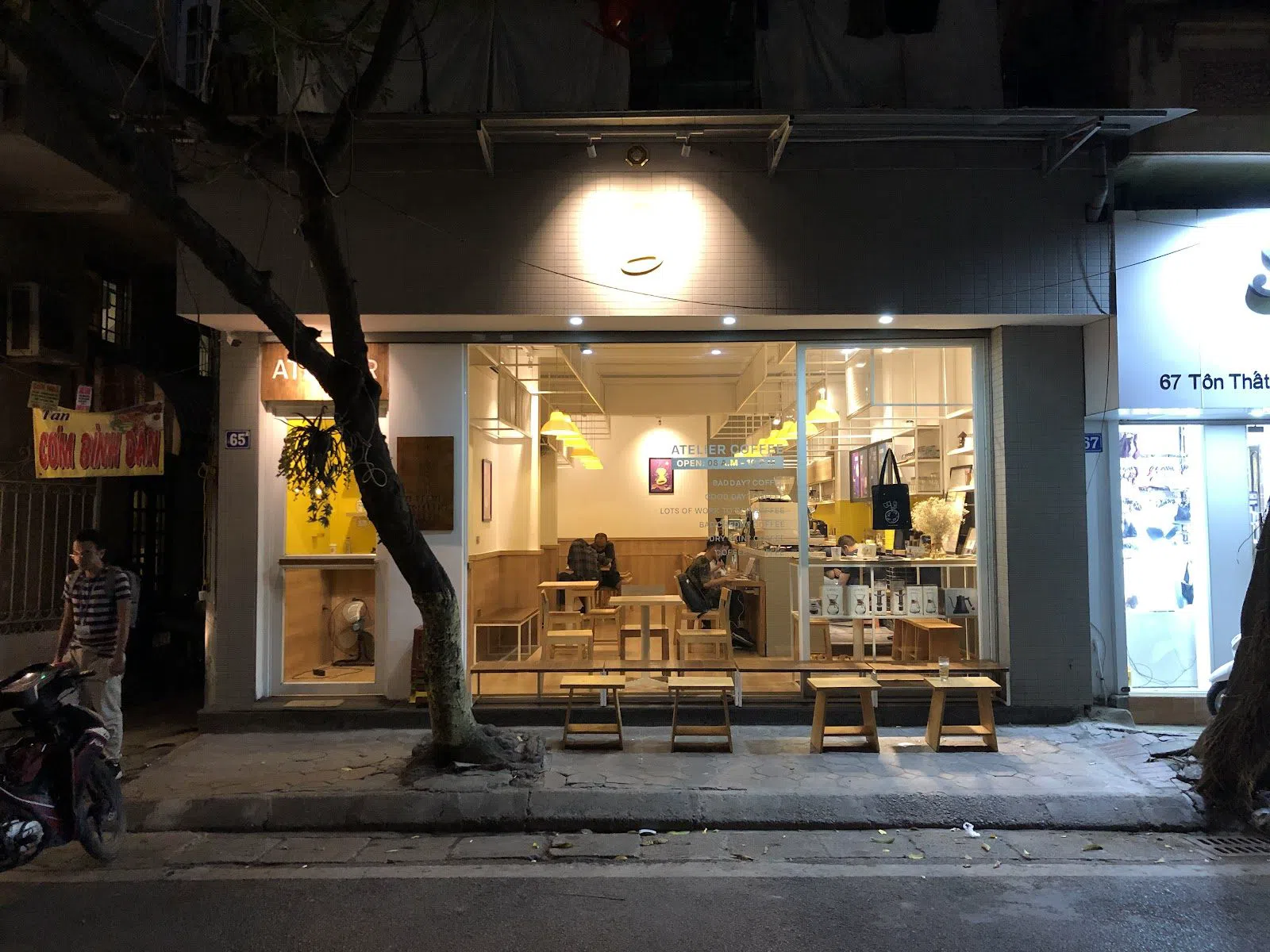
Blackbird Coffee (specialty roaster-cafe) is the one to hit when you want it both ways: a serious roaster championing quality Vietnamese Arabica and Robusta, where you can drink a properly pulled espresso and a proper egg coffee in the same sitting. It's compact, so it's fine for a few and tight for a large group. Atelier Coffee (specialty roaster-cafe) sits further off the tourist radar, roasting its own beans while showcasing other Vietnamese micro-roasters — a quiet, work-friendly room that's ideal for pour-over and single-origin fans and better for pairs and small groups than a party. Bring a laptop; nobody will mind.
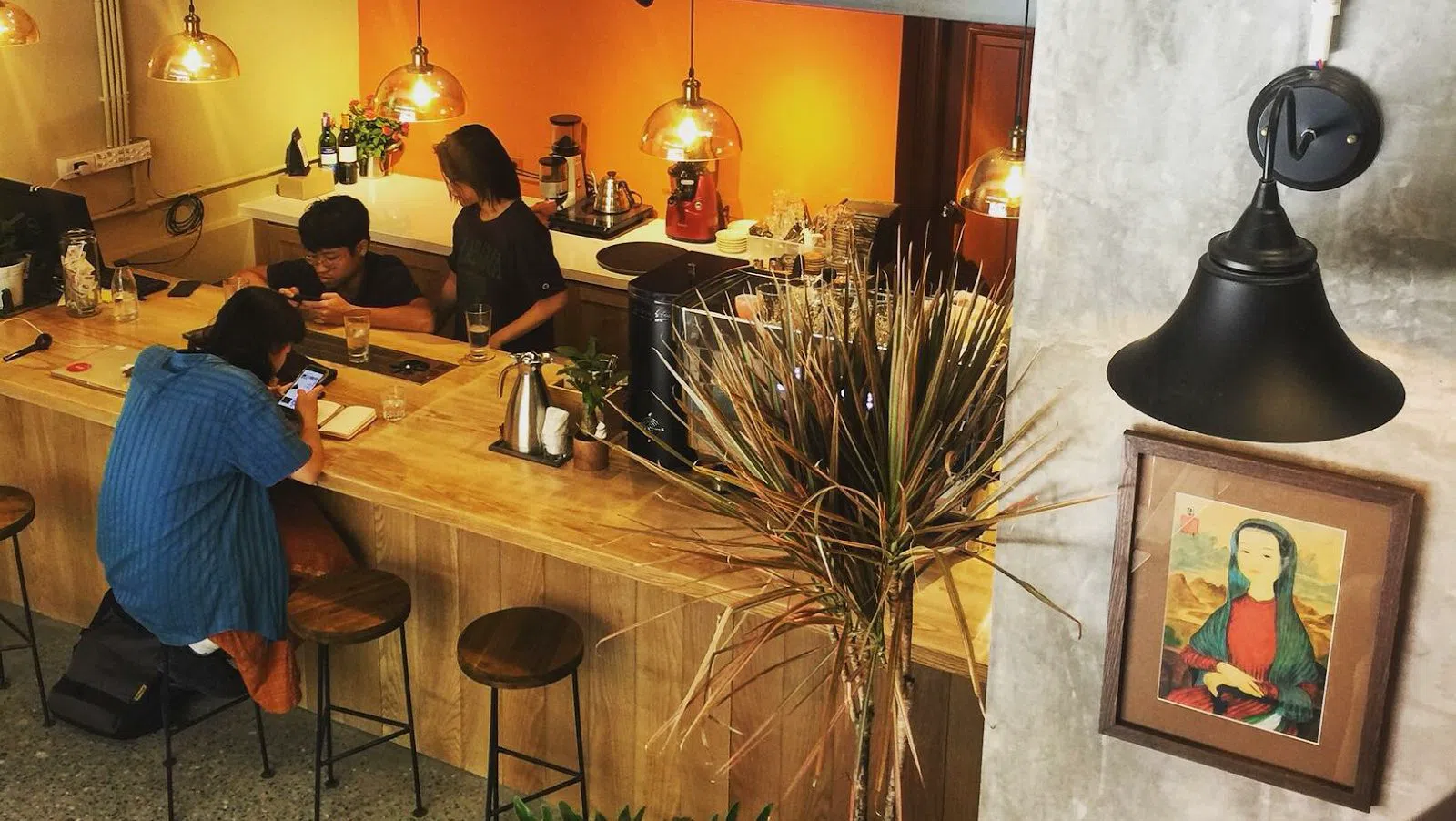
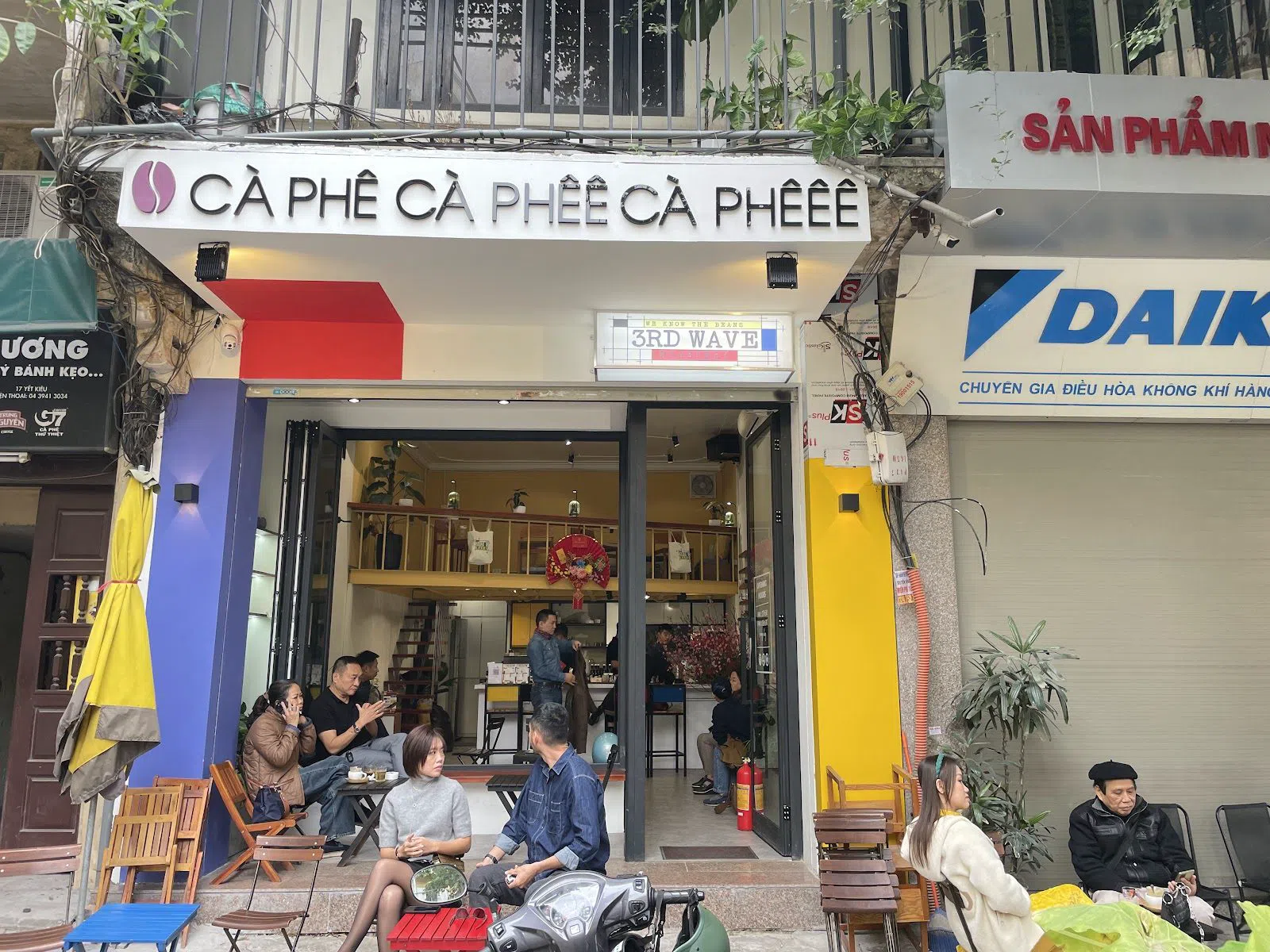
Rounding out the roasters, Third Wave Roastery (specialty roaster-cafe) is a clean, contemporary counterpoint to the heritage cafes — carefully sourced Vietnamese Arabica and Robusta, precise brewing, moderate seating that works for a small group. If you want to taste what Vietnamese coffee can do when it's treated like wine rather than fuel, this is the tasting flight end of the spectrum.
Quiet corners and something to eat
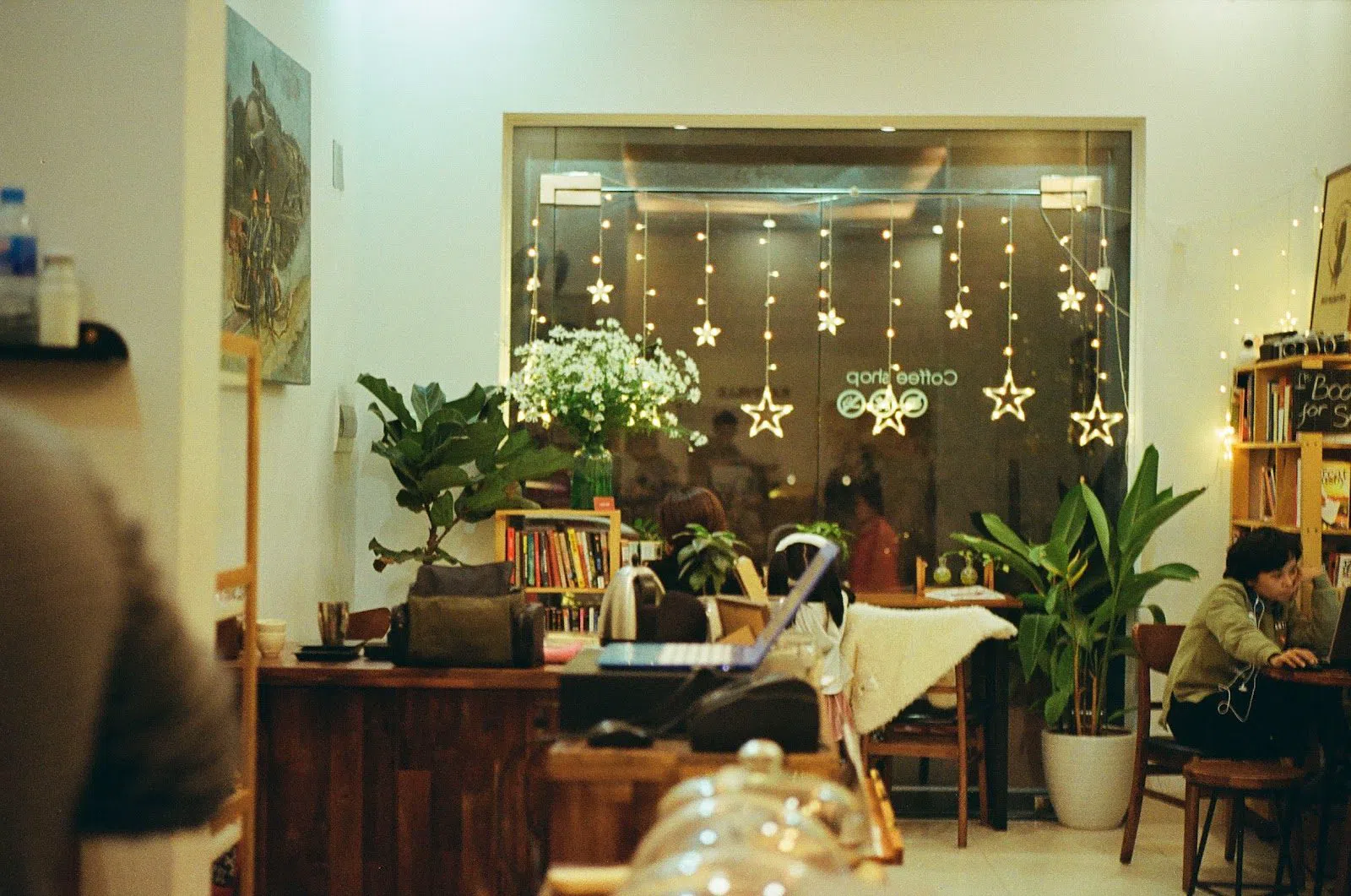
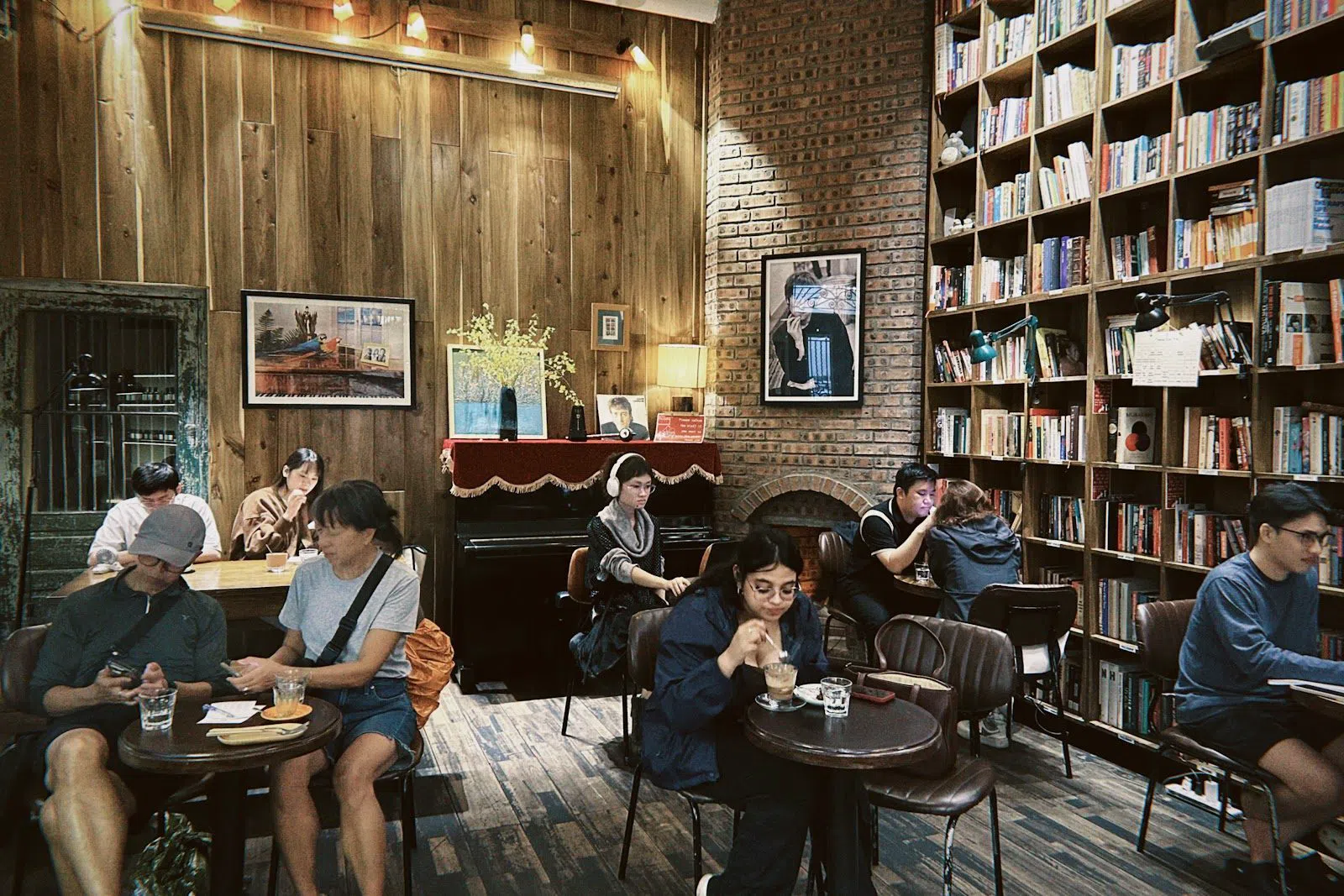
Not every cup wants a soundtrack of motorbikes. Tranquil Books & Coffee (bookshop cafe) is the antidote to the pavement-stool chaos: a hushed, literary room with craft cold brews, shelves of books and the occasional live piano. It enforces quiet zones, which makes it unsuitable for a loud group but perfect for a small, calm meet-up or an afternoon alone with a book. Treat it like a library that serves cold brew.
When coffee needs carbs, go to Gau Coffee and Bakery (Old Quarter). Medium-light roasts paired with genuinely good European-style baking make this the best coffee-and-pastry combination in the Old Quarter — a cosy room that's fine for a small group but tight for a larger one. Come for breakfast before the day's walking; the pastries move fast and the best of them are gone by late morning.
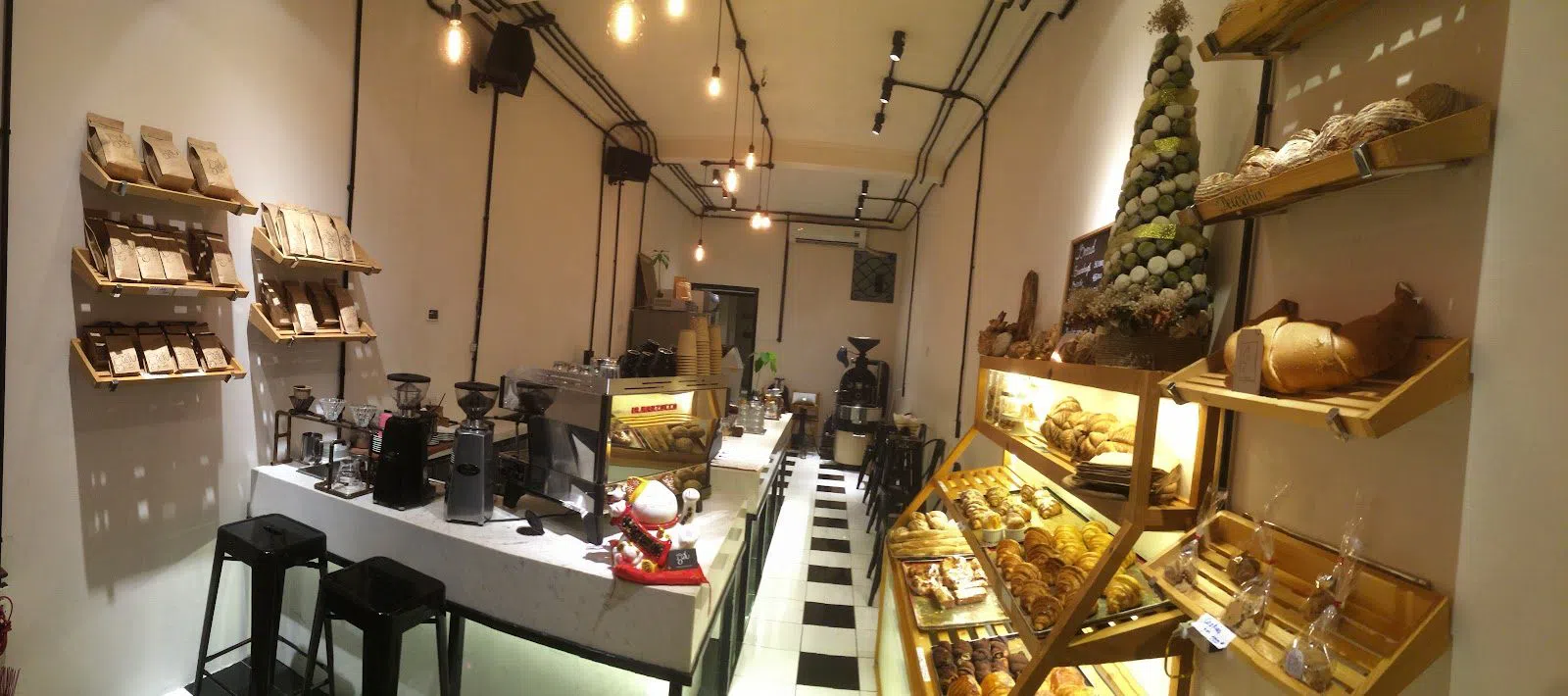
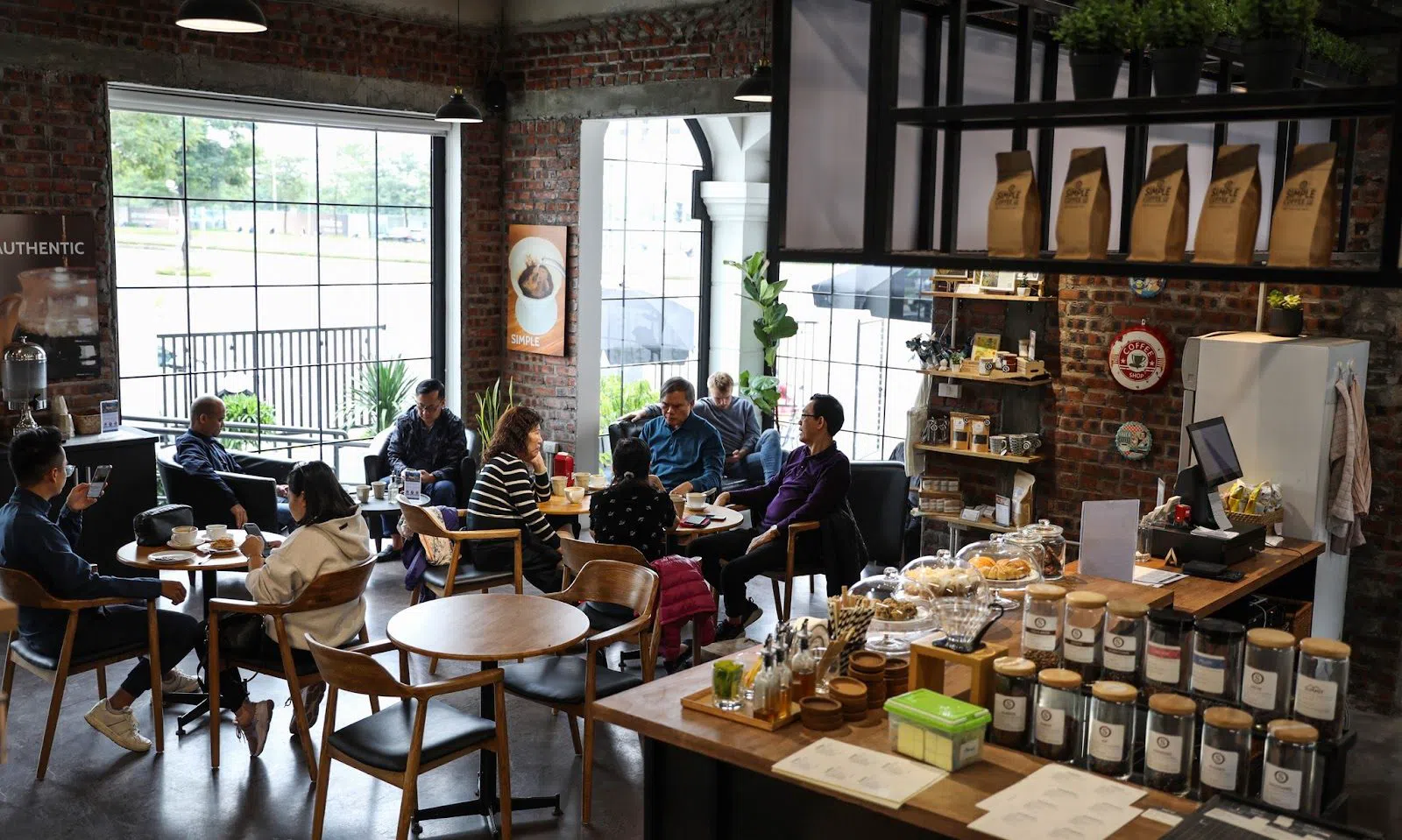
Finally, worth the trip out to Tây Hồ: Simple Coffee (Tây Hồ, social-enterprise cafe). It's a social enterprise employing young adults with intellectual disabilities, the crowd skews expat-and-creative, and the room is easygoing and roomy enough for a small group. The coffee is solid and the reason to make the journey is as much the backstory as the cup — a fair trade for the extra ten minutes on a bike.
If you have one morning, do this
Start at Cafe Giang for the original egg coffee before 9am, walk five minutes to Cafe Pho Co and claim a balcony seat for the lake view, then loop back toward Hoàn Kiếm and finish with a coconut coffee at Cong Caphe or a pastry at Gau. That's the canon, the view and the crowd-pleaser in a single short walk. Save the specialty roasters for a slower afternoon when you can sit and actually taste.
For where to base yourself, the Old Quarter puts you inside walking distance of almost every cafe above — start a Hanoi hotel search there, and see the wider Hanoi guide for how the neighbourhoods around the lake fit together.
Practical notes
Getting around. Most of the heritage cafes are packed into the Old Quarter and around Hoàn Kiếm, walkable in ten to fifteen minutes of each other — this is a city you drink on foot. For the outliers (Simple Coffee in Tây Hồ, and the specialty roasters scattered wider), use Grab: a bike is cheaper and faster through the lanes, a car if you're a group or it's raining. Traffic peaks hard around 8am and 5–6pm; walk then, don't ride.
Cash. Carry small VND notes. The street-stool and heritage places are cash-first and won't love a large bill for a 30,000 VND cup; the specialty cafes and chains generally take cards or QR pay, but assume cash everywhere and you'll never be caught out.
Timing. Mornings are the ritual — locals drink coffee early, and the balcony seats, the fresh pastries and the calm all belong to the early crowd. Egg coffee is a hot-first drink; if you can, take it hot to feel why the foam matters. The photogenic terraces (Cafe Pho Co, The Note) fill by late morning and stay full; the specialty roasters are calmer mid-afternoon.
Budget. A street or heritage cup runs roughly 30,000–50,000 VND (about $1.20–2). Chains and themed cafes land mid-range and tourist-facing. Specialty pour-overs cost the most by Hanoi standards and are still cheap by anyone else's — you can drink your way through this entire list for less than the price of two coffees back home. Order the hot egg coffee at least once, the coconut coffee at least once, and one careful pour-over, and you'll have tasted the whole argument the city is having with itself over what coffee should be.
Before you go
What is Hanoi egg coffee (cà phê trứng) and where was it invented?
Cà phê trứng is hot Robusta topped with a whipped raft of egg yolk and condensed milk, closer in texture to a warm custard than a drink. It was invented at Cafe Giang in the Old Quarter by founder Nguyễn Văn Giang, which still serves it today for around 30,000 VND a cup.
Which Hanoi cafes are best for a large group?
Cong Caphe is the most group-friendly — its branches are large and multi-floor with walk-in seating for bigger parties. The Note Coffee also takes groups thanks to its multiple floors. The heritage cafes (Cafe Giang, Cafe Pho Co, Cafe Lam) are tiny and better suited to pairs or groups of two to four.
How much does coffee cost in Hanoi?
A street-stool or heritage cup runs roughly 30,000–50,000 VND (about $1.20–2). Chains and themed cafes sit mid-range with tourist-facing pricing, and specialty pour-overs cost the most by local standards while still being inexpensive by international ones. Carry small cash notes for the heritage places.
Should I order egg coffee hot or iced?
Hot. The whipped egg-and-condensed-milk foam holds its dense, custardy texture far better warm; iced versions dilute the effect. Order it hot at least once — at Cafe Giang for the original, or Loading T Cafe for a cinnamon-spiked version — to understand why the drink matters.
Where can I find specialty pour-over coffee in Hanoi rather than the sweet condensed-milk style?
Head to the third-wave roasters: Kafeville, credited as Hanoi's first pour-over specialist; Blackbird Coffee, where you can get a proper espresso alongside egg coffee; Atelier Coffee, off the tourist radar with its own and guest micro-roasters; and Third Wave Roastery for precise, contemporary brewing of Vietnamese Arabica and Robusta.