The Hanoi issue
Reading the Unwritten Rules of Hanoi's Motorbike Streets
Hanoi's traffic works by constant negotiation. Here is how to cross it on foot, ride it pillion, learn to steer it yourself, and find the markets and workshops that keep five million bikes moving.

By Rui MarquesTwo unhurried days, not nine temples
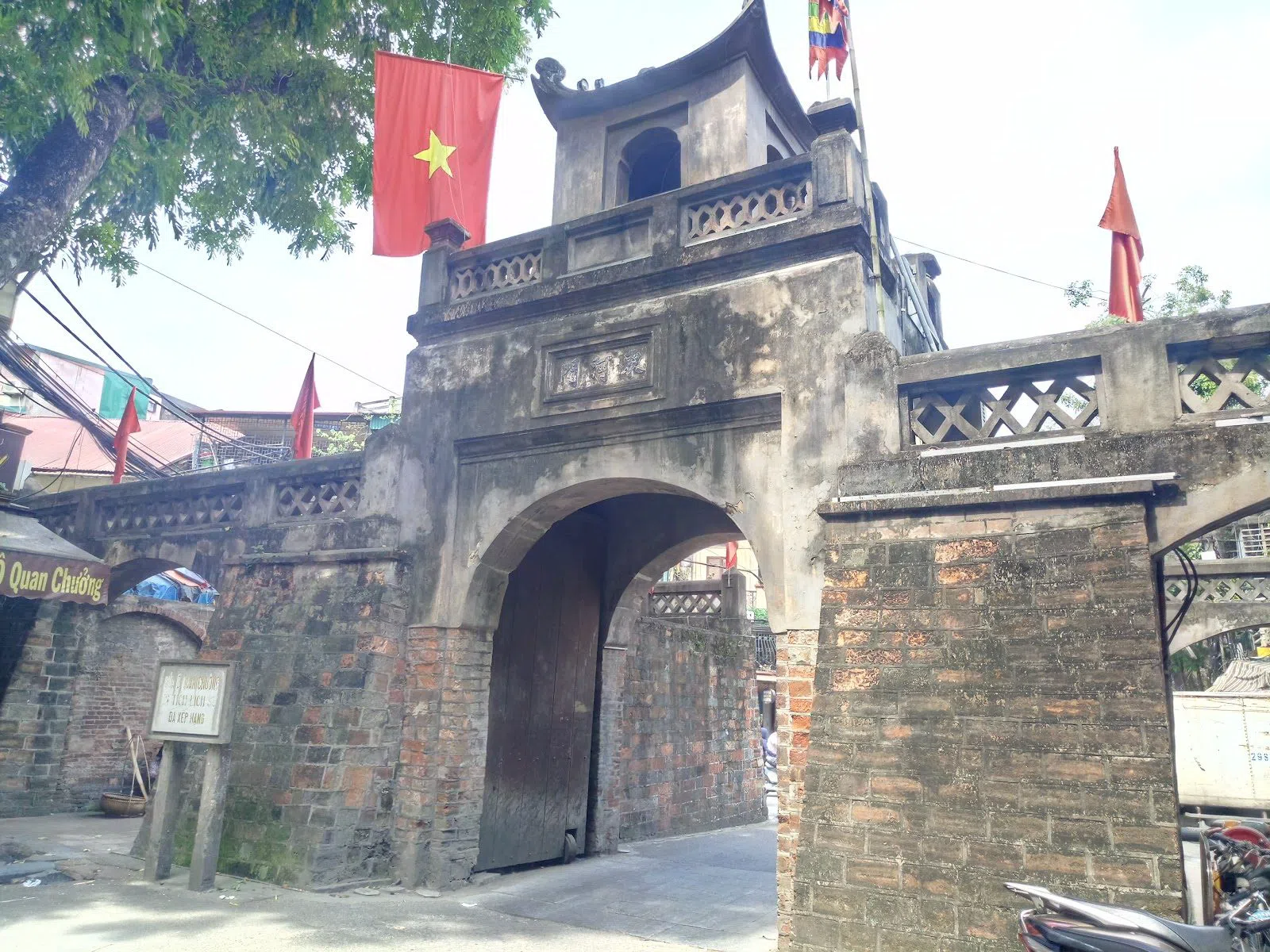
At seven in the morning the junction outside the old citadel gate on Hàng Chiếu does not look like traffic so much as a liquid finding its level. Nobody stops, nobody accelerates hard, and a woman with two crates of pomelo strapped across her rear rack slides into a gap that did not exist a second earlier. None of it is written down, and all of it is learnable.
Hanoi runs on roughly five million motorbikes through a street plan laid out for handcarts and porters, and the result is a system that works to its own conventions. Cars own the mass; bikes own the numbers and the initiative. What reads as chaos from the kerb is a negotiation conducted at fifteen to twenty-five kilometres an hour, held together by constant speed and visible intention. Brake hard, swerve late, or freeze halfway across a road, and you stop being part of the flow and become the obstacle in it.
The rest of this guide stays on two wheels: where to stand and watch the mechanics of it, who will carry you through it before you attempt it yourself, who will teach you to ride, and where the machines are bought, loaded and repaired. The wider city is covered in the Hanoi guide; this is the part that moves.
What the traffic is actually doing
Four rules do most of the work. First, merges happen by eye contact and front-wheel angle, not by right of way. A rider entering from a side lane looks at the wheel of the bike arriving, points their own wheel at the gap, and eases in; the arriving rider adjusts by half a metre. Nobody yields fully, because a full yield would stop the column behind them.
Second, the horn is a position report rather than an insult. A short double tap means I am on your rear quarter and you cannot see me. It is used constantly and carries no aggression, which is why the volume of it takes visitors two days to stop hearing.
Third, priority runs by mass. Buses and lorries take what they take, cars take the middle, bikes fill everything else, including the pavement in the last hundred metres of a jam, legally or not. Pedestrians are inside this system rather than protected from it: cross at a slow, constant walking pace, look at the riders rather than the road surface, and let the bikes flow around you. The dash-and-freeze is the single most dangerous thing a visitor does here.
Fourth, helmets have been compulsory since 2007 and compliance is near-universal, though the quality of what people wear varies enormously. Any operator or rental firm worth using will hand you a proper full-face or three-quarter shell rather than the moulded plastic caps sold on street corners.
Since 1 July 2026, a low-emission pilot has banned petrol ride-hailing bikes outright on eleven Old Quarter streets, which has tilted the mix towards electric machines in the historic core. The traffic sounds different in those blocks: less two-stroke rattle, more tyre noise and horn. It is the plainest evidence so far of the shift away from petrol in the old streets.
Plan your Hanoi trip
Live prices from our booking partners.
Free cancellation on many rooms. We may earn a commission when you book.
Two places to stand and read the flow
Before you ride anything, spend an hour watching. Ô Quan Chưởng (Old Quarter, at the top of Hàng Chiếu) is the last surviving gate of the Thăng Long citadel, raised in 1749 and rebuilt in the early nineteenth century, and it now works as a funnel: several lanes of bikes compress through one arch and re-fan on the far side. Stand on the Hàng Chiếu side, out of the traffic line rather than in the arch itself. It is free and open to any size of group. Come at six or seven in the morning for the calm version, when you can follow individual decisions; come mid-morning to watch the merge-by-eye-contact happen forty times a minute.
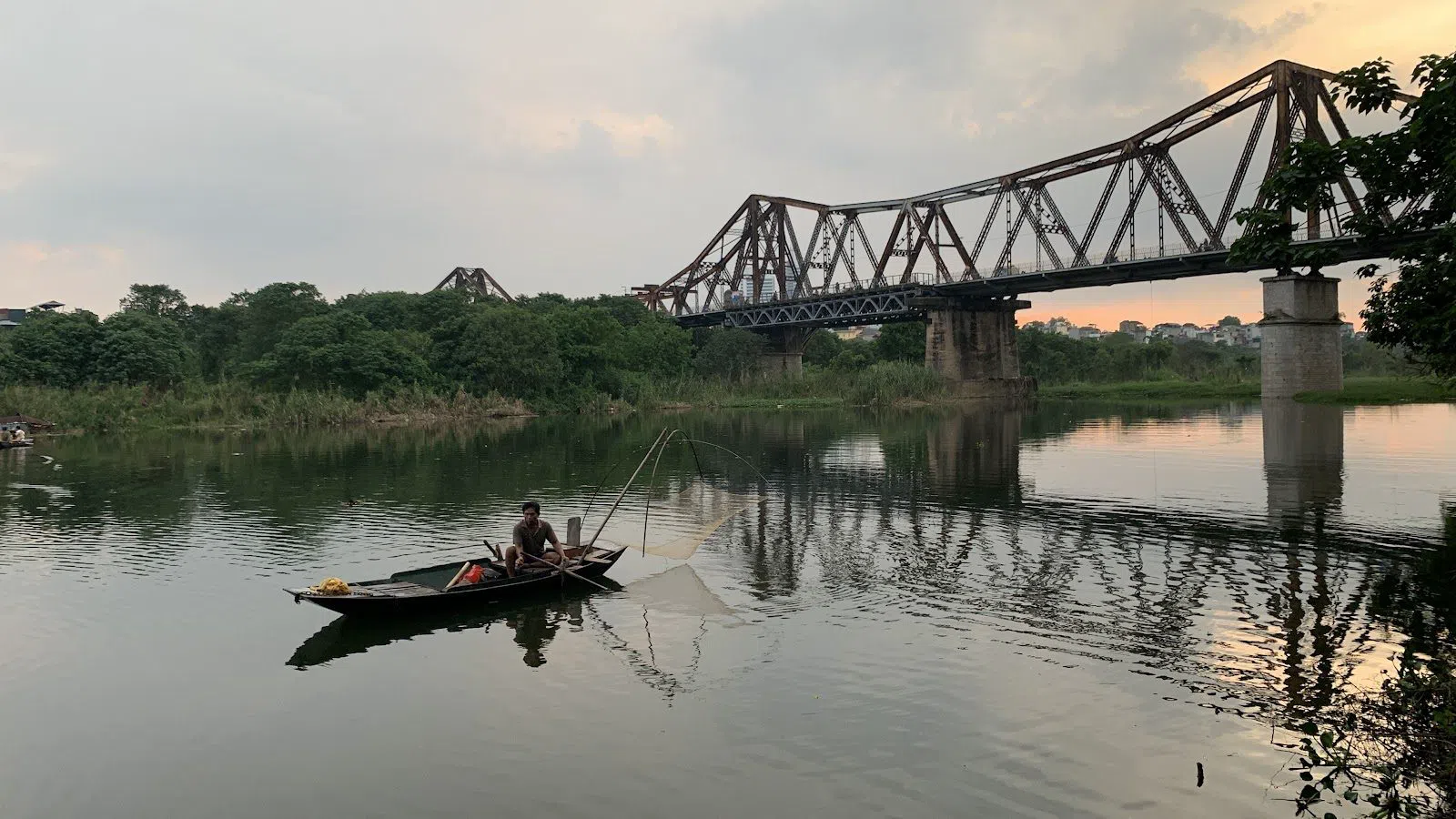
Long Biên Bridge (Hoàn Kiếm to Long Biên) is the other classroom. Built between 1899 and 1902, with a single rail line down its spine and cantilevered outer lanes for bikes and bicycles, it reopened on 28 May 2026 after a two-month overhaul of those outer lanes, and has since taken back around 70% of the bike traffic that had been diverted onto Chương Dương. Traffic on it keeps left, a leftover of the original French layout that catches out newcomers. Crossing is free and permanently open, but the lanes are narrow: ride single file, do not stop for photographs mid-span, and expect to be overtaken by someone carrying a wardrobe. Most tour operators build it into their route, and from the deck you can see the whole logic of the city's river crossings at once.
Riding pillion before you ride yourself

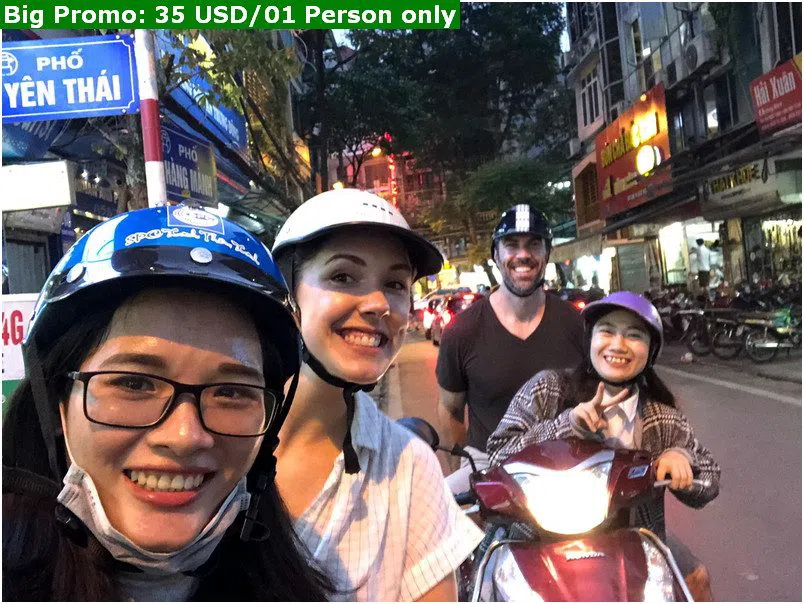
The cheapest way into the traffic is behind a professional. Xanh SM Bike (city-wide, app-based) is the electric bike-hailing service, and at 13,800₫ for the first two kilometres and 4,800₫ per kilometre after, a typical Old Quarter hop costs under a dollar. Order one bike per passenger; a group hails several and the drivers ride in loose convoy. The fleet is electric, so it is unaffected by the eleven-street petrol ban, which makes it the reliable option inside the historic core in 2026. Ten minutes on the back of one teaches you more about lane discipline than an afternoon of reading.
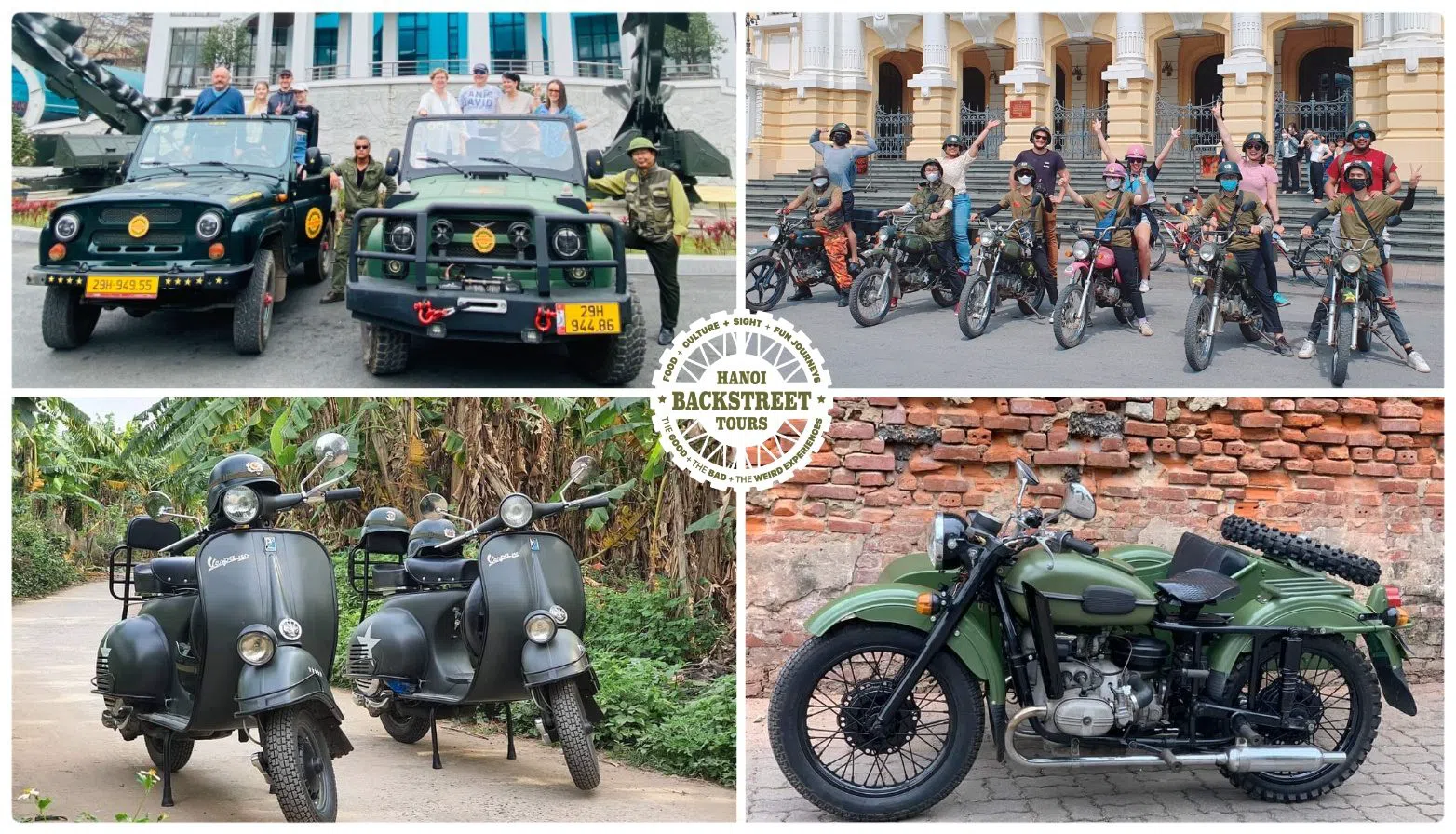
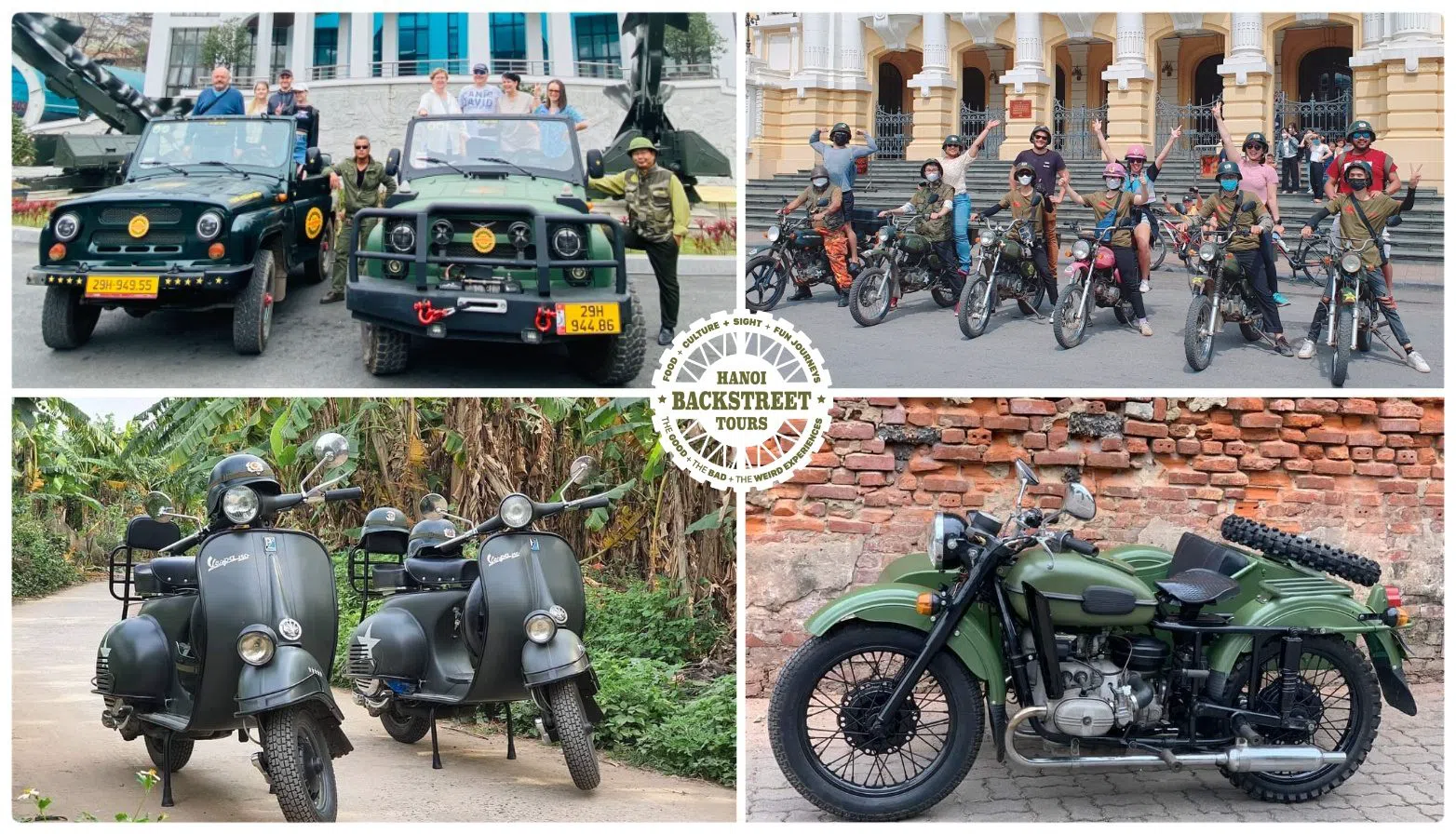
For a structured version, Hanoi Backstreet Tours (Old Quarter, office at 3B Hàng Tre, Hoàn Kiếm) has been running the backstreets for over nine years on Minsks, Vespas and sidecars, with jeeps added when a party grows. Prices run US$30 to US$103 per person depending on length. It takes groups readily, private and small-group departures both, and for eight or more it is worth booking the whole fleet rather than splitting across public departures, which puts your party on one route at one pace.

Vespa Adventures Hanoi (Old Quarter base, three routes) sits at the polished, heavily briefed end of the market: an Insider's city route, a Foodie route and a Countryside run, from US$80 to US$91 per person, with scheduled small-group departures and full private buy-outs for families or corporate parties. If someone in your group is nervous about the traffic, this is the operator most likely to talk them down. The safety briefing is real rather than decorative, and the riders are conservative with their gaps.
Paloma Motorbike Tours (Old Quarter, 33C Phạm Ngũ Lão) has run for over fifteen years with an all-female rider corps in áo dài, and caps tours at eight riders, minimum two. Private customised departures run from US$45 for a three-hour outing to US$75 per person. The áo dài image is the one most people have seen of Hanoi street riding, but the riding itself is the more useful lesson: held lines, no sudden inputs, the traffic joined rather than fought. Couples and pairs are well served here; the eight-rider ceiling means large groups must split or book back-to-back.

Taking the controls

If you want to steer rather than sit, Chicks n Bikes Hanoi (Tây Hồ, meeting at Arch Cafe, 143 Nhật Chiêu) is the practical starting point. Coaching is one-to-one by design, around US$45 for the session, and it takes absolute beginners from a quiet lakeside street into live Hanoi traffic within a single lesson. There is no group format, so friends book consecutive slots and finish together with a guided ride into town. It is the closest thing the city has to a formal school in reading the flow, and the progression from empty road to real junction in one morning is deliberate: the skills only mean anything in traffic.
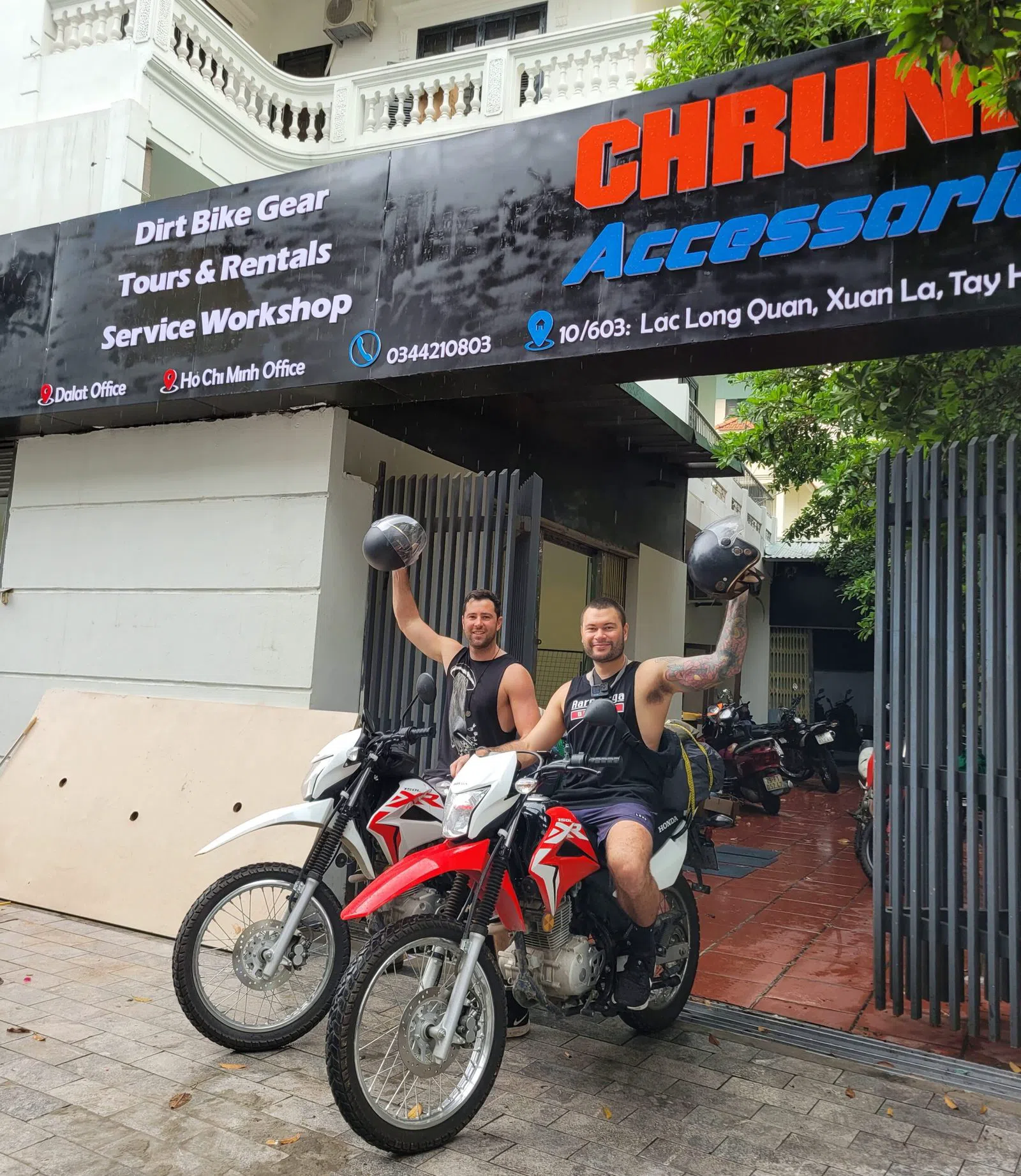
Tigit Motorbikes Hanoi (city offices, fleet rental) covers the machine. Rentals run roughly US$10 to US$25 a day and drop sharply by the month, on maintained Honda XR150s and similar, with real paperwork and traceable ownership, which matters more here than it sounds. A separate two-hour offroad skills session with kit provided is available and is worth taking before any northern trip. Kitting out a whole convoy is routine for them; the coaching is one to one and booked separately.
A foreign driving licence alone does not make you legal here. Vietnam recognises a 1968-convention international driving permit with the correct motorcycle category, and travel insurers routinely decline claims where the rider held neither that nor a Vietnamese licence. Plenty of visitors ride anyway. They are gambling with a hospital bill, and it is worth knowing that is the bet before you take the keys.
Renting, buying and heading north
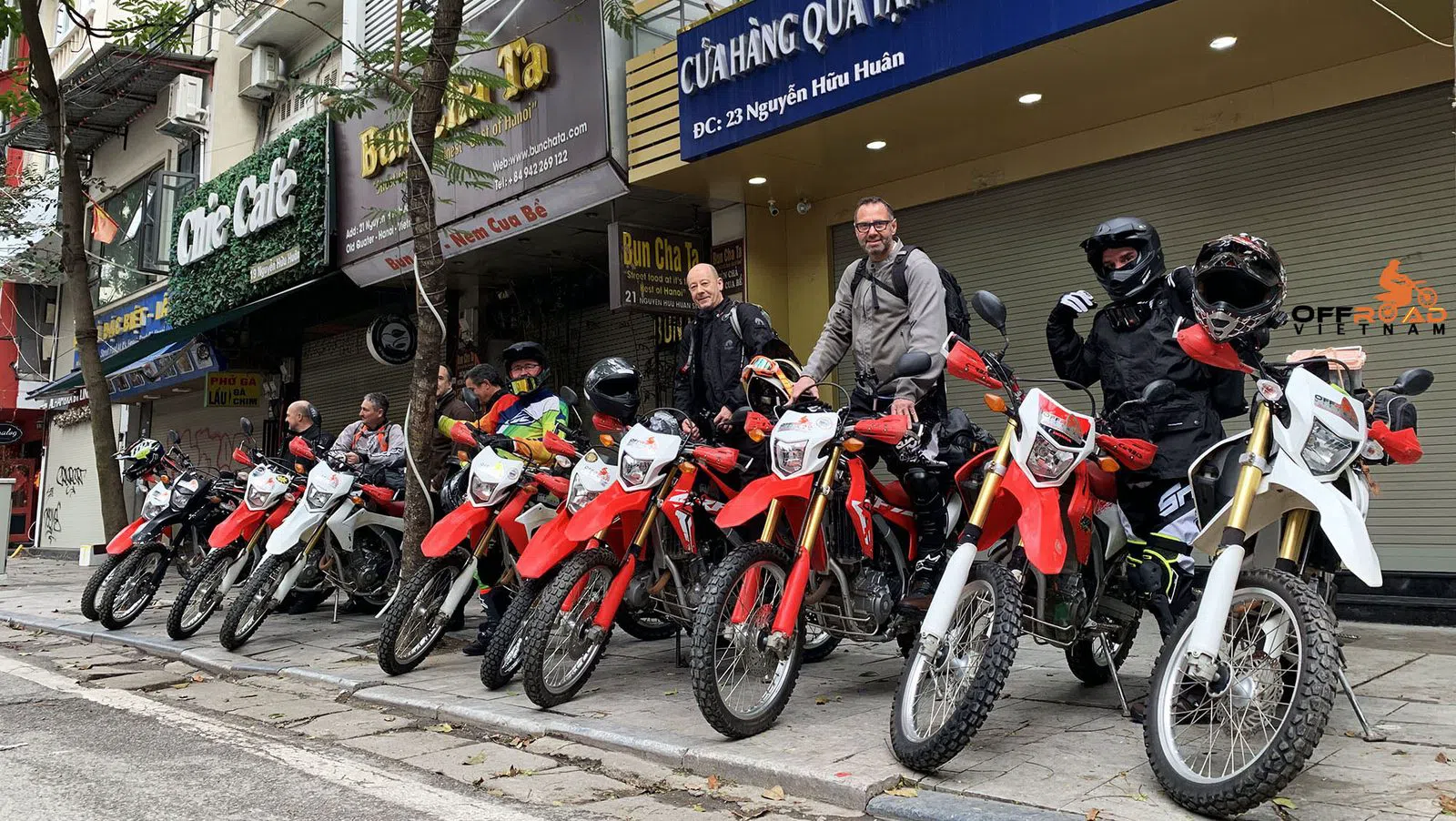
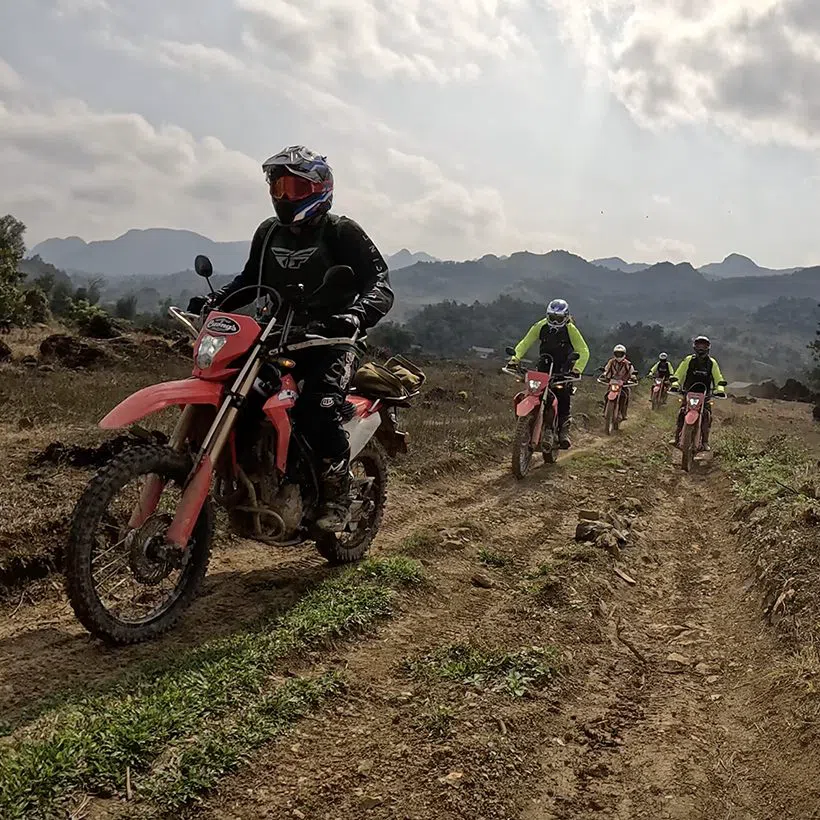
Offroad Vietnam (Old Quarter workshop) rents, services and sells Hondas from 50cc to 300cc, at roughly US$15 to US$40 a day, with guided tours from about US$100 a day and guided, semi-guided and self-guided formats. It handles multi-rider convoys with support vehicles, so groups are well managed. The operator says openly that it is not the cheapest in town, and that is the trade: this is where riders are sent when the bike has to survive the mountain roads north rather than just the Old Quarter.
VietMotorbikes (Red River side, long-term rental and used sales) started in a rented garage on the riverbank more than fifteen years ago and now handles multi-bike deals for travelling groups, with pickup and drop-off between its offices at either end of the country. Long-term rental sits around 1,200,000₫ a month, about US$45, and used bikes start at a few hundred dollars with a three-to-six-month warranty. This is where the long-haul riders buy the semi-automatic Cub, whose flat, patient engine note you hear everywhere in the city.
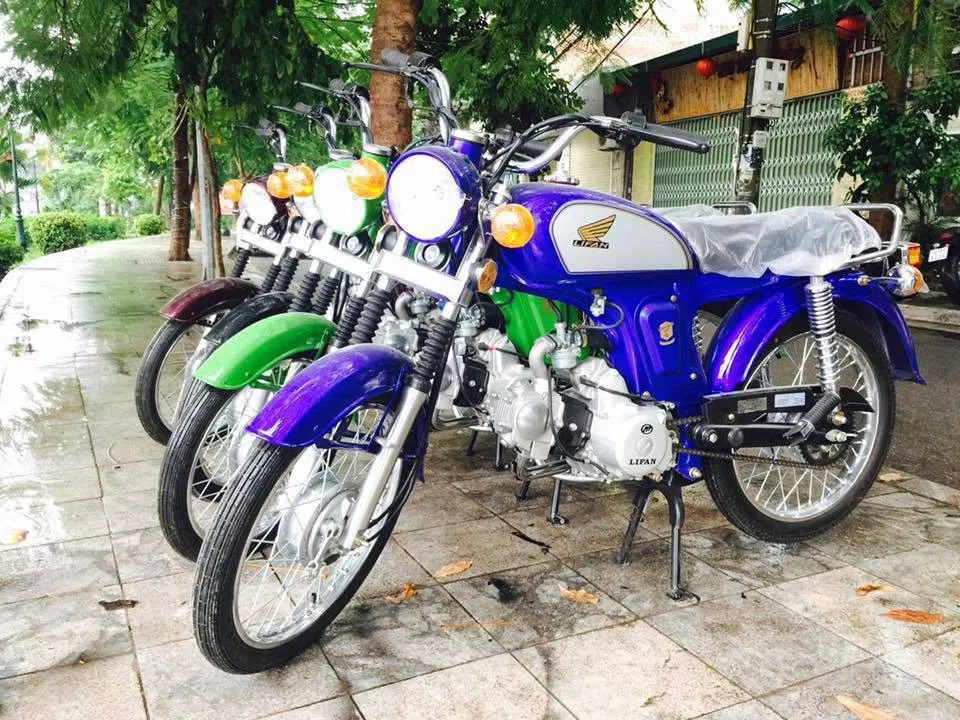
For anything longer, Cuong's Motorbike Adventure (Old Quarter, expeditions by arrangement) is the deep end. Cuong is a member of the Hanoi Minsk Club, the country's oldest riding fraternity, and through 2026 he was still opening fresh off-road routes and running long expeditions down the Trường Sơn corridor. Expect US$150 a day and up, all-in, quoted on request. It is built for small rider groups and custom private trips rather than walk-up bookings, and the club connection ties the city's Soviet-bike past to the touring trade it runs now.
The bike as a freight vehicle
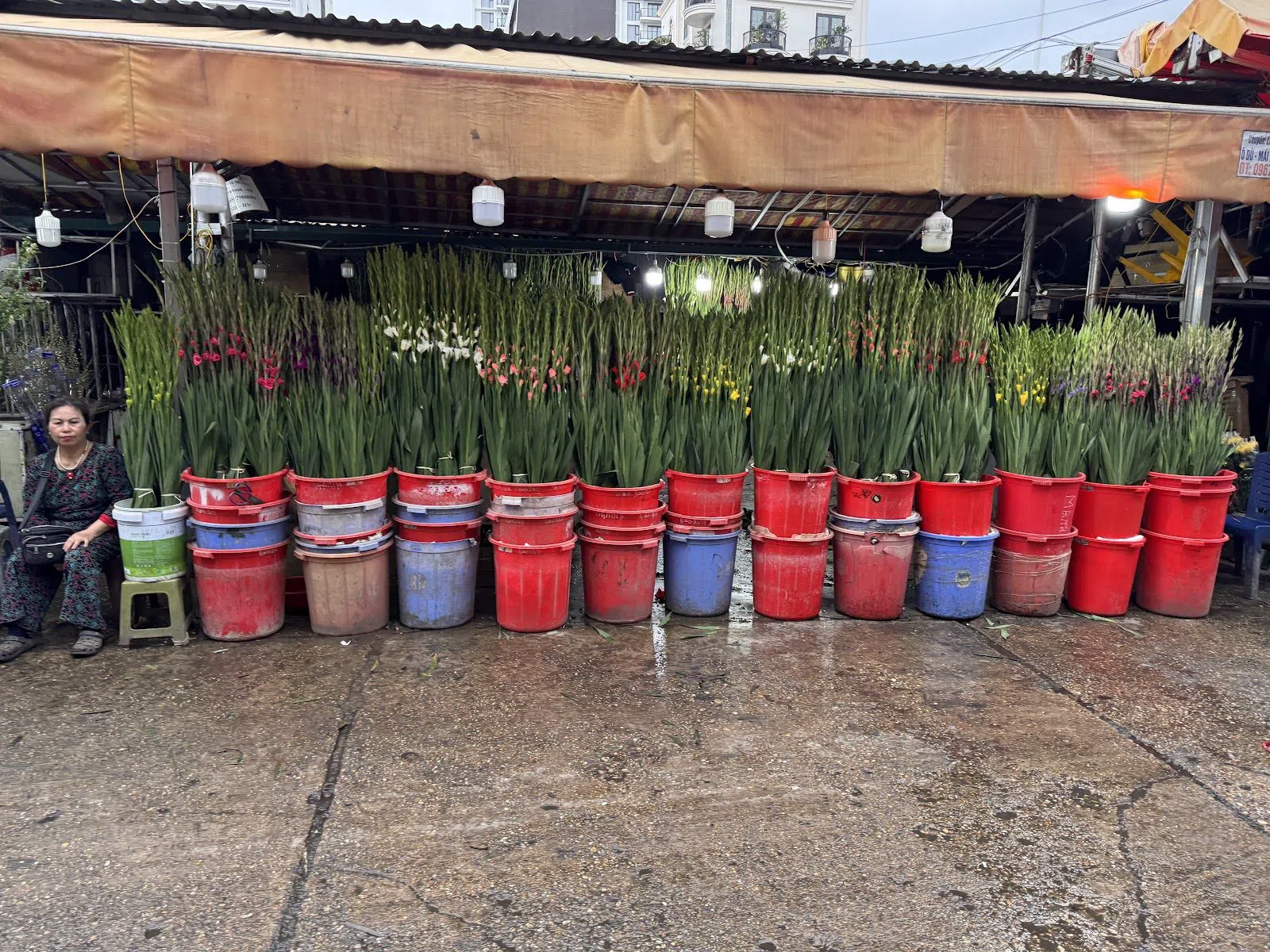
To understand why Hanoians ride the way they do, watch them work. Quảng Bá Flower Market (Tây Hồ, on the Nhật Tân side) runs roughly from 11pm to 5am with the frenzy peaking between two and four in the morning, and it is where the city's florists load a week's stock onto machines never designed to carry it. Walking in is free; bunches run about 20,000 to 100,000₫. Go by bike and, if you can, with a rider or guide, because the approach roads at 3am are dark, fast and full of overloaded machines that cannot stop quickly. Groups are welcome; keep out of the loading lanes.
Hanoi Motorbike Street Foods (Old Quarter, small-group and private departures) makes the daytime version of the same argument. Roughly US$35 to US$60 per person including the food, five stops, and almost no proper parking at any of them: you pull up, eat, and go, which is precisely how Hanoians use a bike. It is a local outfit rather than an international brand, with cyclo and homestay add-ons for mixed-ability parties, a sensible option if someone in the group will not get on a bike at all.
Where the machines are kept alive
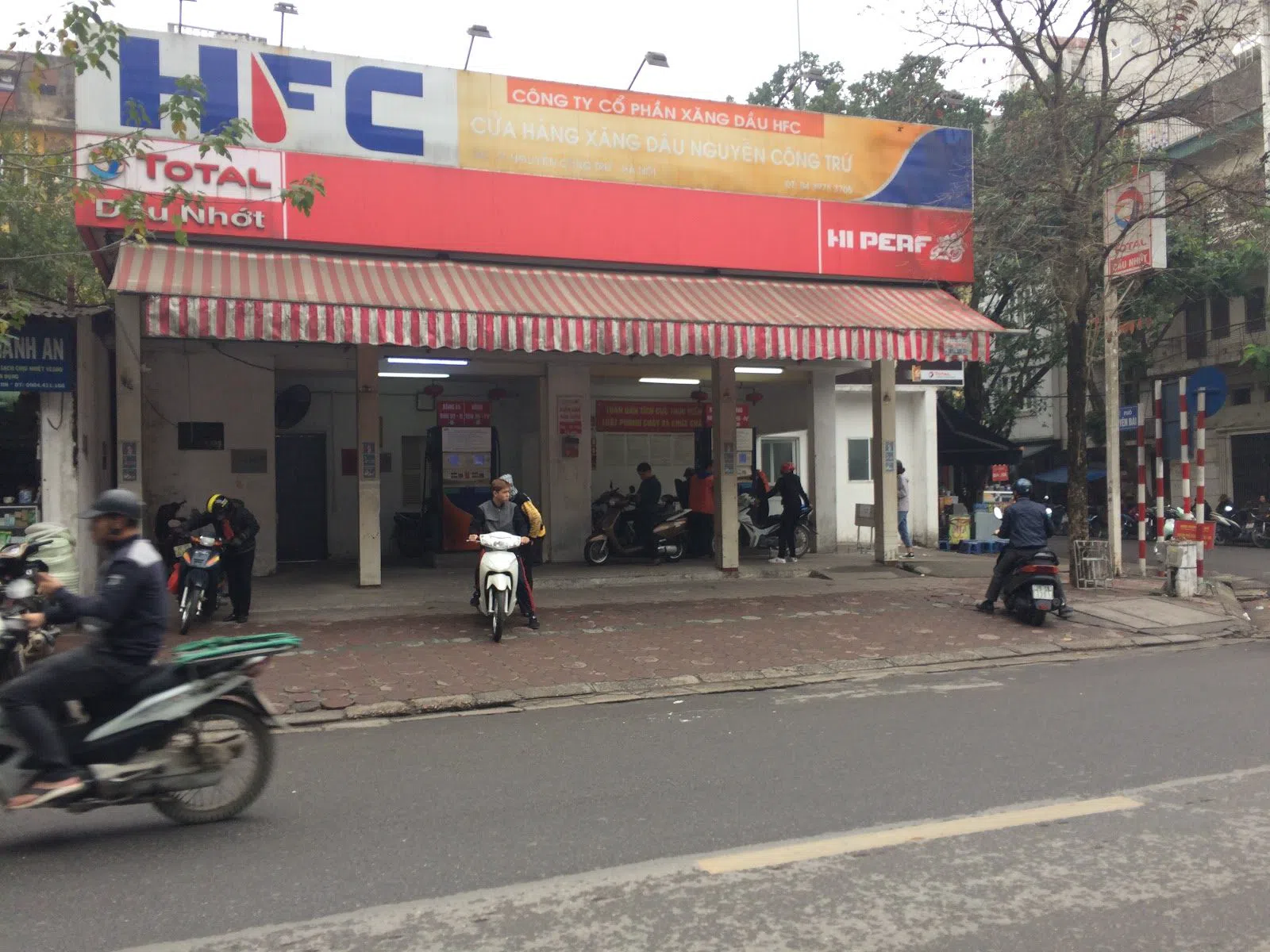
Chợ Giời, the Hoà Bình market (Hai Bà Trưng district), has traded since the 1950s and opens roughly 8am to 6pm. It is the mechanical underbelly of those five million bikes: mirrors, levers, carburettors, whole engine cases, parts from a few thousand đồng. There is no door policy because there is no door. It is a street market, and a crowded one. Keep a small group tight, watch your bag in the crush, haggle hard, and do not expect provenance on anything you buy. Come for the culture of the place rather than the shopping.
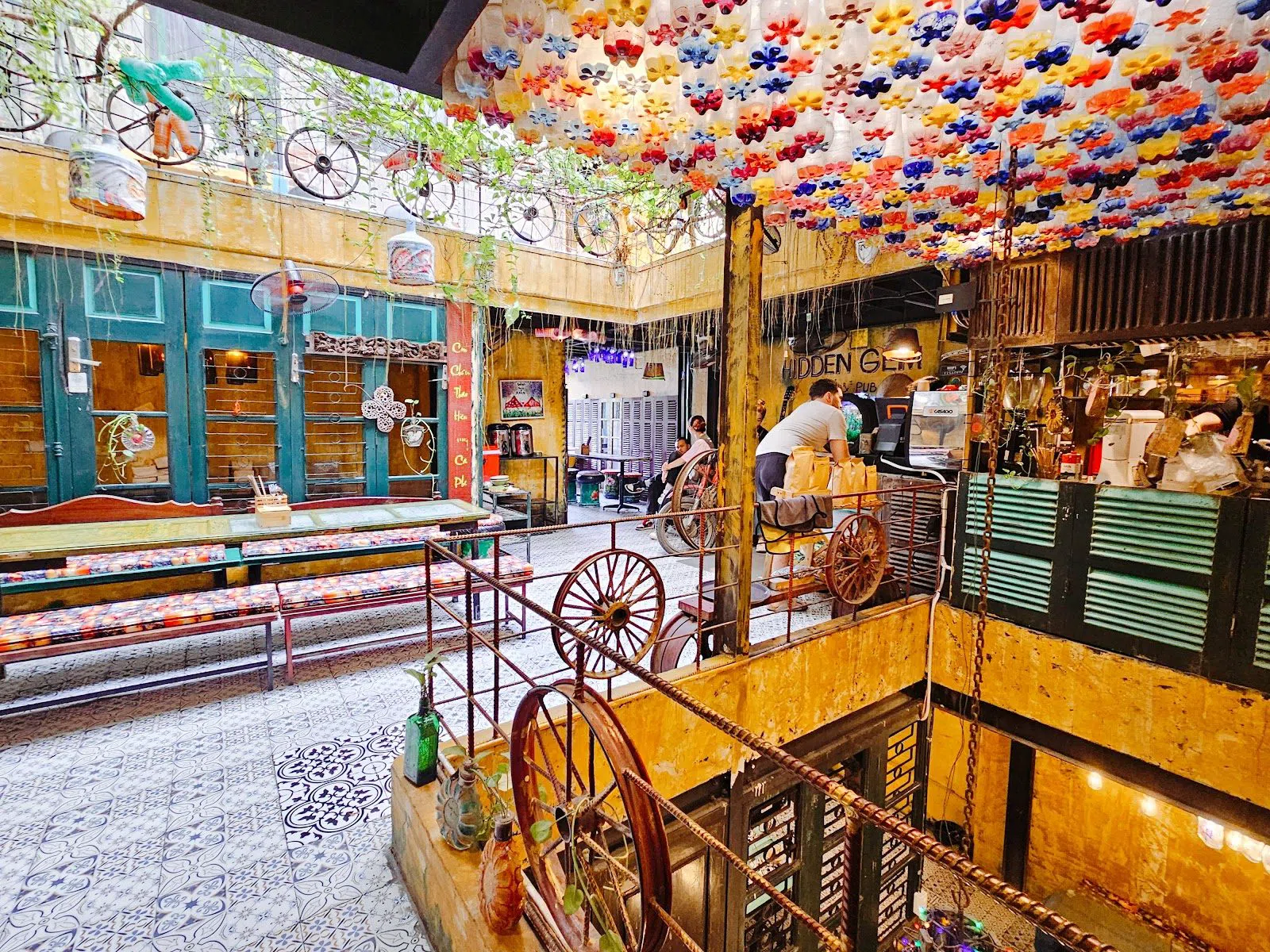
For a gentler version of the same idea, Hidden Gem Cafe (Old Quarter) is open 8am to 11pm across four floors built almost entirely from salvage, bikes included. Coffee runs 40,000 to 70,000₫. It is walk-in, and large groups are fine outside the peak evening hours when the upper floors fill with photographers. The building makes the argument plainly: in Hanoi a motorbike is furniture, tool and cultural object long before it is transport.
Practical notes
Getting around is mostly pillion by app, under a dollar for most Old Quarter hops, and electric services are unaffected by the eleven-street petrol ban in force since 1 July 2026. Taxis are slower than bikes in rush hour, which runs roughly 7am to 8.30am and 5pm to 6.30pm. Distances in the Old Quarter are short enough to walk if you have learned to cross.
Carry đồng, and plenty of small notes. Markets, parking attendants and street-food stops are cash-first; tours and rentals generally take cards or transfers. Budget a few thousand đồng each time you park a bike. It is normal, it buys you a ticket, and it is how bikes stay where you left them.
October to April is the dry, cool half of the year and the better riding season; May to September brings heat and afternoon rain that turns painted road markings slick within seconds. Watch the traffic in the early morning, ride pillion any time, and save the flower market for a night when you have nothing early the next day.
On budget: a pillion hop under US$1; a street-food ride US$35 to US$60; a half-day vintage tour US$30 to US$103; a one-to-one lesson around US$45; a daily rental US$10 to US$40, or about 1,200,000₫ a month; a multi-day expedition US$150 a day and up.
Where you stay changes what the days feel like. The Old Quarter puts you inside the traffic, which is the experience but also the noise; Tây Hồ trades ten minutes of riding for quiet and lake air, and puts you near both the riding school and the night flower market. Compare rooms in both through Hanoi hotel search before you commit. In this city the address decides what your mornings sound like.
Before you go
Is it safe for a visitor to ride a motorbike in Hanoi?
It is manageable if you learn the system first rather than assuming it works like home. Ride pillion for a day, take a one-to-one lesson (Chicks n Bikes Hanoi in Tây Hồ charges around US$45 and takes beginners from a quiet street into live traffic in one session), and rent from an operator with maintained bikes and real paperwork. Keep your speed constant, signal intention early, and never brake hard in a crowded lane.
Do I need a licence to rent a motorbike in Hanoi?
Legally, yes. A foreign licence on its own is not valid; Vietnam recognises a 1968-convention international driving permit with the correct motorcycle category, or a Vietnamese licence. Many rental firms will hand over a bike regardless, but travel insurers routinely decline claims from riders who held neither, so understand the exposure before you take the keys.
How do I cross the road on foot in Hanoi?
Walk at a slow, constant pace and keep going. Riders read your speed and direction and steer around you; they cannot do that if you dash forward or stop dead mid-lane. Look at the approaching riders rather than at the tarmac, and use gaps in the car traffic, because cars are the ones that genuinely cannot flow around you.
Can large groups do a Hanoi motorbike tour together?
Some can, some cannot. Hanoi Backstreet Tours handles eight or more by adding jeeps and sidecars, and taking the whole fleet keeps your party on one route. Vespa Adventures Hanoi sells full private buy-outs. Paloma Motorbike Tours caps every departure at eight riders, so bigger groups must split or book back-to-back slots.
What changed for motorbikes in Hanoi in 2026?
Two things. Long Biên Bridge reopened on 28 May 2026 after a two-month overhaul of the outer lanes that bikes use, pulling back around 70% of the traffic that had been diverted to Chương Dương. From 1 July 2026 a low-emission pilot banned petrol ride-hailing bikes on eleven Old Quarter streets, so electric services like Xanh SM Bike are now the dependable option in the historic core.